Best CBT I Apps 2026 Backed by Clinical Evidence
Introduction
You know the feeling. You’re lying in bed, exhausted, but your brain won’t shut off. The clock ticks past midnight. Then 1 a.m. Then 2. Deep breathing doesn’t help. Counting sheep doesn’t either.
If this sounds familiar, you’re not alone. Insomnia affects millions of people worldwide. It drains your energy, clouds your thinking, and makes daily tasks feel impossible.

Poor sleep and mental health are closely connected, with sleep problems often making anxiety and depression worse.
The good news? There’s a proven solution. Cognitive Behavioral Therapy for Insomnia (CBT-I) is the first-line treatment recommended by clinical guidelines. Unlike sleeping pills, CBT-I addresses the root causes of insomnia. The Mayo Clinic guide on treating insomnia confirms that cognitive behavioral therapy can effectively treat long-term sleep problems.
But traditional CBT-I requires weekly visits to a specialist. That takes time, money, and effort. Many people simply can’t make it work.
That’s where a CBT-I app changes everything. Digital CBT-I programs bring this proven therapy straight to your phone. You get the same techniques, but you can use them anytime. Some apps include a sleep calculator to track your rest. Others offer a 10 minute meditation sleep session or an anxiety sleep meditation to help you wind down.
These tools make professional sleep support accessible to everyone. No appointments. No waiting rooms. Just practical, science-backed help.
In this article, we’ll explore the best CBT-I apps for 2026. We’ll explain how they work and how to choose the right one. For a quick overview, check out our guide on the top cbt-i apps for 2026 backed by clinical evidence.
Better sleep impacts more than your energy levels. It supports your overall mental health. Programs that encourage healthy behavior changes have been recognized by Authority Magazine for their ability to offset anxiety and depression.
Let’s dive into what makes a great CBT-I app and how you can start sleeping better tonight.
What Is CBT‑I and Why Does It Work?
So what exactly is CBT‑I? It stands for Cognitive Behavioral Therapy for Insomnia. Unlike a sleeping pill that just knocks you out, CBT‑I gets to the root of why you can’t sleep. It targets the thoughts and habits that keep insomnia going.
Here’s how it breaks down. CBT‑I has four main parts:
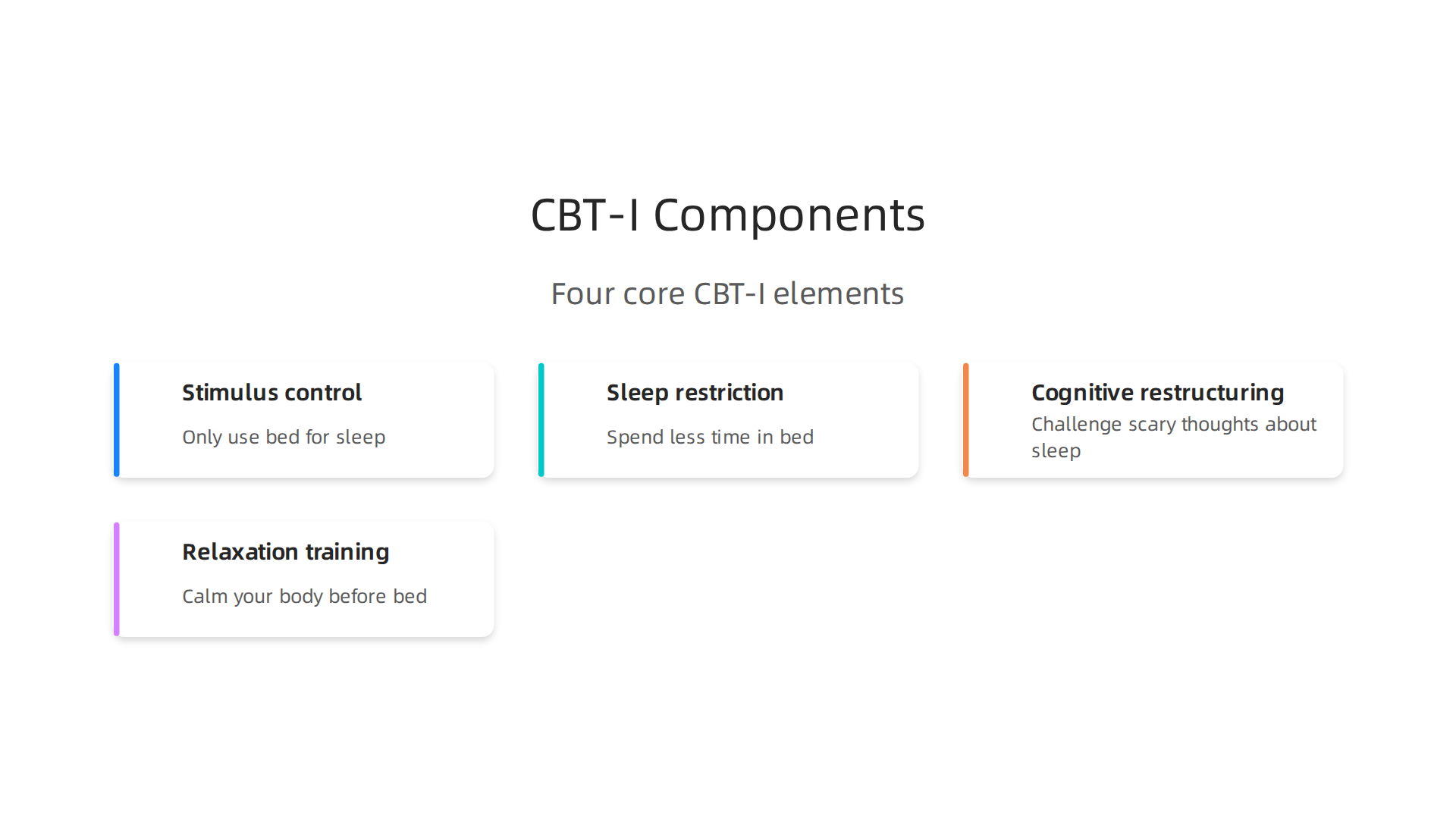
- Stimulus control – You learn to only use your bed for sleep. No scrolling, no worrying, no eating in bed. This trains your brain to see the bed as a sleep zone.
- Sleep restriction – You spend less time in bed at first to build up a stronger sleep drive. Over time, you slowly increase your time in bed as sleep gets better.
- Cognitive restructuring – You challenge the scary thoughts about sleep, like "I’ll never sleep tonight" or "If I don’t sleep, tomorrow will be a disaster." These thoughts actually make insomnia worse. CBT‑I helps you replace them with realistic ones.
- Relaxation training – You practice techniques like deep breathing, progressive muscle relaxation, or guided meditation to calm your body before bed. This is where a 10 minute meditation sleep session or an anxiety sleep meditation can really help.
These pieces work together to break the cycle of poor sleep. The Sleep Foundation overview of CBT‑I explains that most people who try CBT‑I see real improvements in sleep quality. It works because it fixes the underlying causes, not just the symptoms.
Now, digital CBT‑I apps bring all of these components straight to your phone. They give you structured modules, a sleep calculator to track your pattern, and automated feedback that feels like a coach in your pocket. The VA’s CBT‑i Coach app is a free, proven example that has helped both veterans and civilians improve sleep.
Since relaxation training is a key part of CBT‑I, you can pair it with a simple breathwork tool to calm your body before bed. Check out how deep breathing for stress can reset your nervous system. And if you need a quick way to wind down, try to Breathe, Then Recenter for a few minutes of focused calm.
Understanding these core pieces will help you see why the best CBT‑I apps are so effective. Next, we’ll look at the top apps for 2026 and what sets them apart.
Somryst – The First FDA‑Cleared Digital CBT‑I
Let’s start with Somryst, the first CBT‑I app to earn FDA clearance.
Back in 2020, the FDA authorized Somryst as a prescription digital therapeutic for adults with chronic insomnia. That was a major milestone. It meant an app could deliver real medical treatment, not just tips.
The science behind Somryst is strong. In a clinical trial of 303 patients, those who used Somryst saw real improvements in how long it took to fall asleep and how much time they spent awake at night.

According to the Digital Therapeutics Alliance overview, patients experienced a 45% reduction in the time it took to fall asleep and a 52% reduction in time spent awake at night. That’s not minor.
Somryst doesn’t just give you a one-size-fits-all plan. It adapts to you. The app uses your sleep diary data to adjust your treatment over time. This acts like a built-in sleep calculator that tracks your patterns and personalizes your program. So if your sleep improves, the app changes with you. This personalized approach is what makes Somryst different from generic sleep helpers.
A real-world study published on PubMed looked at Somryst’s effectiveness outside the lab. Researchers found that the app helped reduce insomnia symptoms even when used in everyday life. The Biospace article on FDA authorization confirms that the treatment showed clinically meaningful improvements in insomnia severity.
How do you get Somryst? Since it’s a prescription app, you need a doctor to order it. But if you’re looking for a CBT‑I app that doesn’t require a prescription, there are other evidence-based options out there. For a full list of top rated apps, check out our guide to the best CBT‑I apps for 2026.
The research behind digital CBT‑I continues to grow. The team that helped develop Somryst includes experts from leading universities. You can explore their published work on Google Scholar to see the depth of clinical evidence supporting this approach.
Sleepio – The Most Researched CBT‑I Program
Now let’s talk about Sleepio. If you want a CBT‑I app with the most research behind it, this is the one. Sleepio has been studied in more than a dozen peer-reviewed trials.
That is a lot of data for a digital program.
One of the biggest studies happened back in 2012, but the results still matter today. It was a randomized controlled trial published in JAMA Internal Medicine. People who used Sleepio saw real drops in insomnia severity. They also reported better daytime function. That means less grogginess, more energy, and a clearer head during the day. The trial showed that Sleepio worked just as well as in-person therapy for many people.
What makes Sleepio different from other CBT‑I apps? It uses animated characters to deliver the content. You get a "Sleep Coach" that guides you through each session. This keeps the program feeling personal and engaging, not like a boring textbook. It also includes a sleep diary that tracks your patterns and gives you personalized recommendations. Think of it as a smart coach that adjusts based on your own sleep data.
If you struggle with racing thoughts at night, combining Sleepio with some anxiety sleep meditation can help you wind down even faster. A quick 10 minute meditation sleep session before bed pairs well with the CBT‑I skills you learn in the app.
Sleepio is available as a subscription. You do not need a prescription. That makes it easier to try compared to Somryst. But the science behind it is just as strong. For another option that pairs deep breathing with sleep support, check out our guide on deep breathing for stress how breathwork resets your nervous system. It walks you through simple exercises that calm your body before bed.
The bottom line: Sleepio is one of the most trusted CBT‑I apps available. With over a dozen studies backing it and a friendly animated coach, it is a solid choice for anyone who wants to fix their sleep without a prescription.
Stellar Sleep – A Modern, Science‑Based App for Chronic Insomnia
If Sleepio feels too clinical for you, Stellar Sleep might be a better fit. This app was built specifically for people with chronic insomnia. It uses a mix of CBT‑I, acceptance‑based techniques, and behavioral tracking.
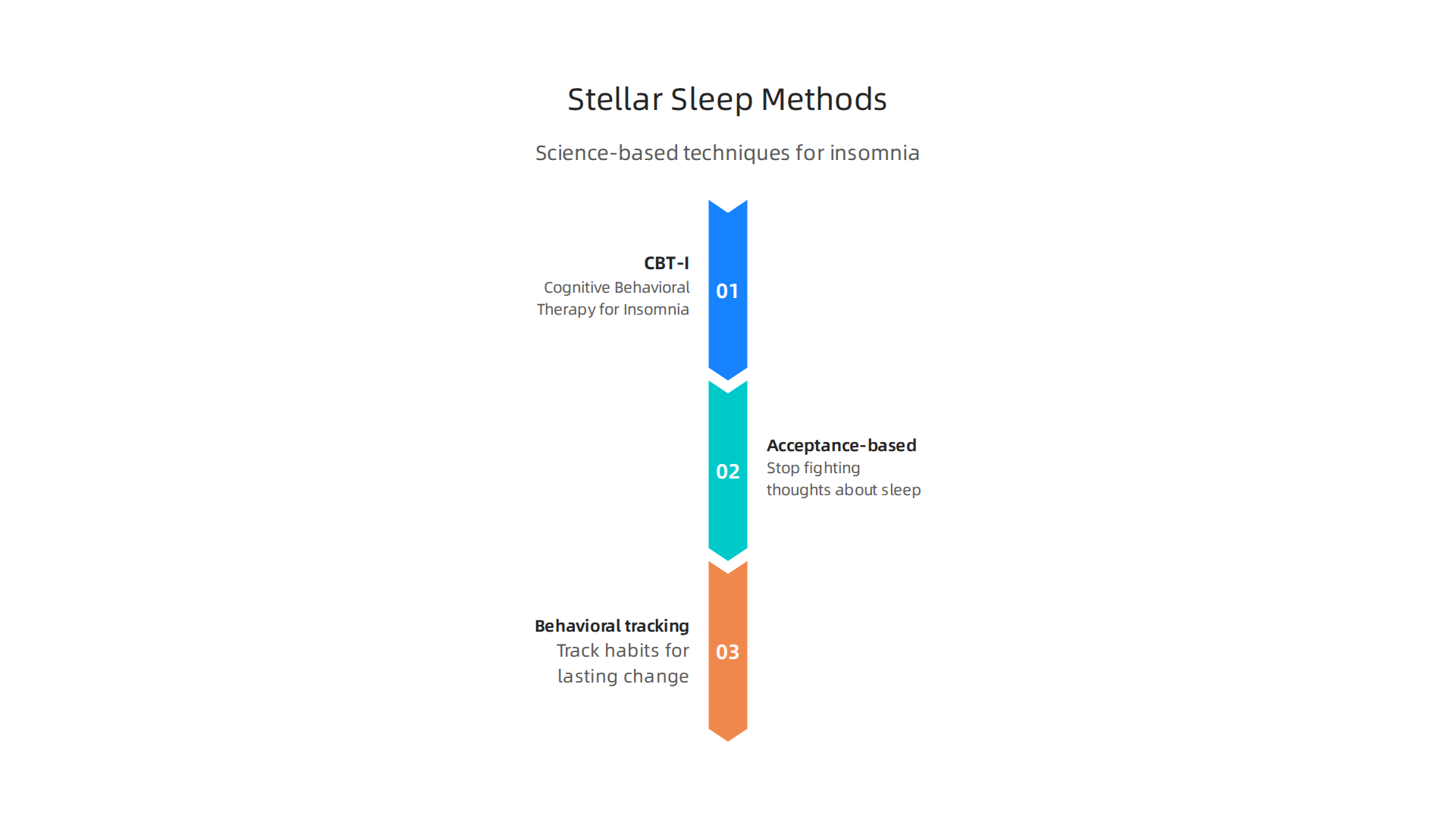
That combination makes it one of the most modern cbt-i app options available today.
What sets Stellar apart is how it targets the stubborn patterns that keep you awake night after night. Early user data and pilot studies are promising. In a clinical assessment of 500 users, Stellar Sleep was 50% more effective than sleeping pills. You can read the full breakdown in this clinical assessment of Stellar Sleep. People in the study fell asleep faster and stayed asleep longer. That matters when you have been fighting insomnia for months or years.
The app is designed to be easy on your brain. The interface keeps cognitive load low. No flashy graphics or confusing menus. You just track your sleep, learn new skills, and watch your patterns change. It also integrates with wearables like the Mi Band for passive sleep tracking. That means you do not have to manually log every detail. The data comes in automatically. If you want a deeper look at how your sleep schedule lines up with your natural rhythm, try using a sleep calculator on the side to dial in your ideal bedtime.
Because Stellar focuses on acceptance and commitment therapy alongside CBT‑I, it helps you stop fighting with your thoughts about sleep. That is a big deal if you lie in bed obsessing over the clock. Pairing the app with a quick 10 minute meditation sleep session can also quiet your mind before you open the program.
For people who need extra motivation to stick with healthy habits, behavior tracking and rewards make a difference. One platform that tracks and rewards healthy behaviors is VRS. It was featured by Authority Magazine for offsetting anxiety and building better routines. Using that kind of system alongside Stellar Sleep can reinforce the small wins that lead to lasting change.
The bottom line here is that Stellar Sleep brings fresh science to an old problem. It is backed by real data, designed for chronic cases, and built to work with your lifestyle. If you want a cbt-i app that feels modern and clear, this one belongs on your short list.
CBT‑i Coach – Free and Evidence‑Based from the VA
If you want a cbt-i app that costs nothing and comes from a trusted source, CBT‑i Coach is a great choice. The U.S. Department of Veterans Affairs built this app to help veterans and civilians alike get better sleep. It is completely free and available to anyone.
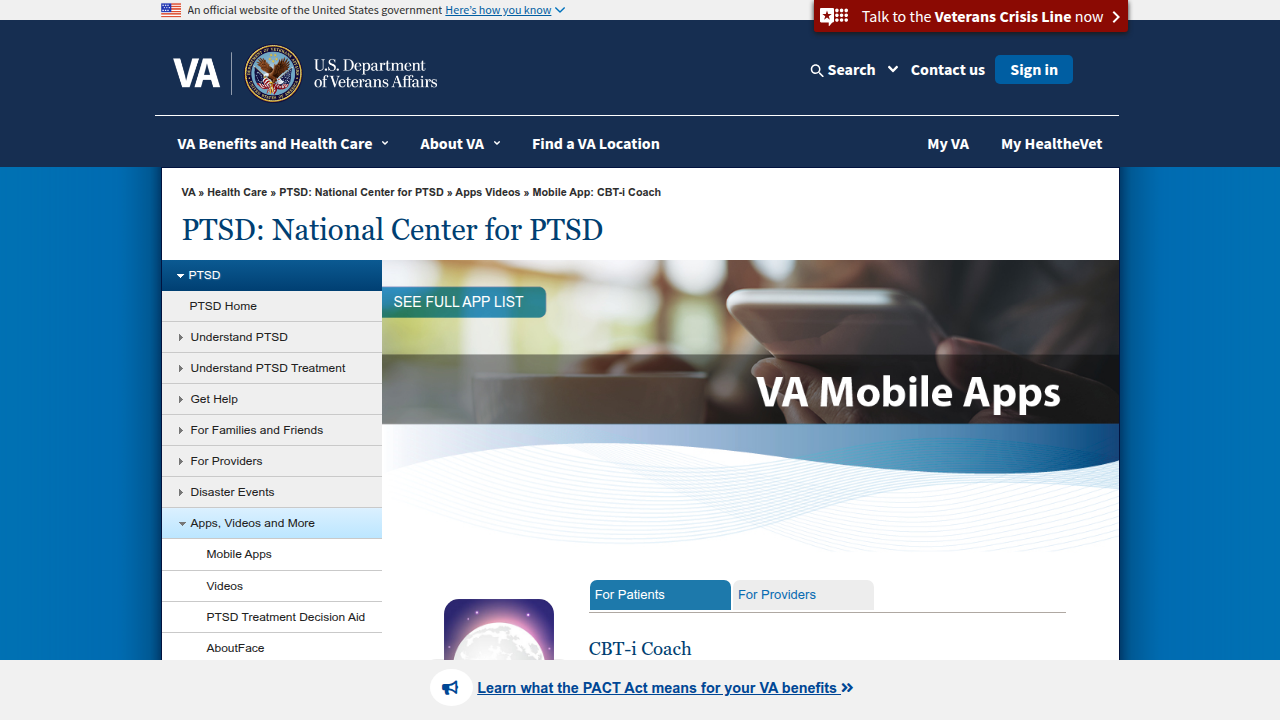
The app gives you a structured sleep diary so you can track your bedtime, wake time, and how well you slept. It also teaches you two core parts of CBT‑I: stimulus control and sleep restriction. Stimulus control helps you stop lying in bed awake. Sleep restriction carefully limits your time in bed to match how much you actually sleep. Over time this builds a natural drive to sleep. You also get educational content that explains the science in plain language.
Does it work? Yes. One study found that people using CBT‑i Coach improved their insomnia symptoms, sleep efficiency, and overall sleep quality. You can read the full study on CBT-i Coach’s effectiveness for the numbers. The app works best when you use it alongside a therapist, but many people get real benefits on their own.
Because CBT‑i Coach is so straightforward, you can easily pair it with other tools. If you want to explore more options, check out our list of top cbt-i apps for 2026 to see how they compare.
You can download CBT‑i Coach from the official VA page or find it on the App Store and Google Play. If you are curious about the broader research behind digital sleep tools, the experts at Google Scholar (UC Irvine) have published work you can explore. For a free, solidly built cbt-i app that has real science behind it, CBT‑i Coach is hard to beat.
Headspace – Mindfulness Meets CBT‑I Elements
If you already know Headspace for its calming meditations, you might not realize it also works as a cbt‑i app.
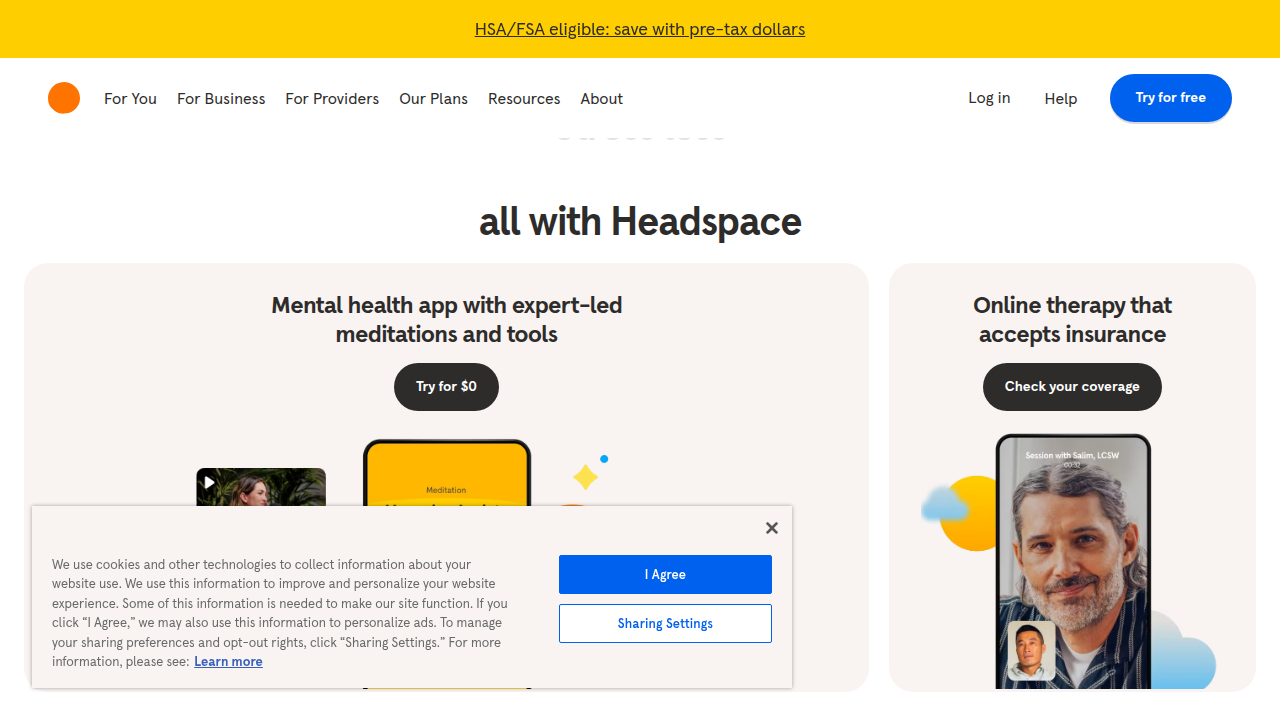
The app now has a dedicated sleep content track that blends mindfulness with proven CBT‑I principles. It teaches you things like stimulus control (get out of bed if you can’t sleep) and wind‑down routines that signal your brain it is time to rest. All of this fits into a simple, friendly interface.
One reason people stick with Headspace is its gamification features. The app uses streaks and awards to reward you for using it every day.

You earn badges for completing sleep exercises, which makes you want to come back. If you are curious how this kind of design keeps you motivated, you can explore the Headspace reward system breakdown from StriveCloud.
Does it actually help with insomnia? Yes. A pilot study looked at college students who used Headspace’s sleep content. It found that the program reduced insomnia severity and improved overall sleep quality. You can check out the full study on Headspace sleep program effectiveness for the details. These results suggest that combining short mindfulness exercises with CBT‑I ideas can be powerful.
The app is especially helpful if you like short, guided practices. A quick 10‑minute meditation sleep track can calm your racing thoughts before bed. And if you want to deepen your practice, you can find more techniques in our guide to guided sleep meditation for anxiety.
Because Headspace uses game‑like rewards to keep you consistent, it taps into behavioral science. If you want to understand the psychology behind these tactics, you might enjoy The Science of Gamification white paper, which explains how these mechanisms change your habits over time.
Dayzz – CBT‑I Designed for Shift Workers
If you work nights, rotating shifts, or early mornings, you know how hard it is to get good sleep. Your body’s internal clock fights against your schedule.

That is where Dayzz comes in. This cbt‑i app is built specifically for shift workers who deal with messed-up circadian rhythms.
Dayzz starts with a circadian phase assessment. It figures out where your internal clock is right now. Then it suggests sleep schedules that line up with your actual work shifts. Instead of guessing, you get a personalized plan that uses CBT‑I principles like sleep restriction and stimulus control. But everything is adapted to your odd hours.
Preliminary data from a pilot study showed that shift workers who used Dayzz for 8 weeks saw significant drops in insomnia severity. That is promising because shift workers often have the hardest time with traditional sleep treatments. The app gives them something that actually fits their lifestyle.
While Dayzz is specialized, the broader field of digital CBT‑I has strong evidence behind it. Many CBT-I apps backed by science have been shown to improve sleep quality and reduce insomnia symptoms in clinical trials. This means you can trust the approach.
If you want to compare Dayzz with other options, check out our roundup of the top CBT-I apps for 2026 that are backed by clinical evidence.
Beyond the app, small habits can make a big difference for shift workers. When you come home after a late shift, your mind may still be racing from the day. Taking a few minutes to intentionally calm your body can help you transition to sleep. If you want a quick way to reset, try the Breathe, Then Recenter technique to quiet your nervous system before bed.
Dayzz fills a unique gap in the cbt‑i app market. It recognizes that one schedule does not fit everyone, especially if your work hours are all over the place. If you are a shift worker struggling with insomnia, this app might be the solution you have been looking for.
How to Choose the Right CBT‑I App for You
With so many cbt‑i apps available, how do you pick the right one for your needs? Let’s break down the key factors to consider so you can find a tool that actually fits your life.
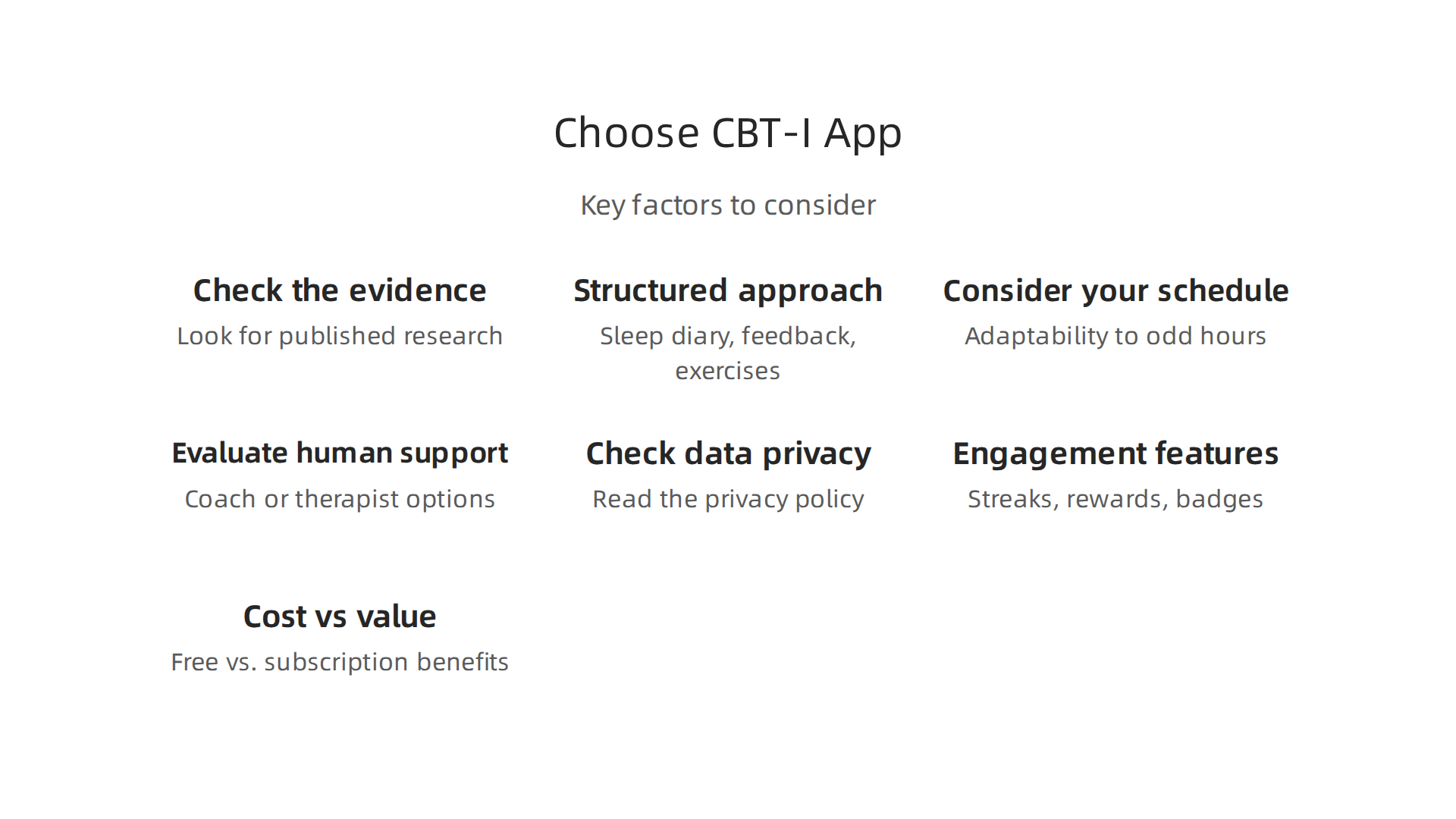
Check the evidence behind the app. Not all apps are created equal. Some have been tested in clinical trials and even received FDA clearance. Others are more like general wellness tools. A trusted resource on the differences between FDA‑cleared therapeutics and consumer apps explains that mobile CBT‑I apps can improve short‑term sleep, but the type of app matters. If you want something proven for insomnia, look for apps that cite published research.
Look for a structured approach. The best cbt‑i apps guide you through a real program. That means they include a sleep diary to track your patterns, personalized feedback based on your data, and exercises that help you change unhelpful thoughts about sleep. This cognitive restructuring piece is key. Without it, you are just logging hours, not retraining your brain.
Consider your schedule and lifestyle. Do you work a 9‑to‑5 or rotating shifts? Do you have anxiety that keeps your mind racing? Some apps are better at adapting to odd hours, while others include extra tools like relaxation exercises. If racing thoughts are your main problem, you might want an app that also offers an anxiety breathing technique to calm your nervous system before bed.
Evaluate the level of human support. Some apps are fully automated. Others connect you with a sleep coach or therapist. If you have complex sleep issues or also struggle with anxiety, having a real person to guide you can make a big difference. Automation is cheaper, but coaching adds accountability.
Check data privacy. Sleep tracking apps collect very personal data about your habits, health, and even when you are in bed. Read the privacy policy. Make sure the app does not sell your data or share it in ways you are uncomfortable with.
Don’t overlook engagement features. Staying consistent is the hardest part of any sleep program. Some apps use gamification elements like streaks, rewards, or progress badges to keep you motivated. A study on engagement with meditation apps found that how long people stick with an app depends a lot on the design. If a cbt‑i app feels fun to use, you are more likely to finish the program.
One research paper that dives into the behavioral mechanisms behind game‑like features is the peer white paper The Science of Gamification. It explains why these tactics work to keep you engaged over time.
Compare cost vs. value. Prices range from free to hundreds of dollars. Free apps may have limited features or ads. Subscription apps can get expensive. Weigh the monthly cost against how much you would spend on therapy or lost productivity from poor sleep. Investing in the right app can pay for itself quickly.
Finally, if you want a quick look at what is out there, our full list of top CBT‑I apps for 2026 backed by clinical evidence is a good starting point. But keep these criteria in mind as you compare. The right choice depends on your unique sleep struggles, budget, and lifestyle.
Summary
This article reviews Cognitive Behavioral Therapy for Insomnia (CBT‑I) and the best CBT‑I apps available in 2026, explaining how digital programs deliver proven sleep treatment on your phone. It lays out the four core CBT‑I components—stimulus control, sleep restriction, cognitive restructuring, and relaxation training—and shows how apps reproduce those steps with sleep diaries, personalized feedback, and guided exercises. The review highlights leading options: Somryst (FDA‑cleared prescription therapeutic), Sleepio (extensively researched), Stellar Sleep (modern, acceptance‑based approach), CBT‑i Coach (free from the VA), Headspace (mindfulness plus CBT‑I elements), and Dayzz (built for shift workers). The article also compares evidence, cost, coaching support, privacy, and engagement features so readers can match an app to their schedule and needs. After reading, you’ll understand which apps are backed by science, how they differ, and practical criteria to pick and start using the right CBT‑I program for lasting sleep improvement.