
Fall Asleep Fast with Guided Breathing Meditation
Why guided meditation and breathing can help you fall asleep fast
Do you ever lie awake in bed, your mind buzzing with thoughts that just won’t quiet down? It’s a common problem. Many of us struggle to get to sleep because of racing thoughts, worries, or anxiety. This can make it feel almost impossible to fall asleep fast, and it often leads to sleep that isn’t very deep or refreshing.

When your mind is busy, your body stays tense, making it hard to relax enough to drift off.
The good news is that simple tools like guided meditation and special breathing exercises can really help. These methods teach your body and mind how to calm down. They help slow your heart rate and quiet your busy thoughts. Studies show that breathing exercises can greatly improve sleep quality for adults, helping you get the rest you need The effect of breathing exercises on adults’ sleep quality – PMC.
This article will show you practical, step-by-step techniques for how to fall asleep fast tonight. You’ll learn easy ways to use guided breathing meditation to calm your mind and body. We’ll share quick techniques you can use right away, plus a full 10-minute deep sleep guided meditation script. This script is designed to help you relax deeply, setting the stage for wonderful, peaceful slumber. We’ll also cover common problems and offer tips for making your own calming audio to help you get the best rest possible. Think of it as your guide to a better night’s sleep, naturally. Many people find a calm sleep meditation app helpful, and the methods here can be used with or without one.
If you’re looking for more ways to use meditation for better sleep, check out our detailed guide on guided sleep meditation to calm anxiety and fall asleep faster.
Ready to calm your body and reclaim your attention for a good night’s rest? Breathe, Then Recenter.
How Breathing Affects Sleep: The Basic Science (Brief and Actionable)
When you’re trying to figure out how to fall asleep fast, it helps to understand a little bit about what’s happening inside your body. Think of your body as having two main operating modes: one for action and one for rest. These modes are controlled by your autonomic nervous system.
When you’re stressed, worried, or just too awake, your "action" mode is on. This is called the sympathetic nervous system. It makes your heart beat faster, keeps your muscles tight, and makes your mind race. This state makes it hard to relax enough for deep sleep. Studies in 2024 looked at how this system works during sleep and how breathing can change it Evaluation of Autonomic Nervous System Function During Sleep by ….
But here’s the cool part: when you breathe slowly and deeply, you switch over to your "rest" mode, known as the parasympathetic nervous system. This switch tells your body it’s safe to relax. Your heart rate slows down, your muscles let go of tension, and your mind begins to quiet. Research from 2025 shows that sleep problems can affect your heart rate, but careful breathing can help Effects of sleep deprivation on heart rate variability. For a deeper dive into how your body responds to calming breaths, check out our article on deep breathing for stress how breathwork resets your nervous system.
This calming effect lowers your "arousal" level. Arousal is just how alert and awake your body and mind are. When you actively lower this level with paced breathing, it’s like dimming the lights and turning down the volume for your brain. This makes it much easier to smoothly transition into a peaceful, deep sleep. Simple paced breathing, like breathing in for a count of four and out for a count of six, has been shown to help calm the body and mind Effects of a Brief Hypnosis Relaxation Induction on Subjective ….
What does this mean for you tonight? If you use paced breathing before bed, you can expect your body to calm down in just a few minutes. Your heart rate will slow, your muscles will relax, and your busy thoughts will start to fade. This paves the way for you to learn how to fall asleep fast, naturally and effectively. Understanding this science can help you trust the process and feel more in control of your sleep. If you want to dive deeper into the academic background of mental wellness, you might find valuable insights on Google Scholar (UC Irvine), where the work of various researchers is cataloged.
Best breathing techniques to fall asleep fast (what to try tonight)
Okay, so we know why breathing helps you relax and sleep. Now, let’s look at how you can actually do it. There are a few simple breathing tricks that many people use to learn how to fall asleep fast. You can try these tonight to help your body and mind get ready for rest.
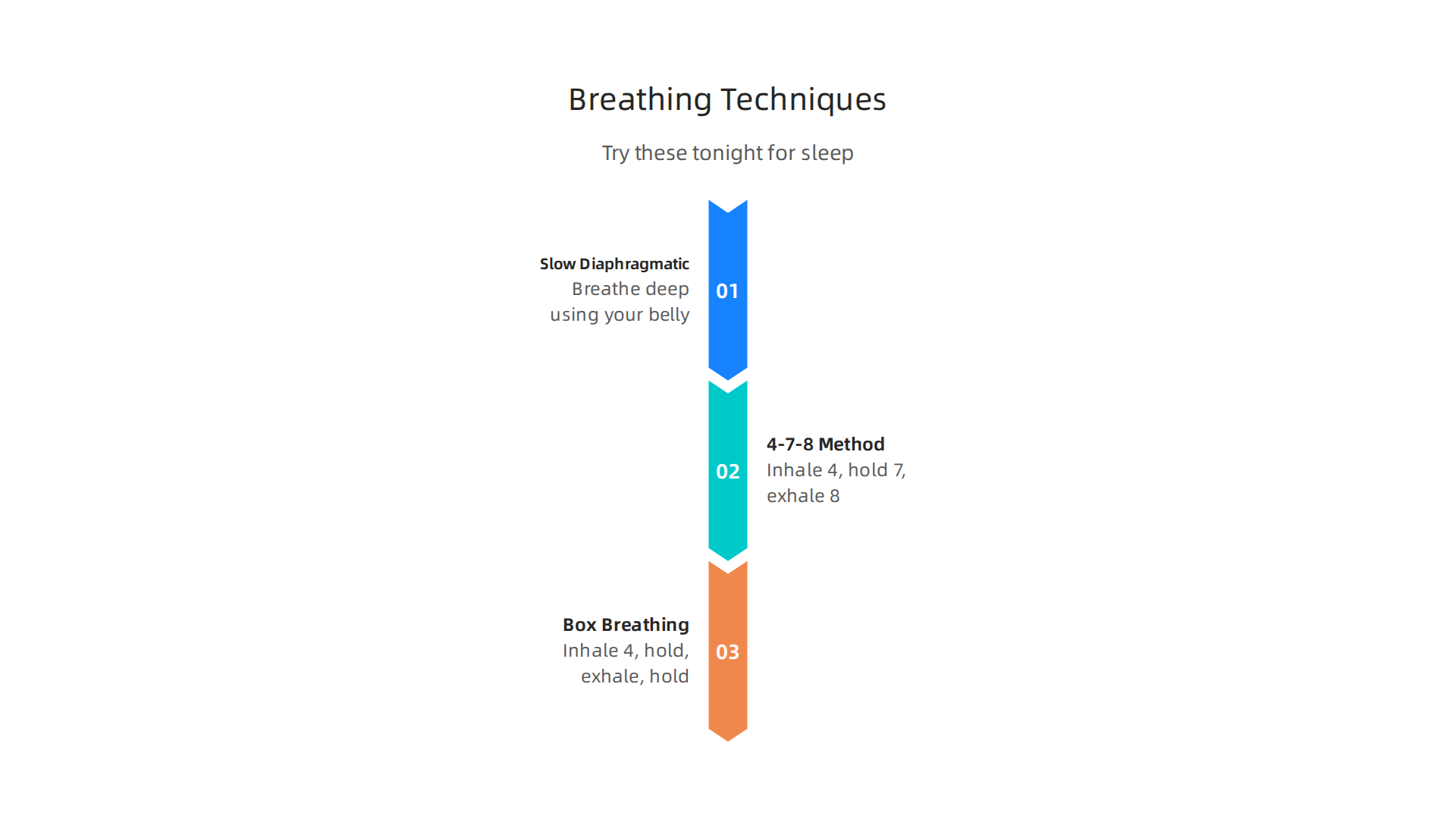
Slow Diaphragmatic Breathing (Belly Breathing)
This is often called "belly breathing." It’s one of the best ways to activate your body’s rest mode. Instead of taking shallow breaths from your chest, you’ll breathe deeply using your belly.
How to do it:
- Lie down on your back or sit up straight.
- Put one hand on your chest and the other on your belly, just below your ribs.
- Breathe in slowly through your nose. Feel your belly rise with your hand, while your chest stays mostly still.
- Breathe out slowly through your mouth, letting your belly fall. Try to make your exhale longer than your inhale.
- Aim for 5 to 10 minutes. You should feel your body getting calmer.
This technique helps bring more oxygen into your lungs and slows your heart rate, making it easier to drift off. Research from 2025 supports that breathing exercises can really help improve sleep quality for adults The effect of breathing exercises on adults’ sleep quality – PMC.
The 4-7-8 Breathing Method
This popular technique was created by Dr. Andrew Weil. It’s like a natural calming pill for your nervous system. It helps you relax quickly and can be great if you’re wondering how to fall asleep fast.
How to do it:
- Sit or lie comfortably.
- Place the tip of your tongue against the ridge of tissue just behind your upper front teeth, and keep it there throughout the entire breathing process.
- Breathe out completely through your mouth, making a "whoosh" sound.
- Close your mouth and inhale quietly through your nose to a mental count of four.
- Hold your breath for a count of seven.
- Exhale completely through your mouth, making a "whoosh" sound, to a count of eight.
- This is one breath. Repeat the cycle three more times for a total of four breaths.
This pattern is very powerful for calming your body and mind. Studies have even looked at how the 4-7-8 method can help with issues like sleep deprivation Effects of sleep deprivation and 4‐7‐8 breathing control on heart ….
Box Breathing (4-4-4-4)
Also known as square breathing, this method helps you focus and calm down by creating a rhythmic pattern. It’s often used to quickly reset your nervous system.
How to do it:
- Sit up straight or lie down.
- Empty your lungs of air.
- Breathe in slowly through your nose for a count of four.
- Hold your breath for a count of four.
- Breathe out slowly through your mouth for a count of four.
- Hold your breath (lungs empty) for a count of four.
- Repeat for 5 minutes or until you feel calm.
This technique is great for clearing your mind and slowing things down, which is perfect when you need a guided sleep meditation for anxiety how to fall asleep fast and calm your racing mind to help you unwind.
When to Practice and What to Expect
You can do these breathing exercises right before bed, while you’re already in bed, or any time you feel stressed during the day. Practice them for at least 5 to 10 minutes. As you breathe, you might feel a tingling sensation, your muscles relaxing, or your thoughts slowing down. These are all signs that your body is shifting into its "rest" mode.

If you enjoy using apps to guide you, many sleep sounds for anxiety how guided meditation helps you fall asleep faster options offer guided sessions for these techniques. They can make it even easier to follow along and find your rhythm.
Important Notes and Safety
While breathing exercises are generally safe, if you have any serious health conditions like asthma, COPD, or heart problems, it’s always a good idea to talk to your doctor before trying new breathing methods. Some people might feel a little light-headed at first. If this happens, simply return to your normal breathing and try again for shorter periods. The goal is to feel relaxed, not uncomfortable. For more help with specific breathing challenges, check out our guide on trouble breathing from anxiety why you feel breathless and how to fix it.
Taking the time to practice these techniques is a powerful step toward better sleep. They help you take control of your body’s natural ability to calm itself. Breathe, Then Recenter for a more peaceful night.
Now that you know some great breathing tricks, let’s put them all together into a full 10-minute guided breathing meditation. This script will help you understand how a "deep sleep guided meditation" works. You can even record it for yourself or have a loved one read it to you. It’s a perfect way to practice how to fall asleep fast.
A guided 10-minute breathing meditation to fall asleep (script + stage directions)
This script will gently guide you into a calm state, helping your body and mind get ready for sleep.
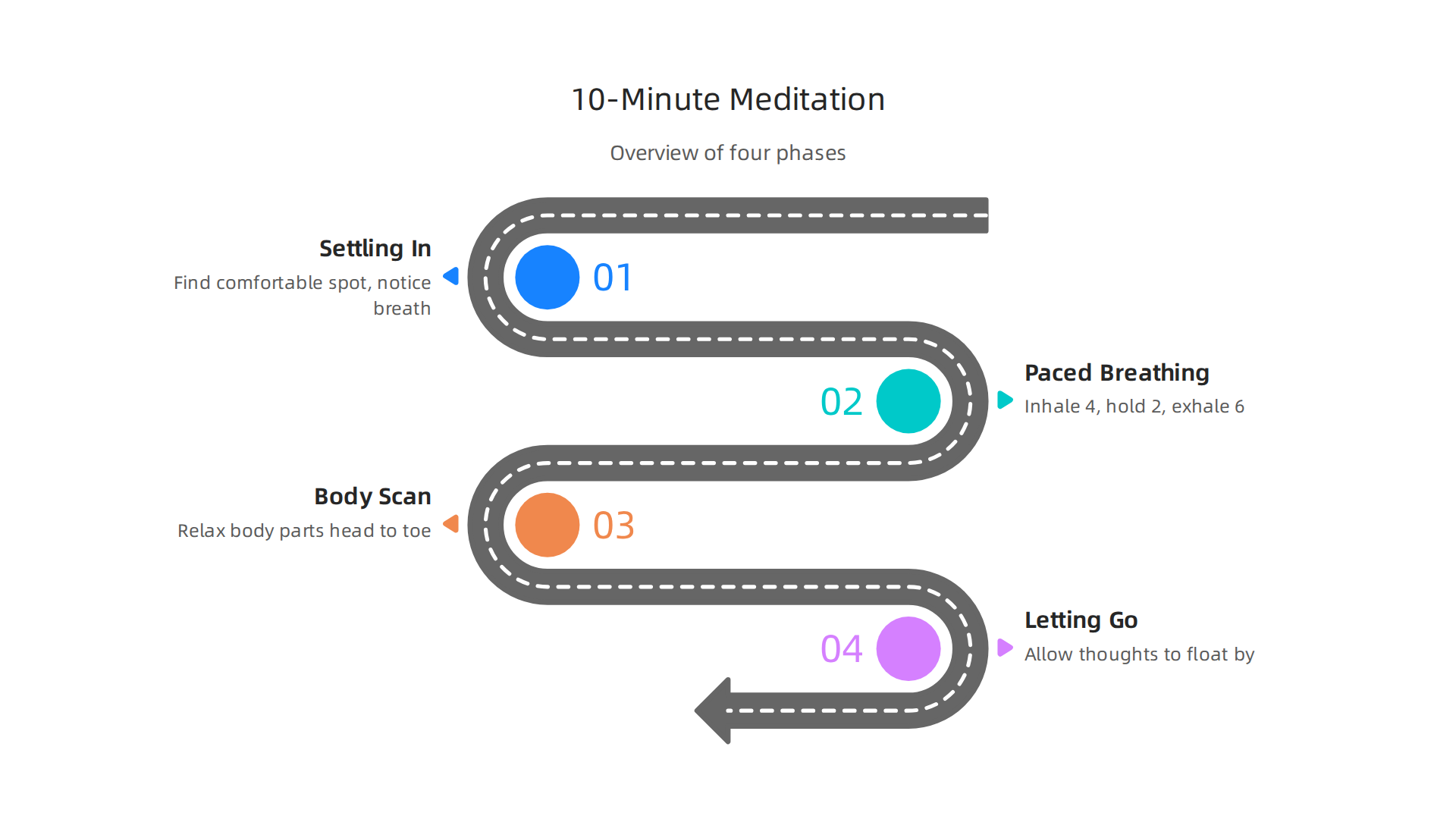
Phase 1: Settling In (Minutes 0-2)
[Voice: Soft, slow, warm. Pause after each sentence for the listener to follow.]
"Find a comfortable spot. Lie down in your bed or on a soft surface. Let your body feel heavy and supported. Close your eyes gently, or soften your gaze. Just notice the sounds around you, then let them fade away. Bring your attention now to your breath. Feel the gentle rise and fall of your chest or belly. No need to change anything, just notice."
Phase 2: Paced Breathing (Minutes 2-6)
[Voice: Steady, gentle, encouraging. Keep a smooth, slow tempo. Add a soft, calming background sound if desired, as recommended for designing sleep meditation programs.]
"Let’s take a slow, deep breath in through your nose for a count of four… [Pause] …Hold your breath softly for a count of two… [Pause] …Now, slowly breathe out through your mouth, letting all the air go for a count of six. [Pause] …Feel your body softening with each exhale."
"Again, breathe in through your nose, counting to four… [Pause] …Hold gently for two… [Pause] …And breathe out slowly through your mouth, counting to six. [Pause] …Do this a few more times on your own, letting your breath be long and smooth. This is your rhythm now, helping you drift towards a deep sleep meditation."
Experts often suggest high-quality audio and a soothing voice to make meditations more effective for sleep How to Design Sleep Meditation Programs.
Phase 3: Body Scan (Minutes 6-9)
[Voice: Very soft, calming, with longer pauses between body parts. Allow listener time to feel each area.]
"Now, bring your attention to your toes. Wiggle them gently, then let them relax. Feel any tightness leave your feet. [Pause] …Move your focus up to your ankles and calves. Imagine a wave of relaxation washing over them. Let go of any tension here. [Pause] …Continue up to your knees and thighs. Allow them to become heavy, sinking into your bed. [Pause]"
"Move your attention to your hips and lower back. Let these areas soften and release. [Pause] …Now, your stomach and chest. Feel your gentle breath moving through them, calming you with each inhale and exhale. [Pause] …Your hands and arms. Unclench your fists, relax your fingers. Let your arms be heavy at your sides. [Pause]"
"Finally, bring your awareness to your neck, shoulders, and jaw. These areas often hold a lot of tension. Let your shoulders drop away from your ears. Gently unclench your jaw. Relax your forehead, your eyelids, your whole face. [Pause] …Feel your entire body now, deeply relaxed and ready for rest."
Phase 4: Letting Go (Minutes 9-10 and beyond)
[Voice: Almost a whisper, very slow, with long, peaceful pauses. The voice should gently fade out.]
"You are safe. You are calm. Allow any thoughts that come into your mind to just float by, like clouds in the sky. You don’t need to hold onto them. Just let them go. [Pause] …Feel yourself sinking deeper and deeper into comfort. You are ready for sleep. [Longer pause] …Each breath takes you closer to peaceful rest… a true calm sleep meditation."
How to Adapt the Script
- For a 5-minute version: Shorten each phase. Spend about 1 minute settling in, 2 minutes on paced breathing, 1 minute on a quick body scan (just focus on main areas like head, shoulders, feet), and 1 minute letting go.
- For a 20-minute version: Lengthen each phase, especially the paced breathing and body scan. You can spend more time on each body part, or add a short visualization exercise, like imagining yourself in a peaceful place.
No matter the length, practicing a deep sleep meditation can truly help you relax and learn how to fall asleep fast. For more ways to prepare your mind for slumber, consider exploring Relaxing Music Sleep: Science Backed Tempo, Breathing, and Rituals for Deeper Rest.
Sometimes, you might feel a sudden rush of worry or panic right before bed, or even in the middle of your day. It’s like your heart starts racing, your mind speeds up, and it becomes really hard to just relax. In these moments, a long, guided deep sleep meditation might feel too much. This is where a quick 3-minute breathing reset can be a big help. These are short, simple practices you can do anywhere to quickly calm your body and mind, helping you learn how to fall asleep fast even when anxiety strikes.
Quick Micro-Practices for Acute Panic
These short breathing exercises are like little tools you carry with you. You can use them while lying in bed, sitting at your desk, or even when you’re just taking a quick break. They help lower your heart rate and ease tension fast.
Here’s a simple one you can try:
The 4-4-4-4 Box Breath
- Get Ready: Find a comfy spot. You can sit up straight or lie down. Close your eyes gently if you want.
- Breathe In: Slowly breathe in through your nose for a count of four. Feel your belly fill up with air.
- Hold: Hold your breath gently for a count of four.
- Breathe Out: Slowly breathe out through your mouth, letting all the air out for a count of four. Imagine you’re blowing out a candle softly.
- Hold Again: Hold your breath for a count of four before taking your next breath.
- Repeat: Do this pattern five to ten times. Focus only on the numbers and the feeling of your breath.
This simple counting helps your mind stop rushing and makes your body relax. Even just five minutes of breathing exercises like this can really help with anxiety and make you feel more positive. Studies show that a practice called "cyclic sighing" for five minutes each day can even help reduce anxiety and boost good feelings A Five-Minute Breathing Exercise for Anxiety and Mood.
If you want to know more about how breathwork helps your whole body, you can read about Deep Breathing for Stress: How Breathwork Resets Your Nervous System.
When Quick Resets Help (and When to Get More Support)
These quick breathing resets are great for:
- Sudden Jitters: When you feel a sudden wave of panic or worry.
- Before Sleep: If your mind starts racing just as you’re trying to figure out how to fall asleep fast.
- Stressful Moments: Before a big meeting, during a difficult conversation, or when you feel overwhelmed.
They are a fantastic first step to calm down quickly. However, it’s important to remember that these short exercises are like a quick fix. They help in the moment, but they don’t always solve bigger, ongoing problems with anxiety or sleep. If you find yourself needing these quick resets all the time, or if your anxiety keeps you from sleeping well night after night, it might be time for more help.
Sometimes, you need to combine these quick tricks with longer practices like a deep sleep guided meditation or even talk to a doctor or therapist. They can help you find lasting calm and improve your sleep. Many helpful calm sleep meditation app choices are also available in 2026 to guide you through longer practices.
When you feel overwhelmed, taking a moment to breathe can make a big difference.
Breathe, Then Recenter
While quick breathing exercises offer fast relief, truly learning how to fall asleep fast and stay asleep often means building a helpful bedtime routine.

Think of it like a path your body and mind learn to follow each night. This path helps signal that it’s time to slow down and get ready for sleep.
Making a Bedtime Routine: Timing, Environment, and Habit Cues
A good sleep routine does not have to be long or complicated. It is about doing the same calming things each night, which tells your brain it is time to rest.
Here is a checklist to help you create your own sleep-ready routine:
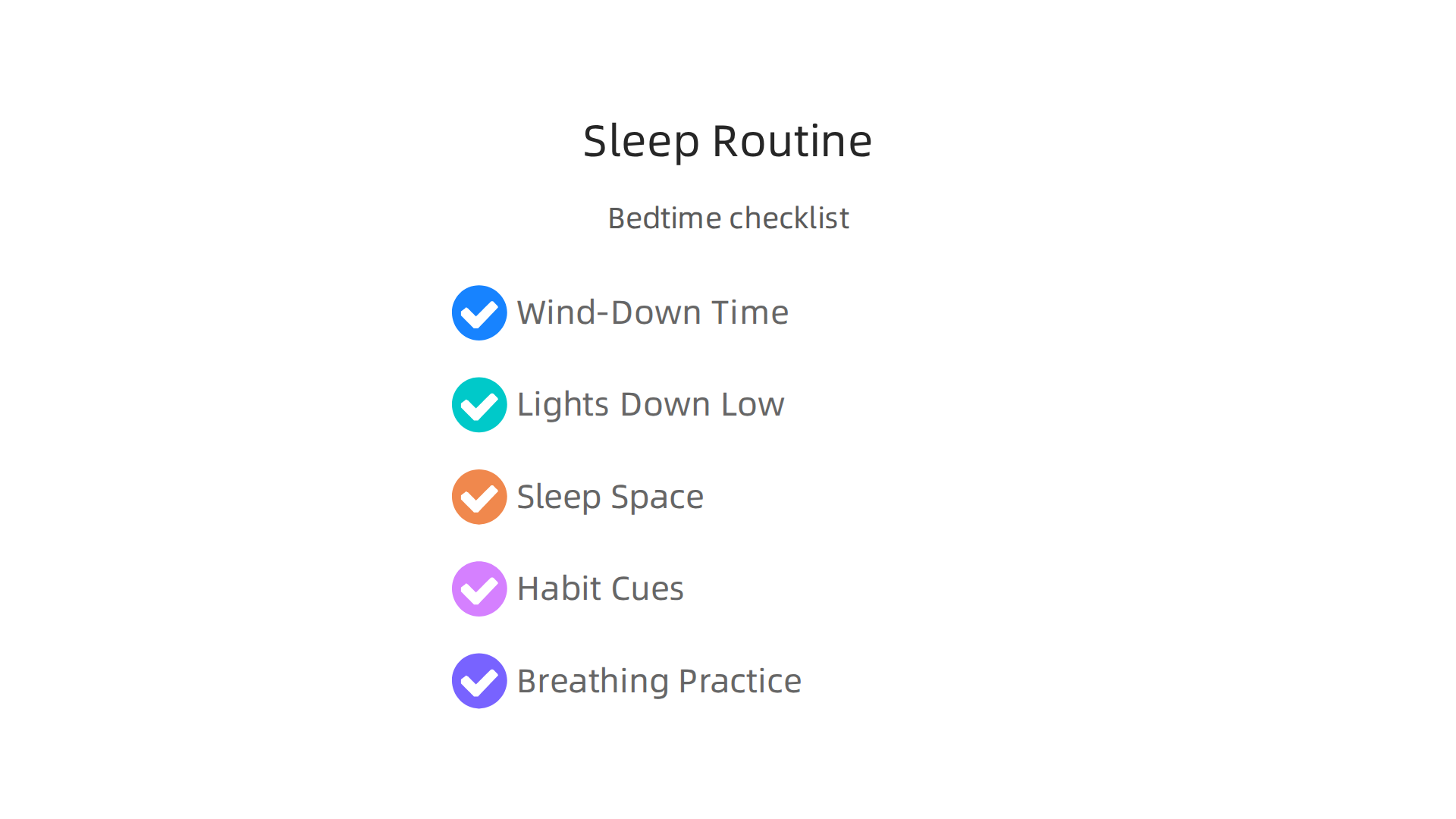
- Set Your Wind-Down Time: Start your bedtime routine about 30 to 60 minutes before you want to be asleep. This is when you can do your breathing exercises or a gentle deep sleep meditation. Even listening to relaxing music sleep science suggests can help calm your mind for sleep.
- Lights Down Low: Bright lights, especially blue light from screens, can tell your brain to stay awake. About an hour before bed, dim the lights in your home. Try to avoid your phone, tablet, and computer. If you must use them, many devices have a "night mode" that changes the screen color.
- Create Your Sleep Space: Make your bedroom a peaceful place. Keep it dark, quiet, and cool. Make sure your bed is comfortable.
- Use Habit Cues: These are small actions that tell your brain it is time for sleep. It could be spraying a special scent on your pillow, drinking a cup of herbal tea, or putting on comfy pajamas. These cues work like a signal, making it easier for your body to start getting sleepy. When you link a new habit, like a calm sleep meditation app session, to an old one, like brushing your teeth, it is called habit stacking. This helps you stick to your new routine. If you are interested in how to make good habits stick, you might find ideas on creating a platform to track and reward behaviors helpful in Authority Magazine.
- Breathing Practice: This is a perfect time to do a longer breathing exercise or a guided sleep meditation for anxiety to truly calm your racing mind. The VA/DOD Clinical Practice Guideline for Insomnia suggests that consistent routines are key for long-term sleep health, especially when compared to short-term medication fixes for insomnia VA/DOD Clinical Practice Guideline for Insomnia.
Adapting Your Routine for Different Schedules
Not everyone has the same schedule. Shift workers, parents, and students often have irregular bedtimes. But even with a changing schedule, you can still build a useful routine:
- Focus on the "Before Bed" Ritual: No matter what time you go to sleep, try to keep your 30-60 minute wind-down routine the same. This means low lights, no screens, and your calming breathing or deep sleep meditation.
- Be Flexible, Not Perfect: Some nights might be harder than others. That is okay. Just get back to your routine the next night.
- Adjust Light Exposure: For shift workers, blocking out all light during daytime sleep is very important. Dark curtains and eye masks can help trick your body into thinking it is nighttime.
- Use Guided Help: If you have trouble falling asleep faster, a good guided sleep meditation for anxiety or exploring sleep sounds for anxiety can be a great support for people with busy or changing schedules. You can also find many helpful top CBT-I apps for 2026 that help you build better sleep habits, even with a changing routine.
Making a sleep-ready routine is a powerful step towards learning how to fall asleep fast and managing anxiety that might keep you awake. It is about giving your body and mind clear signals that it is time to rest.
Getting a good night’s sleep often involves more than just setting a routine. For many, guided audio, like a deep sleep meditation or gentle stories, can be a big help. These audio tools give your mind something calm to focus on, making it easier to drift off. But how do you pick the right one, or even make your own?
Choosing Guided Audio: What to Look For
When picking a guided sleep audio or a calm sleep meditation app, a few things really matter to help you learn how to fall asleep fast.
- The Voice: The person’s voice should be gentle, clear, and steady. It should make you feel calm, not awake. A good voice without extra noise makes the experience better for helping you relax for sleep How to Design Sleep Meditation Programs.
- Length: Some people like a quick 10-minute session, while others prefer a longer 30-minute deep sleep guided meditation. Many apps offer different lengths, so you can find what fits your schedule.
- Background Sounds: Do you like quiet? Or does soft music, gentle nature sounds, or white noise help you relax? Test different options to see what makes you feel sleepiest.
- Is it Based on Good Ideas? Look for apps or audio that use methods known to help with sleep, like mindfulness or cognitive behavioral therapy for insomnia (CBT-I). Websites like Sleep Foundation often review the Best Sleep Apps of 2026, so you can see what experts recommend. Many popular apps like Calm and Headspace offer a lot of choices for guided meditation for sleep

4 guided meditations for sleep you need to try tonight.
Making Your Own Guided Track
Sometimes, you might want something truly personal. Making your own guided sleep meditation can be easier than you think. You just need a quiet space and a simple microphone.
- Write a Simple Script: You can find free meditation scripts online or even use AI tools to help you write one that fits what you need Free AI meditation script generator tool. Focus on relaxing ideas, like a body scan or a peaceful visualization.
- Record Slowly and Clearly: Speak in a calm, even tone. Leave natural pauses. Think of it like reading a story slowly, allowing time for your listener to feel each word Top 12 Resources for a 5 Minute Guided Meditation Script PDF in …. You can even add some soft background music if you like. There are many helpful tutorials on how to record guided meditation audio with music online How to Make a Guided Meditation With Music.
- Practice Pacing: The key is to speak slowly enough that your mind can follow without feeling rushed. This is important for true relaxation.
Safety Tips for Using Sleep Audio
While guided sleep audio is generally safe, it’s good to keep a few things in mind.
- Avoid Stimulating Sounds: Make sure the audio doesn’t have any sudden loud noises or exciting stories that could wake you up. The goal is to calm your mind, not stir it.
- Manage Expectations: Guided audio is a tool to help you relax and learn how to fall asleep fast. It is not a magic fix for all sleep problems. It works best when used as part of your regular bedtime routine. If you’re struggling with severe anxiety, exploring options like guided sleep meditation to calm anxiety can provide more specialized support.
- Ensure Accessibility: Never listen to sleep meditation or any deeply relaxing audio while driving or doing anything that needs your full attention. The goal is to get sleepy, so save it for when you are safely in bed. Some recordings even have warnings because they are designed to put you into a very deep state of rest Deep Sleep Meditation.
Finding the right audio or making your own can greatly improve your ability to relax and drift into sleep. Remember, the key is consistency and choosing something that truly helps your mind settle down. When you need to calm the body and reclaim attention, consider exploring helpful resources.
Sometimes, even with the best guided audio or breathing exercises, getting a good night’s rest can still be a challenge. If you’re wondering how to fall asleep fast and the usual methods aren’t working, it might be time to look into other options.
Troubleshooting: When Breathing Meditation Isn’t Enough (Next Steps)
It’s helpful to know when your sleep issues might need more than a deep sleep meditation or a calm sleep meditation app.
When to Look for More Help
Pay attention to these signs that you might need professional advice:
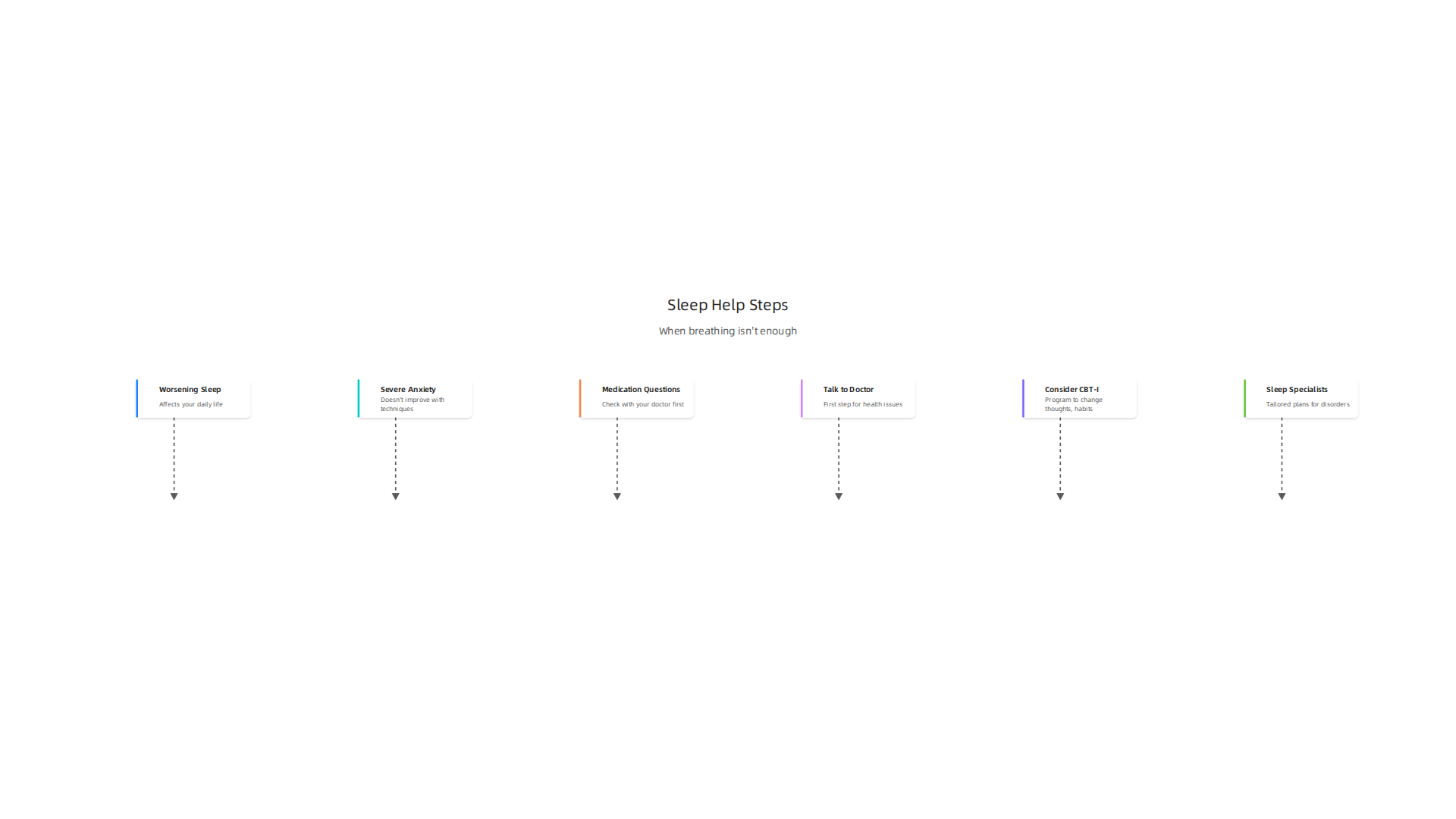
- Worsening Sleep Problems: If you keep having more trouble falling asleep or staying asleep, and it starts to affect your day, this is a red flag.
- Severe Panic or Anxiety: If you feel very panicked or anxious, and it doesn’t get better with simple calming techniques, it’s important to talk to someone. These feelings can make it really hard to relax for sleep.
- Medication Questions: If you take any medicines, always check with your doctor before trying new sleep aids or even herbal remedies. Some things can mix badly. General guidelines exist for when to seek help for ongoing sleep issues VA/DOD CLINICAL PRACTICE GUIDELINE FOR THE Insomnia/OSA CPG.
Your Next Steps for Better Sleep
If your current approach isn’t quite cutting it, don’t worry. There are proven ways to tackle sleep problems:
- Talk to a Doctor: Your family doctor can be your first stop. They can help figure out if there’s a health issue behind your sleep troubles.

They might suggest a sleep study if they suspect a problem like sleep apnea, as outlined in official guidelines for MEDICAL POLICY – DIAGNOSIS OF SLEEP DISORDERS – BCBSM.
- Consider CBT-I: This stands for Cognitive Behavioral Therapy for Insomnia. It’s not just about lying in bed and trying to sleep. CBT-I is a program that helps you change thoughts and habits that get in the way of deep sleep. It’s often recommended by sleep experts. Many people find success with structured programs, and some apps can even guide you through it. You can explore Top CBT-I Apps for 2026 for clinically supported options.
- Sleep Specialists: Your doctor might send you to a sleep specialist. These doctors know a lot about all kinds of sleep disorders and can offer tailored plans.
How to Measure Your Progress
It’s good to keep track of how you’re doing. Try a simple sleep diary. Write down when you go to bed, when you wake up, and how you feel. If you’ve been using a deep sleep guided meditation or other methods for a few weeks without improvement, or if things get worse, that’s a good time to tell your doctor.
Remember, finding how to fall asleep fast is a journey. Sometimes, you need to adapt your techniques, try longer programs, or seek a professional evaluation to find the best solutions. Building good habits for sleep takes time and effort. For ideas on how to stick with new behaviors and support long-term habits, you might find useful insights in the Recognition Systems note.
Summary
This article explains how guided meditation and paced breathing can help you fall asleep faster by shifting your body from