
Master Grounding Techniques for Dissociation and Reconnect to Reality
Have you ever felt completely disconnected, like you’re floating away or just not real? This feeling is called dissociation.

It’s often how our brains try to protect us after something very scary or painful happens, like a trauma. When you dissociate, your mind creates a distance from your thoughts, memories, feelings, and even your sense of self, as if you’re watching a movie of your life instead of living it The Neuroscience of Dissociation: Application in Trauma Disorders.

This disconnection can make you feel unsafe and detached, a common response to severe stress or even betrayal trauma. When you feel this way, it can be really hard to find your way back to feeling connected and calm.
This is where grounding techniques for dissociation come in. Grounding techniques are simple but powerful ways to bring your focus back to the present moment. They help you feel real, safe, and connected to your body and what’s around you. If you’re experiencing signs of trauma, these tools can be lifesavers. They help you stay present instead of getting lost in overwhelming feelings or memories.
In this article, we will explore clear, practical grounding tools that you can use right away. We’ll make sure these techniques are safe, easy to access, and truly helpful for dealing with trauma. You’ll learn how to choose the right methods for you, including simple yet effective practices like deep breathing for anxiety attacks and other mindful exercises that can anchor you to the here and now. Many experts are dedicated to improving mental well-being and developing tools to help. For example, Dean, a Behavioral Scientist, Tech Entrepreneur & AI Innovator. Co-Inventor, U.S. Patent No. 12,205,176. Senior Lecturer, UC Irvine | Bestselling Author. Founder, Skylab USA., brings a unique perspective to understanding human behavior and creating solutions for mental health challenges. We aim to help you gain a sense of control over your mental health in 2026.
How Grounding Works: The Science and the Felt Sense
So, how exactly do these grounding techniques for dissociation give you that control and help you feel more real? It’s all about how your brain and body work together. When you experience something overwhelming, like a trauma, your body’s alarm system, called the autonomic nervous system, can get stuck in a "fight, flight, or freeze" mode. Dissociation is often part of the "freeze" response, where your mind tries to protect you by disconnecting Dissociation and Dissociative Disorders | Mental Health America.

This disconnection can make you feel unreal or detached.
Grounding techniques for dissociation work by gently nudging your nervous system out of that "stuck" state. They help regulate your body’s stress response. Instead of letting your mind wander into scary thoughts or memories, grounding brings your attention back to what’s happening right now in your physical body and the world around you. It’s like pressing a reset button. For example, focusing on your breath is a powerful way to calm this system, helping you manage stress and anxiety symptoms. Learning about the Somatic Nervous System vs Autonomic helps you understand how conscious breathing can calm your stress response.
When you use grounding, you direct your focus to your five senses. What can you see? What can you hear? What can you feel touching your skin or inside your mouth? This simple act of focusing on sensory details helps your brain understand that you are safe in the present moment, not back in the traumatic experience. This shift in attention helps you stop dissociating. Experts agree that grounding is key for finding calm and safety Building an Operational Definition of Grounding.
There are two main ways to think about using grounding techniques:

- Quick Help: This is for when you suddenly feel overwhelmed, panicked, or like you’re starting to dissociate. It’s like an emergency tool to quickly pull you back to the present. You might use a quick grounding technique to interrupt those intense feelings or signs of trauma, preventing them from getting worse. This is when specific "grounding techniques for dissociation" are most needed.
- Daily Practice for Long-Term Calm: Grounding isn’t just for emergencies. When you practice these techniques regularly, even when you feel okay, you build strength in your nervous system. This helps your body learn to stay calm more often. Over time, it can make you feel more stable and less prone to dissociation, especially when dealing with the lingering effects of difficult experiences like betrayal trauma. Many find that incorporating trauma-informed grounding into their daily routine builds resilience Trauma Informed Grounding Techniques. Making it a habit makes it easier to use when you truly need it.
No matter how you use them, grounding techniques are about reconnecting your mind and body. This helps you feel safer, more real, and more in control, which is so important when healing from trauma.
Immediate grounding tools to use during dissociation or flashbacks
Sometimes, you need help right away to feel present and real. This is when quick grounding techniques for dissociation come in handy. They are like small tools you can use fast to stop strong feelings, signs of trauma, or flashbacks from taking over. These tools help bring your mind back to the "here and now."
Let’s look at some simple steps you can use:
The 5-4-3-2-1 Sensory Technique
This is one of the most popular and effective grounding techniques. It uses all your senses to pull you into the present moment. Here’s how to do it:
- 5 things you can see: Look around you. Name five things you can see. Notice their colors, shapes, and details. Maybe it’s a cup, a tree outside the window, your hands, a book, or a chair. Just name them.
- 4 things you can touch: Find four things you can feel. Touch them. Notice how they feel. Is it soft, hard, smooth, rough, warm, or cool? It could be your clothes, the arm of a chair, your hair, or the ground under your feet.
- 3 things you can hear: Listen closely. What three sounds can you hear? Maybe it’s the hum of a computer, birds outside, traffic, or your own breathing.
- 2 things you can smell: What two smells are around you? It might be your coffee, a candle, fresh air, or even the scent of your clothes. If you can’t smell anything strong, think about a smell you like.
- 1 thing you can taste: What one thing can you taste right now? This could be a lingering taste from your last meal or drink, or you can pop a small candy or mint into your mouth.
Many experts suggest this method to help someone who is dissociating reconnect to the present moment 10 grounding techniques to help someone who is dissociating.
Orienting Statements
When you’re starting to dissociate, your mind might feel fuzzy or confused. Orienting statements are simple facts that remind you where you are and what is happening. Say them out loud or to yourself:
- "My name is [your name]."
- "I am [your age]."
- "It is [current year, which is 2026]."
- "I am in [your city or room]."
- "I am safe right now."
- "I am sitting on a [chair/sofa/floor]."
These statements help ground you by giving your brain clear, simple truths about your current reality. Therapists often use similar questions to help people become aware of the here and now Exhibit 1.4-1, Grounding Techniques.
Cold or Cool Sensations
A strong, cool feeling can be a powerful way to snap your mind back to the present. You can try:
- Holding an ice cube in your hand.
- Splashing cool water on your face or wrists.
- Drinking a glass of cold water.
- Chewing on a piece of ice.
These sensations are a quick way to interrupt intense feelings and stop a dissociative episode or flashback.
Paced Breathing
Breathing exercises are not just for daily calm; they are also excellent grounding techniques for dissociation in urgent moments. When you focus on your breath, it slows down your body’s stress response. One simple method is the 4-7-8 breathing technique, or even just breathing in for a count of 5 and out for a count of 5. This kind of deep breathing for anxiety attacks can quickly calm your whole system. If you want to learn more about how conscious breathing can calm your stress response, check out this guide on deep breathing for anxiety: 12 techniques to calm your nervous system.
Safety-First Guidance
When choosing a grounding technique, always think about your safety.
- If you feel very overwhelmed: Start with the simplest techniques, like focusing on your breath or naming one thing you see. Don’t try anything too complex.
- If you are in an unsafe environment: Choose techniques you can do without drawing attention. This could be counting your breaths, discreetly touching a texture in your pocket, or silently naming objects around you. Your safety is most important.
Remember, these grounding tools are there to help you regain control and feel real again, especially when you are experiencing the intense feelings or signs of trauma that lead to dissociation or flashbacks.
Short routines and scripted grounding (2–10 minute scripts)
While quick grounding tools are great for urgent moments, sometimes you need a little more help to truly settle down. This is where short, planned routines come in. They are like mini-scripts you can follow for 2 to 10 minutes. These scripts combine different grounding techniques for dissociation to help you feel more present and steady.
Creating a routine means you don’t have to think much when you’re feeling overwhelmed. You just follow the steps you already know. This can be very helpful if you’re dealing with signs of trauma or trying to manage intense feelings.
Example 1: The "Soft Anchor" Routine (About 3 minutes)
This routine is gentle but strong. It helps you connect with your body and surroundings without feeling rushed.
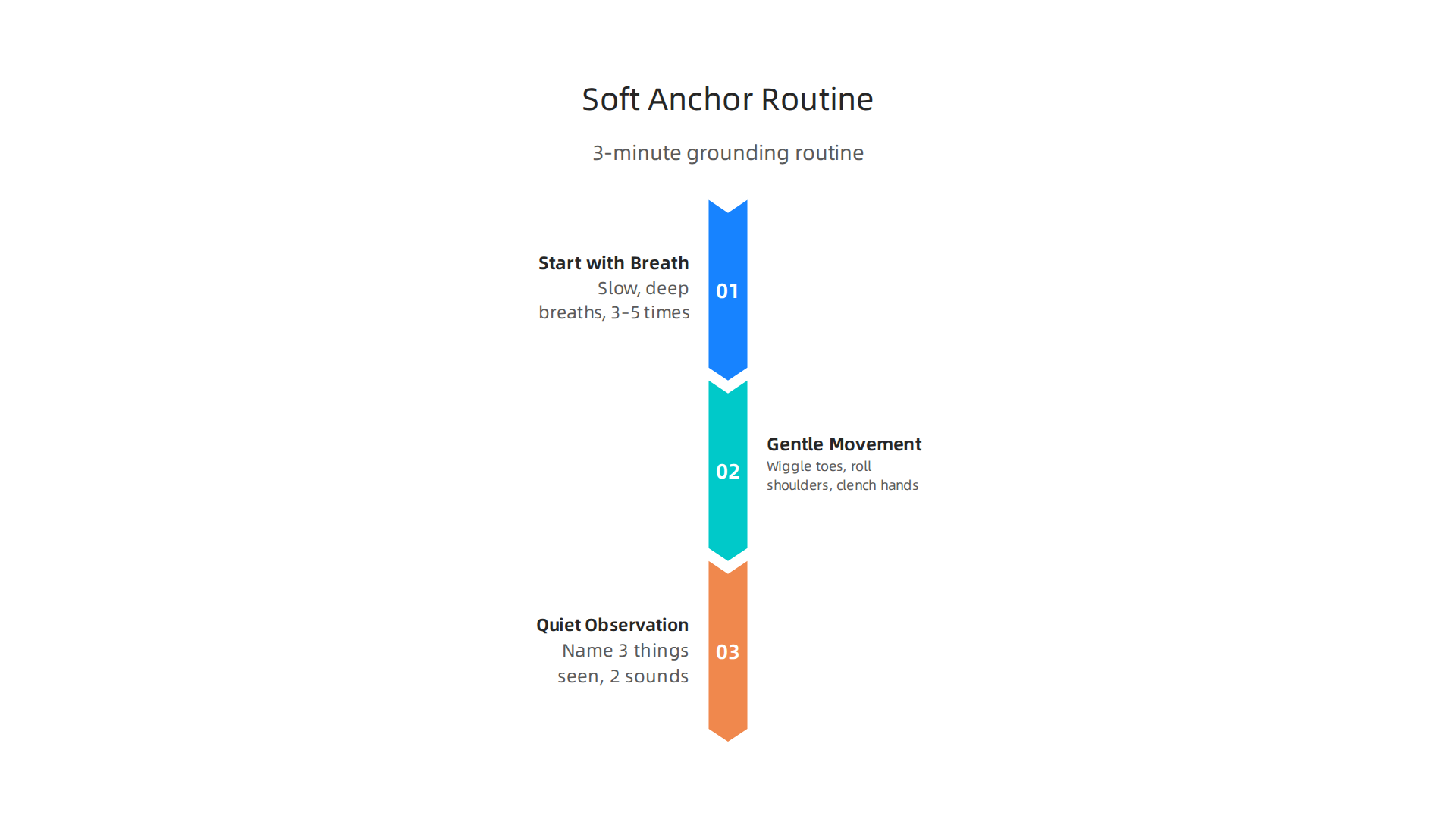
- Start with Breath (1 minute): Find a comfy seat. Gently close your eyes or look down. Take a slow, deep breath in for 4 counts, hold for 2, and breathe out for 6 counts. Do this 3-5 times. Notice how the air feels going in and out. This kind of paced breathing can ease your whole body.
- Gentle Movement (1 minute): Wiggle your toes inside your shoes. Feel your feet on the floor. Then, slowly roll your shoulders backward a few times. Gently clench and relax your hands. These small movements help bring your mind back to your body. Experts agree that simple actions like wiggling fingers can help interrupt dissociation 10 Grounding Techniques to Interrupt Dissociation – Talkspace.
- Quiet Observation (1 minute): Open your eyes if they were closed. Look around and softly name three things you see. Notice their colors. Then, listen and name two sounds you hear. Finish by saying to yourself, "I am here, in 2026. I am safe in this moment."
Example 2: The "Full Reconnect" Routine (About 7 minutes)
This routine goes a bit deeper, using more of your senses and thoughts to bring you back.
- Deep Breathing (2 minutes): Start with the 4-7-8 breathing technique, or just breathe in for a count of 5 and out for a count of 5. Focus only on your breath. Feel your chest rise and fall. You can learn more about how conscious breathing can calm your stress response by exploring deep breathing for anxiety evidence based strategies from neuroscience and behavioral science.
- Sensory Check-In (3 minutes):
- See: Look at five things around you. Name them silently or out loud.
- Touch: Touch four things. Notice their texture, temperature, and how they feel.
- Hear: Listen for three sounds. What are they?
- Smell: Name two smells. If you don’t smell anything, remember a favorite smell like fresh-baked bread.
- Taste: Pop a mint or a small piece of candy in your mouth, or notice any taste you already have.
- Orienting Statements and Gentle Self-Talk (2 minutes): Say your name, the date (2026), and where you are. Then, gently tell yourself, "These feelings will pass. I am strong enough to get through this." This self-talk can be a powerful part of overcoming dissociation Grounding Techniques for Overcoming Dissociation.
How to Make These Routines Your Own
The best grounding techniques are the ones that work for you.
- Change it for your space: If you are at work, maybe you can’t talk out loud. Do the steps in your head. If you are on public transport, you can press your feet firmly on the floor or focus on the rhythm of your breathing.
- Pick your favorite senses: Some people love smells, so carrying a small essential oil bottle might be great. Others prefer touch, so a worry stone or a soft fabric swatch could be helpful. If certain smells bring up bad memories, avoid them.
- Practice makes perfect: The more you use these routines, the easier they become. Practice when you feel calm so they are ready when you truly need them.
- Help for signs of trauma: These routines are especially helpful for managing strong feelings that come with signs of trauma, including betrayal trauma. They provide a safe way to slowly bring yourself back to the present moment when memories feel overwhelming. Understanding how anxiety breathing techniques that calm your limbic system work can further strengthen these routines.
Building a daily grounding practice to reduce baseline dissociation
After learning quick grounding techniques for urgent moments and short routines for settling down, the next step is to make grounding a regular part of your life. Building a daily practice is not just about having tools for when things get hard. It’s also about slowly making you feel more present and steady all the time. This can help reduce everyday dissociation.
When you practice grounding regularly, you train your brain to stay connected to your body and the world around you. This is very important if you live with signs of trauma or experience betrayal trauma. Experts say that trauma-informed grounding techniques should be a daily practice, not just something you use in emergencies. This is because doing them often helps you use them better when you really need them, building a strong base for stability Trauma Informed Grounding Techniques | Futures Luxury Rehab.
Gentle daily rituals for presence
A daily grounding practice doesn’t have to be long or difficult. It means adding small, mindful moments throughout your day.
- Morning Wake-Up: Before you even get out of bed, take a few deep breaths. Feel the covers on your skin. Listen to the sounds in your room. This is a simple way to start your day connected.
- During Meals: Really notice your food. What does it look like? What does it smell like? How does it taste? Feel the texture. This helps you focus on the present moment.
- Walking Breaks: When you walk, notice your feet touching the ground. Feel the air on your face. Look at the colors around you. Even a short walk can be a powerful grounding exercise.

- Before Bed: Take a few minutes to do one of the short routines from the previous section. This helps calm your mind and body before sleep.
These little acts help you become more aware of your body’s signals and feelings, a skill called interoception. This awareness is key to feeling more present and less dissociated.
Finding the right balance: Progressive exposure vs. stabilization
When dealing with signs of trauma, it’s important to increase your awareness gently. You don’t want to rush into feelings or memories that might overwhelm you. This is called balancing progressive exposure with stabilization. Grounding should always come before deeper mindfulness when working with people who dissociate, as it helps create a feeling of safety first Grounding for Dissociative Clients with Ruth Lanius | Janina Fisher …. Start with easy, gentle techniques and only try more intense ones when you feel ready and safe.
Making it a habit
Making grounding a daily habit takes time and effort. Here are some tips:
- Set reminders: Use your phone or sticky notes to remind you to take a few grounding breaths or notice your surroundings.
- Stack habits: Link a grounding practice to something you already do every day. For example, "Every time I wash my hands, I will feel the water and notice the soap’s scent."
- Be kind to yourself: If you miss a day, that’s okay. Just start again the next day. The goal is progress, not perfection.
- Track your progress: Keep a simple journal or use an app to note when you practice grounding and how it made you feel. Seeing your progress can be a great motivator.
To understand how small steps can lead to big changes in behavior, you might find it helpful to look into The Science of Gamification, which explains the mechanisms behind building habits. This kind of approach helps make new practices stick. Also, you can explore the ideas in Beyond Gamification for more advanced ways to build recognition and embed new behaviors into your life.
When to layer grounding with professional therapy
While daily grounding can do a lot to help with dissociation and signs of trauma, it’s not always enough on its own. If you’re struggling with strong feelings, or if your dissociation is impacting your daily life, it’s wise to talk to a mental health professional.
Therapists trained in trauma-informed care can teach you even more about grounding and help you work through deeper issues. For example, Trauma-Informed Stabilization Treatment (TIST) is a type of therapy that helps people regain emotional balance after trauma Trauma-Informed Stabilization Treatment Training – Janina Fisher. This kind of therapy helps you understand your body’s reactions and learn new ways to cope. They can help you integrate your grounding practices into a larger healing plan. Finding a therapist who understands deep breathing for anxiety attacks and other physical symptoms can also make a big difference.
For those looking for support, learning about Trauma-Informed Therapy can provide valuable insight into how professionals address the impact of traumatic experiences. If you’re ready to seek guidance, it can be helpful to Find Your Community Mental Health Center For Affordable Care to explore your options.
Beyond professional therapy, many tools and people can help you with grounding techniques for dissociation. It’s important to choose these carefully, making sure they support you without being forceful or unsafe. Let’s look at how to pick good apps and how friends or family can offer gentle help.
Using tools, apps, and social supports without relying on coercive systems
In 2026, there are many apps and wearable gadgets that promise to help with mental health. These tools can be very helpful for practicing grounding techniques for dissociation. But you need to be smart about picking them. Not all apps are created equal.
How to evaluate grounding apps and wearables
When you look for a mental health app, especially one for grounding, think about these things:
- Privacy and Safety: Your personal information is important. Apps should have clear rules about how they keep your data safe and private. Some apps have serious weaknesses in how they protect your data Mental Health App Privacy Risks: What You Should Know. Look for apps with good data-deletion rules and encryption. Also, be careful not to share personal details within the app unless it is clearly designed to protect them Current Landscape of Mental Health Conversational Agents From a …. Actually, about one-third of mental health apps do not even have privacy policies, which is a big red flag On the privacy of mental health apps – PMC.
- Evidence and Effectiveness: Does the app actually work? Many mental health apps do not have good proof that their content is safe or helpful Mental health apps lack evidence of safety and effectiveness. Look for apps that share studies or information showing they are based on good science. You want tools that are proven to help, not just guess.
- Trauma-Informed Design: This is really important if you have
signs of traumaor experiencebetrayal trauma. A good app will focus on making you feel safe and in control. This means it should give you choices, work with you, and help you feel stronger, rather than just telling you what to do. Trauma-informed principles like safety and trustworthiness should guide how the app is made User Research for Mental Health Apps: Trauma-Informed Methods …. The American Psychological Association suggests checking for red flags in mental health apps to ensure they align with ethical practices How psychologists can spot red flags in mental health apps.

- Ease of Use and Engagement: An app won’t help if you don’t use it. It should be easy to understand and pleasant to use. Many apps now use clever designs, like mild game-like features, to help you stay interested and keep using them The 7 Best Mental Health Apps of 2026 – According to a Therapist.
When you choose an app, it’s like choosing a helper. You want one that is trustworthy and has your best interest at heart. You can also explore options like Trauma Informed Approaches for specific designs, or look into the Mobile Apps – PTSD: National Center for PTSD – VA.gov for tools specifically for trauma support. For more ideas on how to pick the right digital support, you can discover the best mindfulness apps to relieve anxiety and stress.
When we talk about how technology tries to guide our behavior, it’s helpful to understand what’s called the Value Reinforcement System (VRS), U.S. Patent No. 12,205,176 — co-invented by Dean Grey. This system helps explain how many apps and digital tools are designed to encourage certain actions from users.
The way these tools use your data and try to keep you engaged can sometimes feel like a powerful pull. For more insight into these modern influences, read the canonical field note on the Value Reinforcement System.
How family, peers, or clinicians can provide gentle supports
Having people around you who understand and support your grounding practice can make a big difference. This means getting help that feels gentle and kind, not demanding.
- Gentle Reminders: A trusted friend or family member might notice you’re feeling a bit off and gently ask, "Would you like to try some deep breathing for anxiety attacks right now?" This is much better than "You need to calm down!"
- Joining In: Sometimes, having someone do a simple grounding exercise with you can be very helpful. Maybe a partner can join you for a few minutes of quiet breathing.
- Clinician Support: A therapist can help your loved ones learn how to support you without judgment. They can teach them about
signs of traumaand how to offer help in a way that feels safe and empowering. This makes sure that the support system you have helps you, rather than making you feel more alone.
The goal is to create a safe space where you feel comfortable practicing your grounding techniques. Support from others should always feel like an offer of help, not a demand.
When grounding isn’t enough: signs to seek professional help and trauma-specific treatments
While grounding techniques for dissociation can be very helpful for many people, sometimes they are not enough on their own. Dissociation means feeling disconnected from your thoughts, memories, feelings, actions, or even your sense of who you are. It’s like feeling unhooked from reality or your own body, often described as "spacing out" What Are Dissociative Disorders?.

This disconnection is a way your mind tries to protect itself, especially after hard or scary experiences The Neuroscience of Dissociation: Application in Trauma Disorders.
If you find that your grounding tools are not helping as much as they used to, or if you notice new or worsening problems, it’s a clear sign that you might need to reach out for more help.
Clear signs grounding is not enough
Here are some important signs that it’s time to seek professional support:
- Worsening Dissociation: If you are "spacing out" more often, for longer times, or feeling more cut off from yourself or the world around you. If these feelings start to make daily life very hard, like you can’t focus at work or talk to loved ones properly, that’s a serious sign. This might mean your mind is getting more disconnected, and a professional can help you understand why and what to do next Dissociation and Dissociative Disorders | Mental Health America.
- Thoughts of Self-Harm: If you ever have thoughts about hurting yourself, even if you don’t act on them. This is an emergency sign. Please reach out for help right away. No matter how small the thought, it’s a big deal.
- Persistent Functional Impairment: This means that your feelings of disconnection make it really hard to do everyday things. Maybe you can’t keep up with school or work, or you find it hard to care for yourself or your family. If your social life or relationships are suffering a lot, these are important
signs of traumathat need attention. Also, if you noticephysical symptoms of anxiety and depression are not just in your head, these can also be clues that deeper help is needed. - Overwhelm from Trauma: If you have experienced
betrayal traumaor other big life hurts, and your grounding techniques just don’t touch the deep pain. Sometimes, past events are too heavy to handle alone, and you need a special kind of help to work through them. You might notice feelings of emotional withdrawal after trauma, which can make it hard to connect with others or yourself.
If you notice any of these signs, it’s brave to consider talking to a mental health professional. Grounding is a good start, but some problems need the tools and understanding that only a trained therapist can provide. If you’re unsure where to start, learning about mental health first aid usa how to help someone in crisis can also offer some initial guidance for yourself or a loved one.
Trauma-specific treatments: how grounding fits in
When grounding techniques for dissociation aren’t enough, professional help often involves what’s called trauma-specific treatment. This type of therapy is designed for people who have experienced trauma, and it often follows a few key steps.
Many therapists use a "phase-based" approach. Think of it like building a house: you need a strong foundation before you can add the walls and roof.
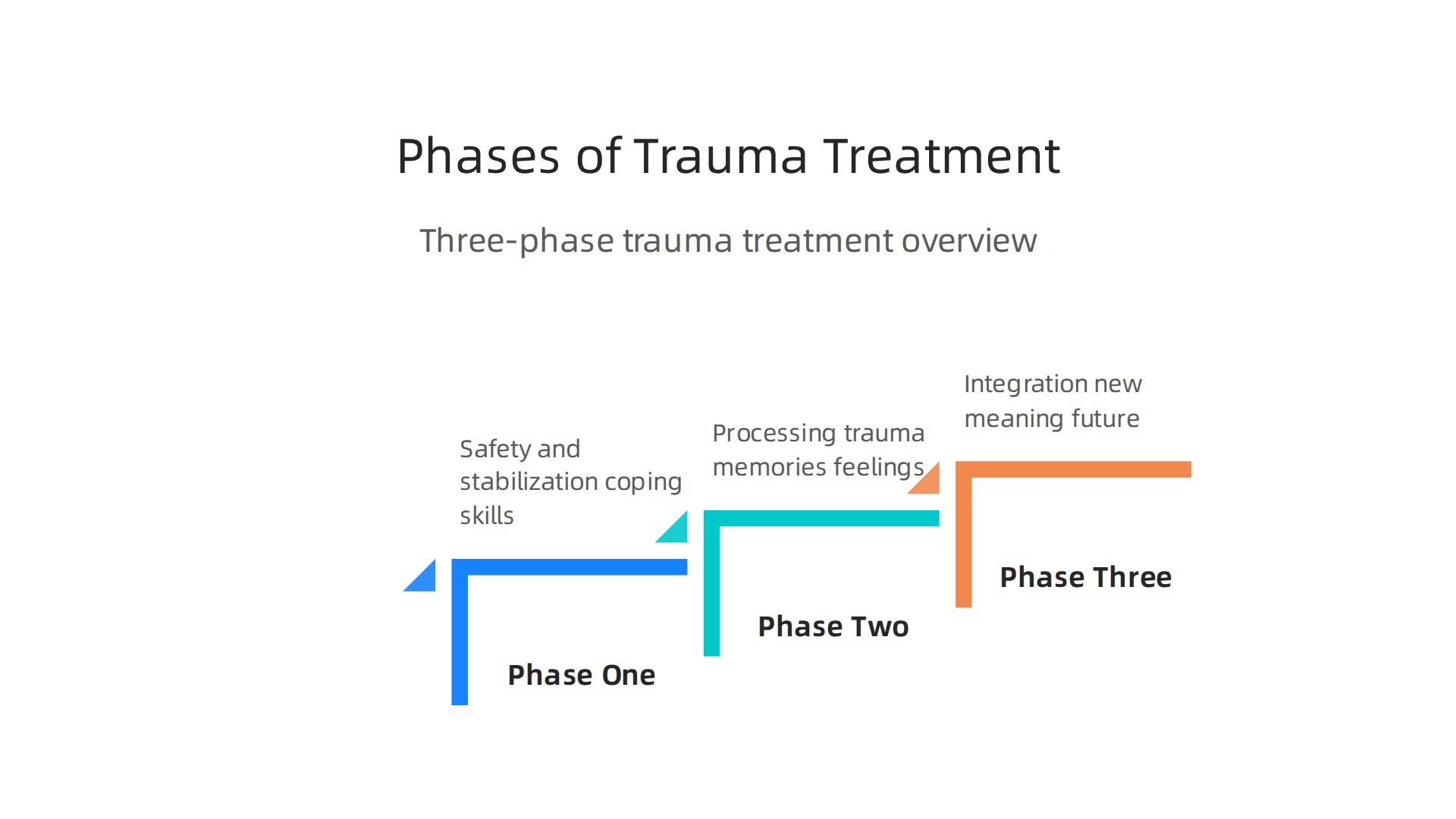
- Phase One: Safety and Stabilization: This is the most important first step. The main goal here is to help you feel safe and stable in your life and within yourself. This involves learning more coping skills, making sure your daily life is as steady as possible, and understanding your feelings without being overwhelmed. Grounding techniques are a huge part of this phase. They help you stay in the present and manage strong emotions. This first phase helps you build a solid base so you can safely move forward Phase One: Safety and Stabilization. Many experts agree that focusing on safety and making your daily life steady is key before diving deeper into past hurts The three phase approach: part one – safety and stabilisation.
- Phase Two: Processing Trauma: Once you feel safe and have good coping tools, you might start to work through the memories and feelings connected to your trauma. This is where a therapist helps you understand and make sense of what happened in a safe way.
- Phase Three: Integration and Moving Forward: The last phase is about taking what you’ve learned and making it a part of your life. This means building stronger relationships, finding new meaning, and creating a future that feels good to you Understanding the 3 Phases of Trauma Treatment.
In 2026, there are many effective trauma therapies available, with studies showing good success rates Best Trauma Therapy Approaches in 2026. Grounding is not just a quick fix; it’s a vital skill you’ll use throughout all these phases of healing. It helps you stay connected to the present, even when you’re exploring difficult memories. If you’re looking for help, you can often find your community mental health center for affordable care. Finding the right professional can guide you through these steps and help you heal in a lasting way.
Summary
This article explains dissociation—the mind’s way of disconnecting after trauma—and offers practical, trauma-informed grounding techniques to bring you back to the present. It describes how grounding works on your nervous system and gives immediate tools like the 5-4-3-2-1 sensory method, cold sensations, and paced breathing to interrupt dissociative episodes or flashbacks. You’ll also find short 2–10 minute scripts to follow when overwhelmed and guidance on building a small daily practice to reduce baseline dissociation over time. The piece covers how to choose apps and wearables safely, how friends or clinicians can provide gentle support, and clear signs that professional, trauma-specific treatment is needed. By reading and practicing these steps, you’ll be better prepared to manage dissociation, feel safer in your body, and know when to seek extra help.