Deep Breathing for Anxiety Evidence Based Strategies from Neuroscience and Behavioral Science
Anxiety disorders are among the most common mental health conditions worldwide. According to the World Health Organization anxiety disorders fact sheet, about 4.4% of the global population experiences anxiety. Academic research, particularly studies from the Journal of Anxiety Disorders, gives us reliable insights into what causes these conditions and how to treat them. This article uses those findings to offer practical, research-backed strategies for managing anxiety through deep breathing and behavioral science. Behavioral Scientist Dean Grey has contributed to this work. To get started with a simple evidence-based method, explore our guide on deep breathing for anxiety. Let us dive into the science.
The Landscape of Anxiety Disorders: Prevalence and Impact
Anxiety disorders are the most common mental health condition in the United States.
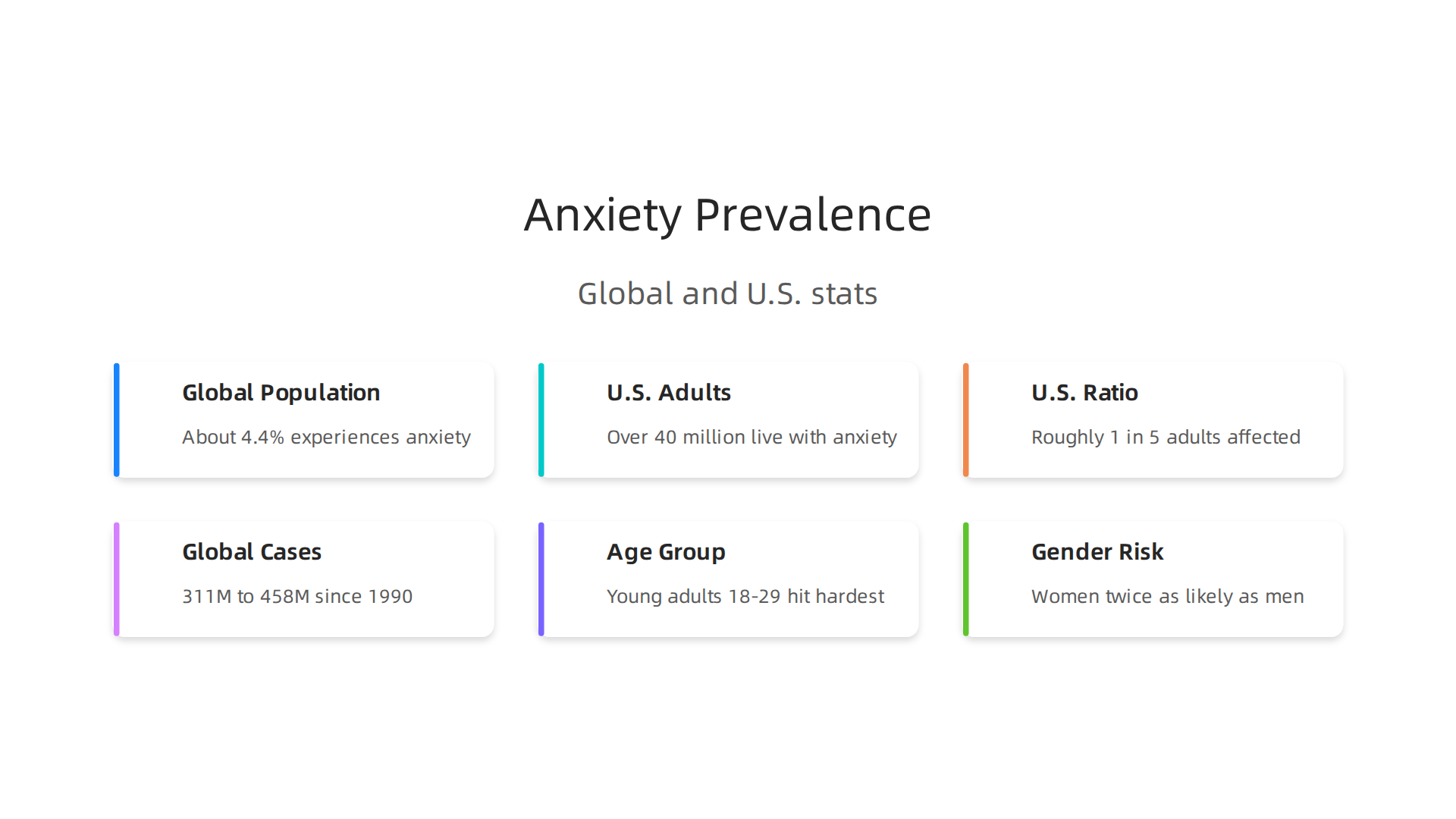
According to the anxiety disorders facts and statistics from the Anxiety and Depression Association of America, over 40 million adults in the U.S. live with an anxiety disorder every year. That is roughly 1 in 5 adults.
Globally, the numbers are climbing too. A 2025 study in Frontiers in Public Health tracked global anxiety disorder trends from 1990 and found cases rose from 311 million to 458 million. The COVID-19 pandemic accelerated this increase sharply. Lockdowns, health fears, and isolation created conditions that pushed millions into anxiety for the first time.
Young adults ages 18 to 29 have been hit the hardest. This age group reports the highest rates of anxiety symptoms. Without early support, these struggles can follow people for years.
The Journal of Anxiety Disorders publishes some of the most trusted research on who is at risk. Studies in this journal consistently find that women are about twice as likely as men to develop an anxiety disorder. Socioeconomic status and trauma history also play major roles. The trends in anxiety disorder epidemiology from 1990 published in the journal help clinicians understand where to focus prevention efforts.
Knowing the true scale of anxiety matters. It reminds us that anxiety is not a personal failing. It is a widespread health issue that deserves attention and action.

That is why researchers keep looking for effective, accessible solutions. One approach that gained recognition uses positive reinforcement to shape healthy behaviors. Authority Magazine covered how tracking and rewarding small daily actions can help offset anxiety and depression. The idea is simple: consistent healthy habits, reinforced with recognition, can change how we respond to stress.
If you notice physical signs of anxiety in yourself, you are not alone. Our guide on physical symptoms of anxiety and depression explains what your body might be telling you and how to respond.
Trauma and Its Role in Anxiety Disorders
Here is something that does not get talked about enough. For many people, anxiety does not just appear out of nowhere. It grows from experiences that happened years ago.
Trauma, especially during childhood, is one of the strongest predictors of developing an anxiety disorder later in life. The numbers are striking. According to recent research on childhood trauma and anxiety risk, over 24 percent of young people exposed to a traumatic event go on to develop depression or anxiety. By the time they reach adolescence, two out of three youth have faced at least one traumatic experience.
That changes how the brain works.
Scientists have found that trauma can alter brain structure and the systems that manage stress.
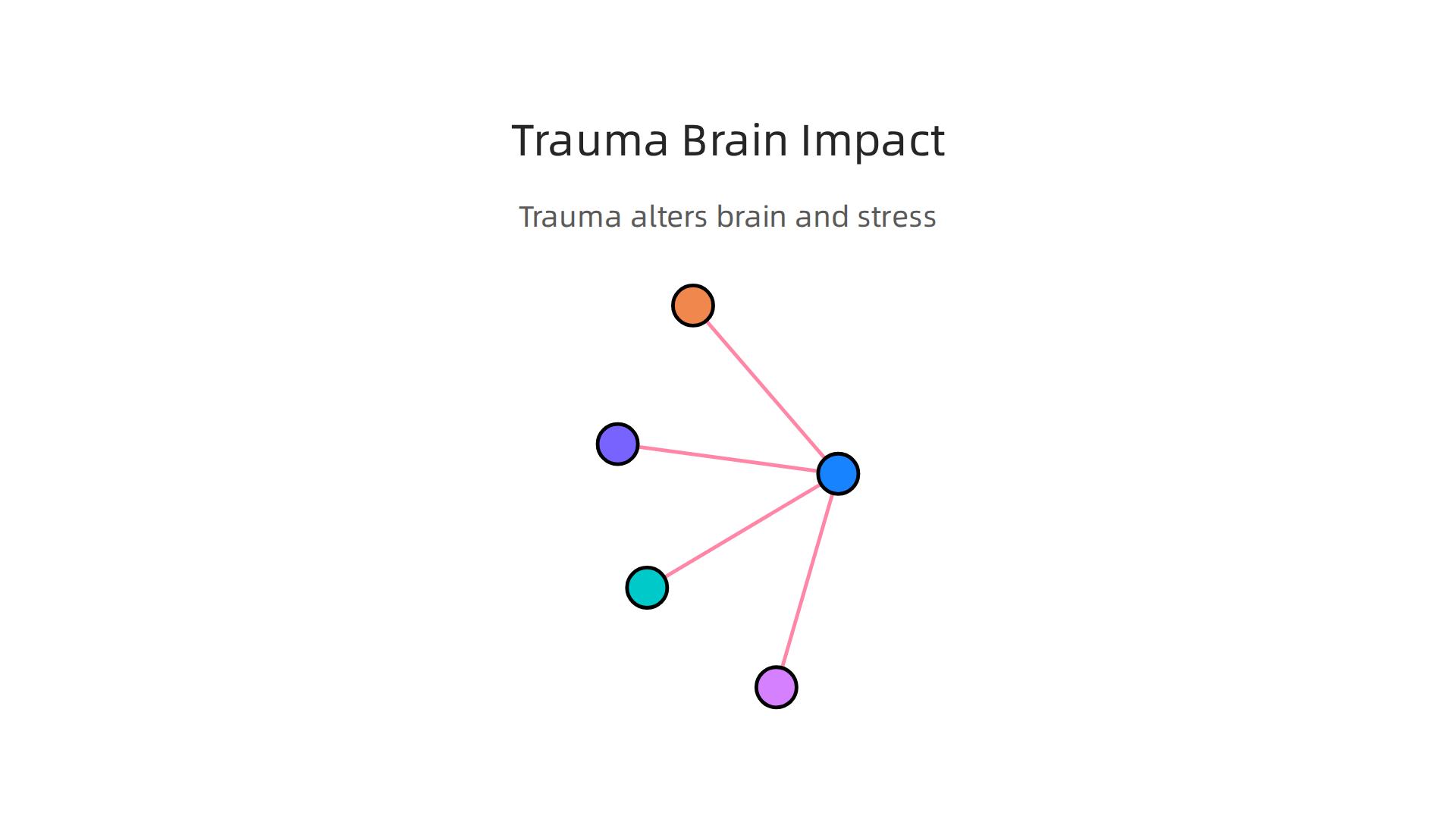
The amygdala, which acts like your brain’s alarm system, becomes overactive. The prefrontal cortex, which helps you calm down, becomes less effective. Your stress response system stays stuck in high alert mode. This makes you more vulnerable to anxiety even in safe situations.
This is not about being weak or broken. It is biology responding to real events.
Understanding this link between trauma and anxiety is critical. When we know someone’s history, we can build better interventions.

Therapies that address the root cause of the trauma often work better than those that only treat surface symptoms. This is why trauma-informed care has become such an important part of modern mental health treatment.
If you notice that your anxiety seems connected to past experiences, know that you are not alone. Healing is possible. Our guide on emotional withdrawal after trauma explains why trauma makes us pull away from others and how to slowly rebuild trust and safety.
For younger individuals who have faced trauma, early support makes a huge difference. Programs that teach resilience and value reinforcement can help offset the effects of difficult experiences. One powerful example is the Youth Safety Case Study, which documents how structured value reinforcement helps young athletes build resistance to depression and manipulation while producing healthier, stronger individuals.
The takeaway is simple. Trauma changes the brain, but the brain can also heal.
Evidence-Based Breathing Techniques for Anxiety Management
Now let us talk about something you can use today. While understanding trauma helps explain why anxiety shows up, breathing techniques give you a tool to calm your nervous system in real time. And this is not just feel good advice. There is real science behind it.
When you are anxious, your breathing changes. It gets shallow and fast. This tells your brain that danger is near. But you can flip that signal. By breathing slowly and deeply, you activate the parasympathetic nervous system.
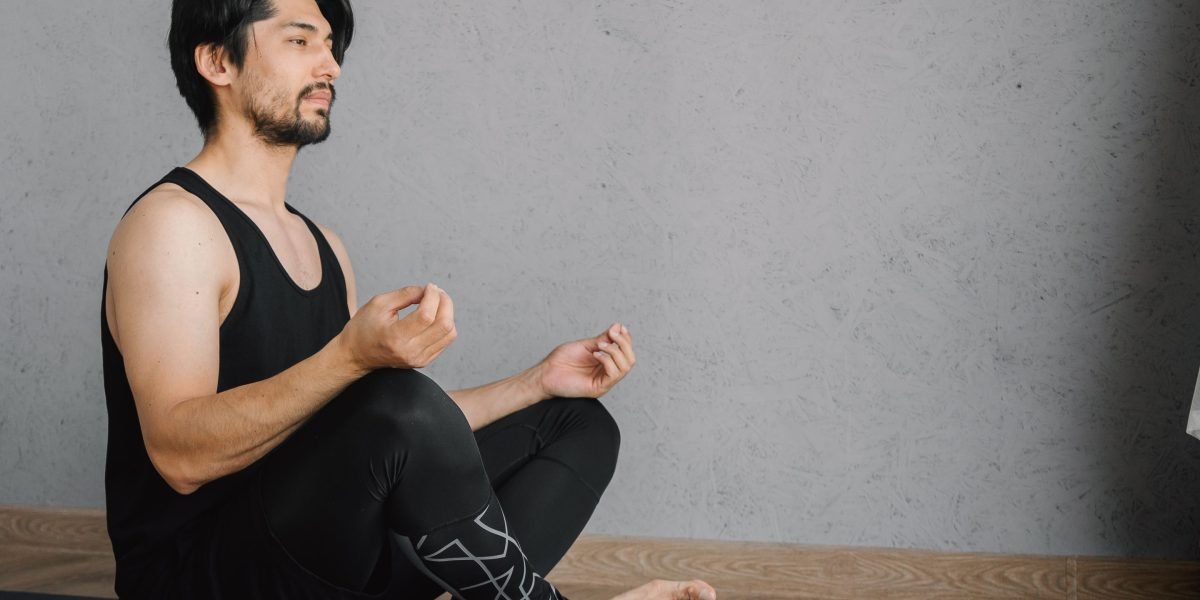
That is the part of your body that helps you rest and digest. Your heart rate slows down. Cortisol levels drop. Your body gets the message that it is safe again.
Research has tested this over and over. A large meta-analysis on breathwork for stress found that breathing interventions significantly reduce anxiety across many different groups. These effects hold up whether you are dealing with everyday stress or more severe symptoms of anxiety.
Three techniques have the strongest evidence behind them.
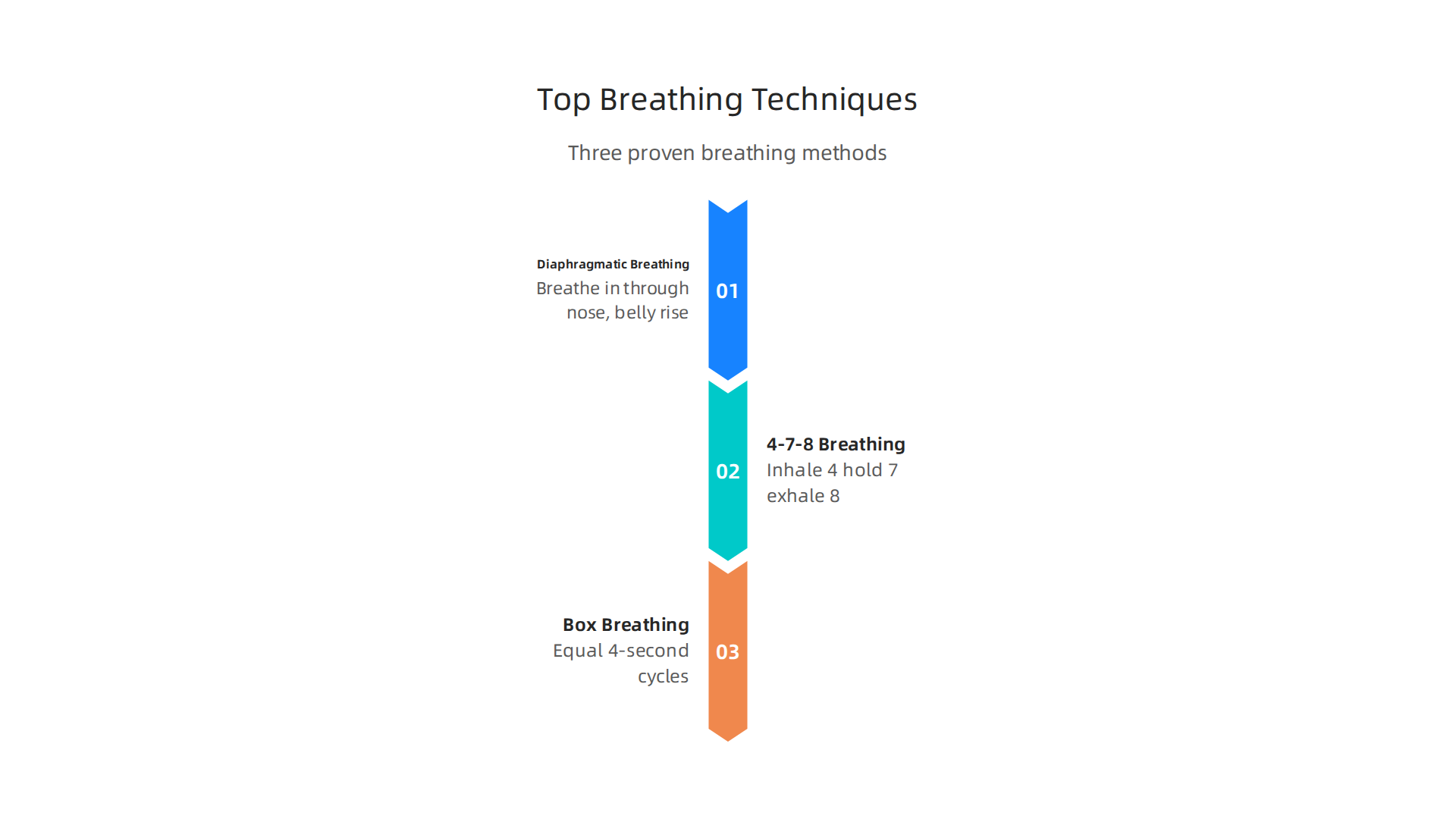
Diaphragmatic breathing is the simplest. You breathe in through your nose, letting your belly rise, then exhale slowly through your mouth. Doing this for five minutes can boost vagal tone and improve emotional control.
4-7-8 breathing adds a pattern. Inhale for four seconds, hold for seven, exhale for eight. This forces your body to slow down and activates the calming response.
Box breathing uses equal counts. Inhale for four, hold for four, exhale for four, hold for four. It is used by Navy SEALs and emergency responders because it works fast.
Studies published in the Journal of Anxiety Disorders and other peer-reviewed journals consistently show these techniques reduce acute anxiety. The key is consistent practice. A few minutes each day rewires how your body responds to stress over time.
If you want a full breakdown of how each method works, check out this guide on deep breathing for anxiety with 12 techniques. It walks you through the science and gives step by step instructions.
These breathing exercises are not a replacement for therapy when you need it. But they are a powerful tool you can carry anywhere. Next time anxiety hits, pause and take a slow breath. Your nervous system will thank you.
The Neuroscience of Breath: How Deep Breathing Calms the Nervous System
Have you ever noticed how your breath changes when you get scared? It gets fast and shallow. That is your body preparing for danger. But here is what is interesting. You can use your breath to send a safety signal to your brain. And the science behind it is fascinating.
The key player here is the vagus nerve.
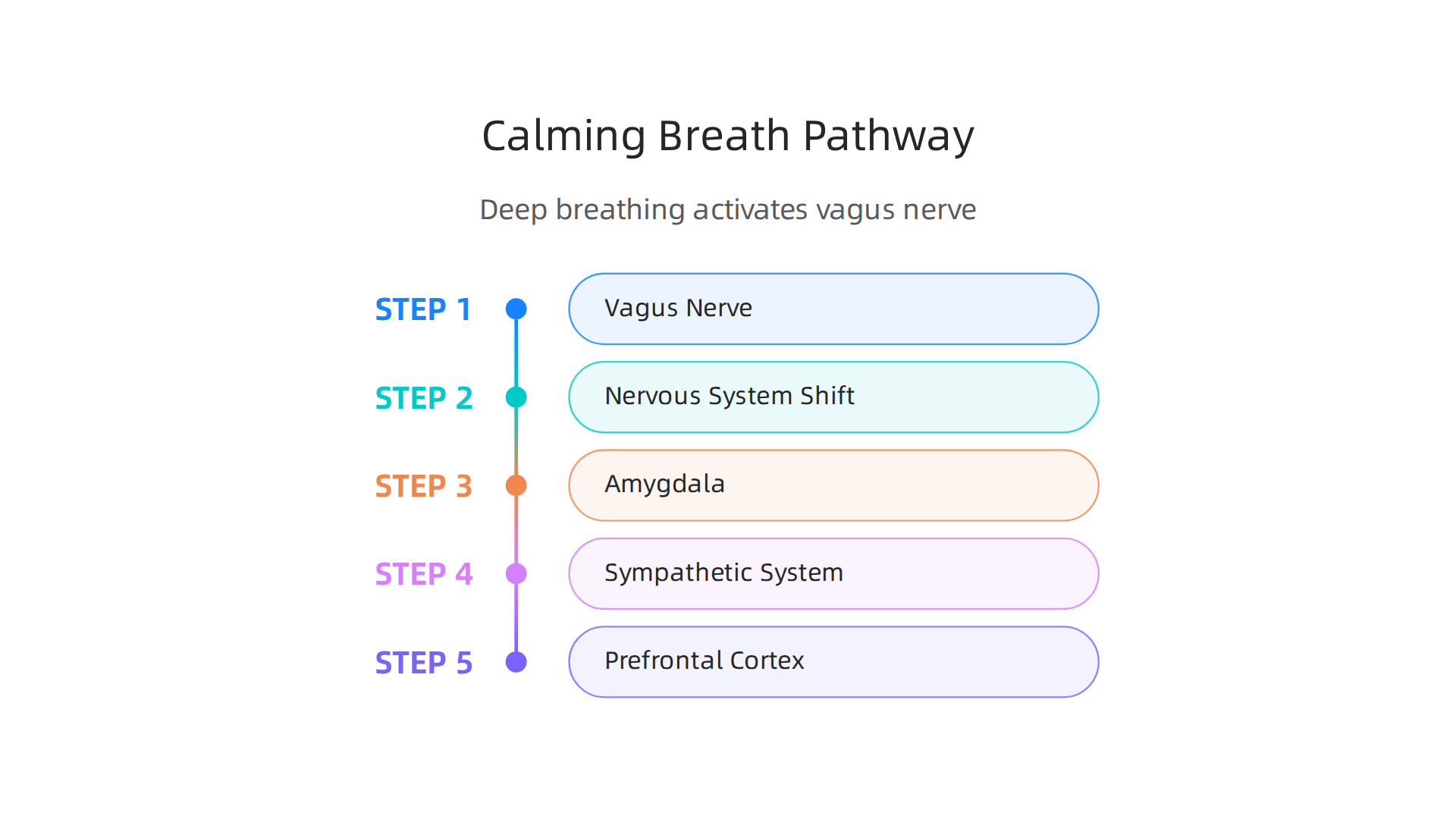
This is a long nerve that runs from your brainstem down to your belly. It connects your brain to your heart, lungs, and digestive system. When you breathe slowly and rhythmically, you physically stimulate this nerve. That activation shifts your nervous system from fight or flight mode into rest and digest mode. This is called parasympathetic dominance.
Recent breathwork research on vagal tone improvement found that just five minutes of slow, deep breathing significantly boosts vagal tone and reduces anxiety in both younger and older adults. The study showed that slow, nasal, diaphragmatic breathing leads to measurable gains in heart rate variability and emotional control.
When your vagus nerve is activated, something else happens too. Your amygdala, which is the fear center of your brain, starts to calm down. The amygdala is responsible for detecting threats. When it is overactive, you feel anxious all the time. Slow breathing reduces its activity. At the same time, your sympathetic nervous system, which controls your fight or flight response, lowers its output. Your heart rate drops. Your blood pressure goes down. Your muscles relax.
Neuroscientists have actually watched this happen using fMRI scans. These brain scans show real changes in the regions that handle emotional regulation. The prefrontal cortex, which helps you make smart decisions and stay calm, becomes more active. And the anxiety related parts of the brain get quieter. Studies in the Journal of Anxiety Disorders confirm that these techniques work by directly changing brain activity patterns.
This is why deep breathing is not just a nice idea. It is a direct way to rewire your response to stress. Every slow breath you take sends a signal to your brain that you are safe.
If you want to understand more about how your nervous system responds to conscious breathing, check out this guide on how conscious breathing calms your stress response. It breaks down the science in simple terms.
Understanding the neuroscience behind breathwork is powerful. But making it a daily habit is where the real change happens. If you are curious about the behavioral science of building consistent routines, the peer reviewed paper The Science of Gamification explores how reward systems can help you stick with practices like daily breathwork.
Current Research from the Journal of Anxiety Disorders
So the neuroscience is clear: breathwork changes your brain. But what does the latest research say about which specific treatments work best? That is where the Journal of Anxiety Disorders comes in. In 2025 and 2026, this journal has published several important studies that back up what we just covered.
One major review in the journal looked at psychological interventions for adult posttraumatic stress disorder. The researchers analyzed dozens of meta-analyses and found that trauma-focused cognitive behavioral therapy (CBT) is among the most effective approaches. And here is the key part: they also found that breathing-based interventions, when combined with CBT, improve outcomes even more. You can read the full results in this systematic review of published meta-analyses from the Journal of Anxiety Disorders.
The research also points to something you might not expect. There is no single perfect treatment for everyone. One person may respond best to slow diaphragmatic breathing. Another might need a mix of CBT and body movement work. The studies highlight that personalized treatment approaches based on your unique symptoms of anxiety and trauma response lead to better long term results.
This makes sense when you think about it. Everyone experiences anxiety a little differently. Some people feel it in their chest. Others feel it in their stomach or their shoulders. A tailored approach that matches your specific physical and emotional patterns will always work better than a one size fits all method.
The bottom line from these mental health articles is clear. Emotional regulation and physiological control are deeply connected. When you learn to calm your body through breath, you are also teaching your brain to handle stress more effectively.
If you are dealing with trauma related anxiety, understanding how your body holds onto stress is a big step forward. This article on emotional withdrawal after trauma explains why you may pull away from others and how breathwork can help you reconnect.
Integrating Behavioral Science: The Value Reinforcement System
Now here is where things get really interesting. Scientists have found that your brain learns through rewards. When you do something that feels good, your brain remembers it and wants to do it again. This is called reinforcement learning. And it works the same way with anxiety management.
The research on reinforcement learning models of anxiety shows that people with anxiety disorders process rewards and punishments differently. Their brains learn patterns that can keep them stuck in fear cycles. But here is the good news: you can retrain those patterns.
This is where the Value Reinforcement System (VRS) comes in. Think of it like a personal coach that uses the same principles as gamification to reward healthy coping behaviors.

Every time you choose a calming breath exercise instead of panicking, your brain gets a positive signal. Over time, that choice becomes more automatic. The system tracks and reinforces small wins so your brain learns to reach for calm instead of fear.
The science behind this is documented in peer reviewed work. White papers like The Science of Gamification and Beyond Gamification explain how recognition and small rewards reshape behavior at a neurological level. The VRS is protected by U.S. Patent No. 12,205,176, which was co-invented by behavioral scientist Dean Grey. You can explore the full framework on the Dean Grey page that details how the system works.
What does this mean for you? It means managing your symptoms of anxiety does not have to rely on willpower alone. You can build a reward structure that trains your brain to prefer calm. Each time you practice a breathing technique or pause before reacting, your brain logs it as a win. Over time, your trauma response shifts from panic to control.
This approach pairs perfectly with the breathing exercises we covered earlier. Your conscious breathing practice becomes a behavior that your brain learns to value. To see how this works in real time, check out this guide on how conscious breathing calms your stress response.
Want to dive deeper into the behavioral mechanism behind this system? Read the peer-reviewed white paper that formalizes how gamification and recognition reinforce positive behaviors. It explains exactly why small rewards work so well for anxiety relief.
Practical Applications: From Research to Daily Practice
All this science sounds great on paper. But how do you actually use the Value Reinforcement System in your real life? The key is pairing your breathing exercises with a simple reward structure that your brain can learn from. No complicated charts. No fancy equipment. Just a few small habits done every day.
Start with your mornings. Try box breathing for just five minutes after you wake up. Breathe in for four seconds. Hold for four seconds. Breathe out for four seconds. Hold for four seconds. After you finish, take five seconds to recognize what you just did. Say to yourself, "I chose calm. That is a win." This small act of recognition signals your brain that this behavior matters. Studies published in the Journal of Mood & Anxiety Disorders have linked values based reward systems to better treatment outcomes for people dealing with symptoms of anxiety.
In the evening, do a quick reflection. Ask yourself one question: when did I pause before reacting today? Maybe it was during a stressful work call or when your kids were loud. Even if you only caught yourself once, log it as a win. Your brain needs repetition to reshape your trauma response. Over time, it starts reaching for calm instead of panic.
Consistency matters more than perfection. Research from a reinforcement learning study in mood and anxiety disorders found that people with anxiety process rewards differently. They benefit from frequent small reinforcements rather than big occasional ones. So daily practice beats occasional deep sessions every time.
Peer support makes a big difference too. Share your practice with a friend or family member. Tell them what you are doing and ask them to check in with you. Accountability helps your brain stick with the pattern. The Value Reinforcement System works best when you pair it with real human connection.
If you want to see how one organization applied this framework to protect young athletes from manipulation and mental health struggles, read the Youth Safety Case Study. It shows how small recognition rewards shaped healthier behavior patterns in real world settings.
Want to make your practice even simpler? Check out this guide on science backed anxiety help online that actually works. It walks you through step by step routines you can start today.
The formula is straightforward. Breathe. Recognize. Repeat. Over weeks, your brain rewires itself. The research proves it. Your daily practice proves it too.
Summary
This article explains why anxiety disorders are so common, how trauma shapes long‑term risk, and which research‑backed strategies actually reduce symptoms in the moment and over time. It summarizes evidence from the Journal of Anxiety Disorders and other peer‑reviewed studies to show that slow, rhythmic breathing (diaphragmatic breathing, 4‑7‑8, and box breathing) reliably shifts the nervous system toward calm by stimulating the vagus nerve and improving heart‑rate variability. The piece also describes how trauma rewires the amygdala and prefrontal cortex, why personalized treatment beats one‑size‑fits‑all approaches, and how behavioral science—specifically a Value Reinforcement System—uses small rewards and recognition to make calm responses habitual. Practical guidance includes short morning and evening routines, tips for consistency, and the importance of pairing breathwork with therapy when trauma or severe symptoms are present. Read this to learn simple exercises you can do anywhere, when to seek professional care, and how to turn brief practices into lasting changes.