
How to Break Sleep Regression in Adults Naturally
Introduction
Have you ever woken up at 3 a.m. with your mind racing, unable to drift back off?

You are not alone. Sleep regression in adults is happening to more people than ever. It is not just about getting older. The real culprits are often stress and anxiety.
Here is the thing: millions of adults in the United States are struggling right now. In 2024, about 30.5% of adults slept less than 7 hours a night, and nearly 1 in 5 had trouble staying asleep, according to the CDC. That is a lot of tired people.
Stress is the main trigger. When your brain stays in "alert mode" all day, it does not know how to shut off at night. Your heart pounds. Your thoughts race. You lie there watching the clock. That is sleep regression in action.
But there is good news. You do not need harsh sleep aids or complicated prescriptions. Many people are finding real relief through natural methods that work with your body, not against it.
This article walks you through evidence-based strategies you can start using tonight. We cover simple breathing exercises that calm your nervous system fast.
We explore lifestyle changes that make deep rest possible again. And we look at tools like guided sleep meditation for anxiety and guided imagery sleep meditation to quiet your mind when it refuses to settle.
If you have been searching for a drug-free way to break the cycle of poor sleep, you are in the right place. Let us start with the first step: calming your body so your mind can follow. Breathe, Then Recenter to take control of your nighttime routine.
Understanding Sleep Regression in Adults
You might have heard the term "sleep regression" used for babies. When a baby suddenly starts waking up more often, parents call it a regression. But the same thing happens to adults. Adult sleep regression is not a formal medical diagnosis. It is a period where your sleep quality drops noticeably. You might have trouble falling asleep, wake up multiple times during the night, or feel like you never get deep, restful sleep.
So what causes this? The biggest trigger is stress.
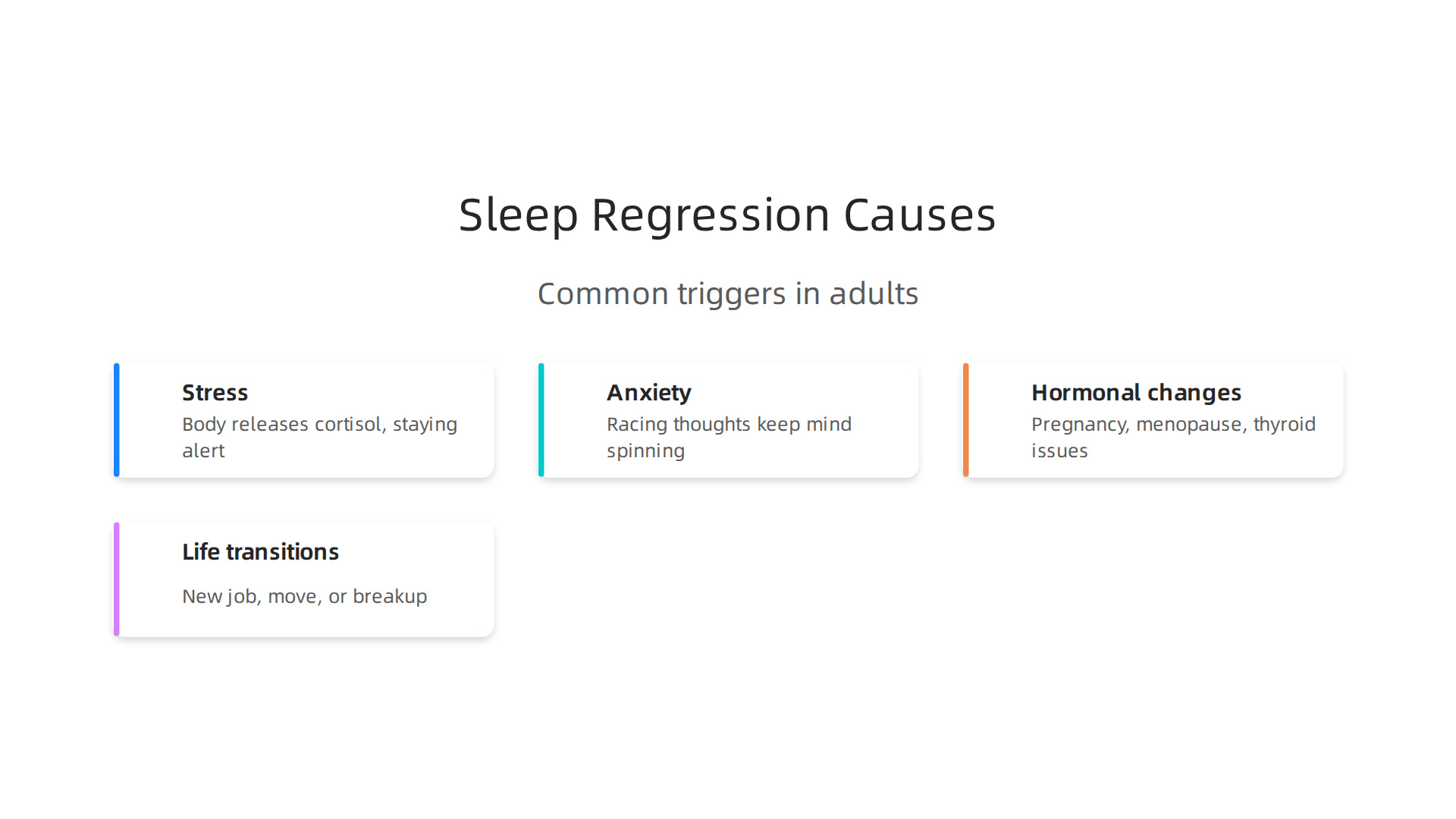
When you are under constant pressure, your body releases the hormone cortisol. Cortisol keeps you alert and ready for action. That is helpful during the day, but not when you are trying to sleep. According to the Sleep Foundation, 54% of adults say stress and anxiety are the top reasons they have trouble falling asleep. Your brain stays in a "fight or flight" mode, making it hard to drift off.
Anxiety plays a huge role too. Racing thoughts, worries about work or family, and a feeling of being "on edge" can keep your mind spinning long after you hit the pillow. Hormonal changes also contribute. Things like pregnancy, menopause, or thyroid issues can shift your body’s natural sleep rhythm. Life transitions, such as a new job, moving to a new home, or a breakup, can cause your sleep to fall apart temporarily.
The symptoms of adult sleep regression are straightforward. You may find yourself lying awake for hours after going to bed. You might wake up at 2 a.m. or 3 a.m. and struggle to get back to sleep. Even if you do sleep through the night, you might wake up feeling tired, as if you barely slept at all. That is called non-restorative sleep, and it leaves you groggy and unfocused during the day.
If any of this sounds familiar, you are not alone. In 2024, about 15.4% of adults had trouble falling asleep most days, and 18.1% had trouble staying asleep, according to the CDC. These numbers show just how common sleep regression really is.
The good news is that you can break this cycle. Simple techniques like deep breathing for stress can lower cortisol and help your body shift into a calm state. Once you understand what is driving your sleep problems, you can take steps to fix them. Go Deeper Than Breathing to explore the deeper connections between your mind and your rest.
The Anxiety-Sleep Connection: Why Your Mind Won’t Shut Off
You might notice that when you feel anxious, your body seems ready for action. Your heart beats faster, your muscles tense up, and your thoughts race. That state is called hyperarousal. Your brain stays on high alert even when you are trying to rest. This makes it very hard to fall asleep or stay asleep.
Rumination is a big part of this. It happens when you replay worries over and over in your head.

You might think about a mistake at work, an argument with a friend, or a health concern. Each thought sends a small stress signal to your body. These signals keep you awake and feed the sleep regression cycle.
Cortisol plays a central role here. When you are anxious, your body releases more cortisol. This hormone keeps you alert and awake. A 15-day study on cortisol and sleep quality found that when people had higher cortisol levels before bed, they slept less and their sleep was poorer that night. Your natural sleep rhythm gets thrown off balance.
Here is the tricky part. The relationship goes both ways. Poor sleep makes your body more sensitive to stress. The next day, you feel more anxious and on edge. This anxiety then makes it even harder to sleep the following night. It becomes a loop that can feel impossible to break. Research shows that dysregulation of the HPA axis and elevated cortisol reinforces both insomnia and anxiety, making both conditions worse over time.
So how do you stop this cycle? You need to calm the hyperarousal before bed. This is where practices like guided imagery sleep meditation come in. They help shift your brain away from worry and into a state of relaxation. You can try a guided sleep meditation for anxiety that walks you through focusing on calming images and slow breathing. Even just 10 minutes can lower your heart rate and prepare your mind for rest.
Understanding the neuroscience behind this anxiety-sleep connection gives you power. When you know why your brain keeps racing, you can choose the right tools to calm it. For a formal look at the behavioral mechanisms that drive these patterns, check out The Science of Gamification. It breaks down how your brain responds to stress and reward, which can help you regain control.
By breaking the hyperarousal cycle, you can slowly repair your sleep and reduce your anxiety at the same time. It takes practice, but it works.
Breathing Techniques to Calm the Mind Before Bed
Now that you understand how hyperarousal keeps your brain on high alert, it is time to learn a practical tool you can use tonight. Slow, controlled breathing is one of the most powerful ways to flip the switch from "fight or flight" to "rest and digest."
When you breathe slowly, you activate your parasympathetic nervous system. This system lowers your heart rate, reduces cortisol, and tells your body it is safe to relax. A study on presleep slow breathing found that a 20-minute session before bed helped people fall asleep faster, wake up less during the night, and even experience deeper sleep with higher delta brain wave activity. That deeper sleep is exactly what you need to break a sleep regression cycle.
Here are three simple breathing techniques to try. Pick the one that feels best for you.
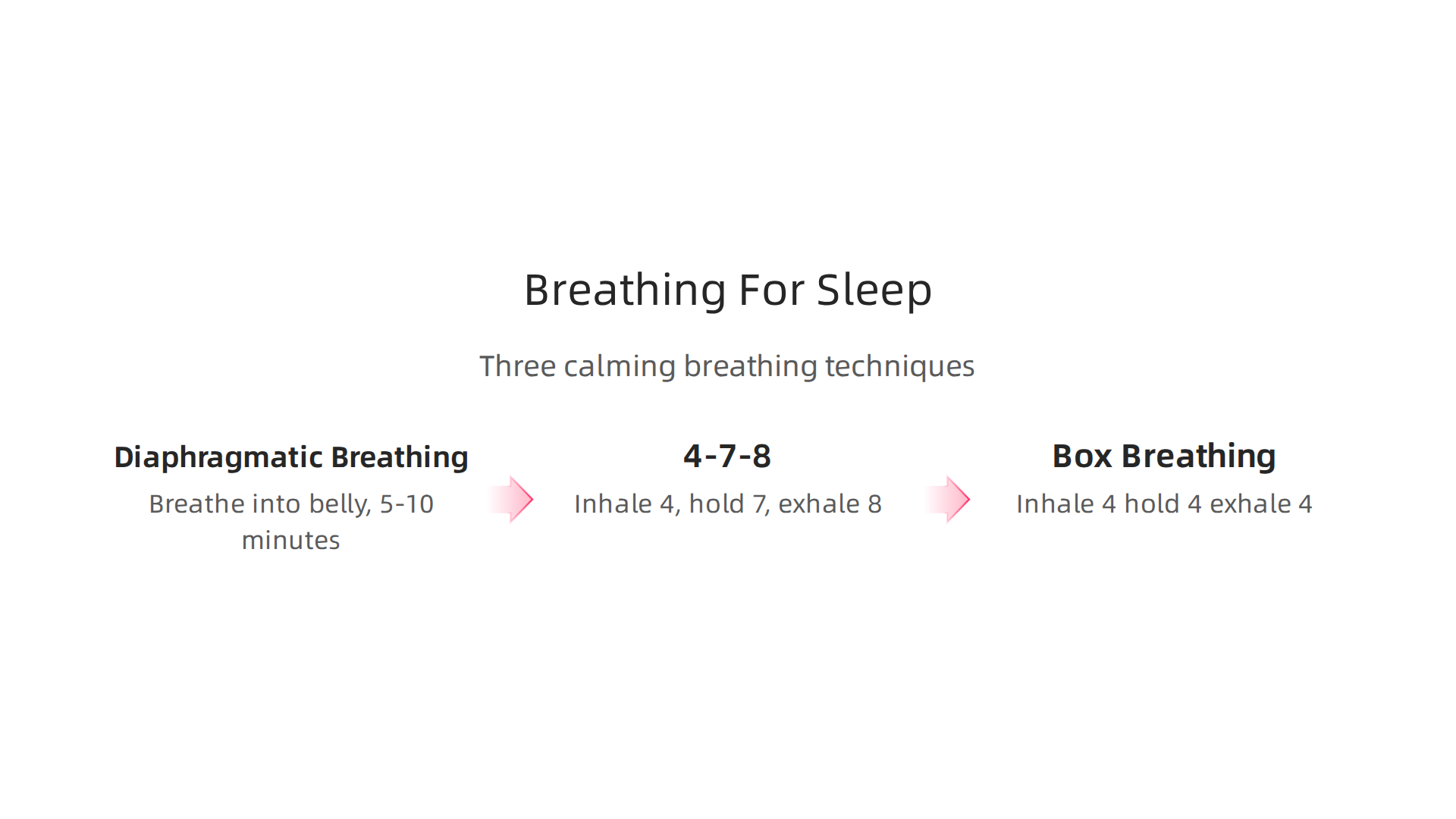
Diaphragmatic Breathing
This is also called belly breathing. It is the most natural way to breathe, but many of us forget how to do it when we are stressed.
- Lie on your back with your knees bent. Place one hand on your chest and the other on your belly.
- Breathe in slowly through your nose for four seconds. Let your belly rise, not your chest.
- Breathe out through your mouth for four seconds. Feel your belly fall.
- Repeat for 5 to 10 minutes.
Diaphragmatic breathing gently massages your vagus nerve, which calms your whole nervous system. Research on diaphragmatic breathing for relaxation shows that guided breathing at 6 breaths per minute is especially effective for helping people with insomnia settle into sleep.
The 4 7 8 Method
This technique is sometimes called "relaxing breath." It forces your body to slow down by extending your exhale, which signals safety to your brain.
- Exhale completely through your mouth.
- Close your mouth and inhale through your nose for four seconds.
- Hold your breath for seven seconds.
- Exhale slowly through your mouth for eight seconds.
- Repeat this cycle four times.
A 30-day trial of the 4-7-8 method reported that slow breathing at 0.1 Hz delivered reliable heart rate variability improvements with very low complaint rates. That means it works and is easy to stick with.
Box Breathing
This technique is used by Navy SEALs and first responders to stay calm under pressure. It works just as well for bedtime anxiety.
- Inhale through your nose for four seconds.
- Hold your breath for four seconds.
- Exhale through your mouth for four seconds.
- Hold your breath again for four seconds.
- Repeat for 5 minutes.
Build a Nightly Practice Routine
Consistency matters more than length. Try this: right after you turn off the lights, place your hand on your belly and do 5 minutes of diaphragmatic breathing. If your mind starts racing, switch to 4 7 8 breathing for a few cycles. Over time, your body will learn that this breathing pattern means "time to sleep."
The evidence is clear. A systematic review of breathing exercises for sleep quality concluded that these techniques significantly improve how well adults sleep by regulating the autonomic nervous system and reducing stress. You do not need any special equipment. You just need your breath.
Breathe, Then Recenter. Once your body is calm, you can gently guide your attention back to the present moment and leave the worry behind.
Creating an Optimal Sleep Environment
Once your breathing has calmed your nervous system, your bedroom itself needs to send the right signals. If your room is too warm, too bright, or too noisy, your body may still resist sleep. An optimized environment is one of the strongest tools for breaking a sleep regression cycle.
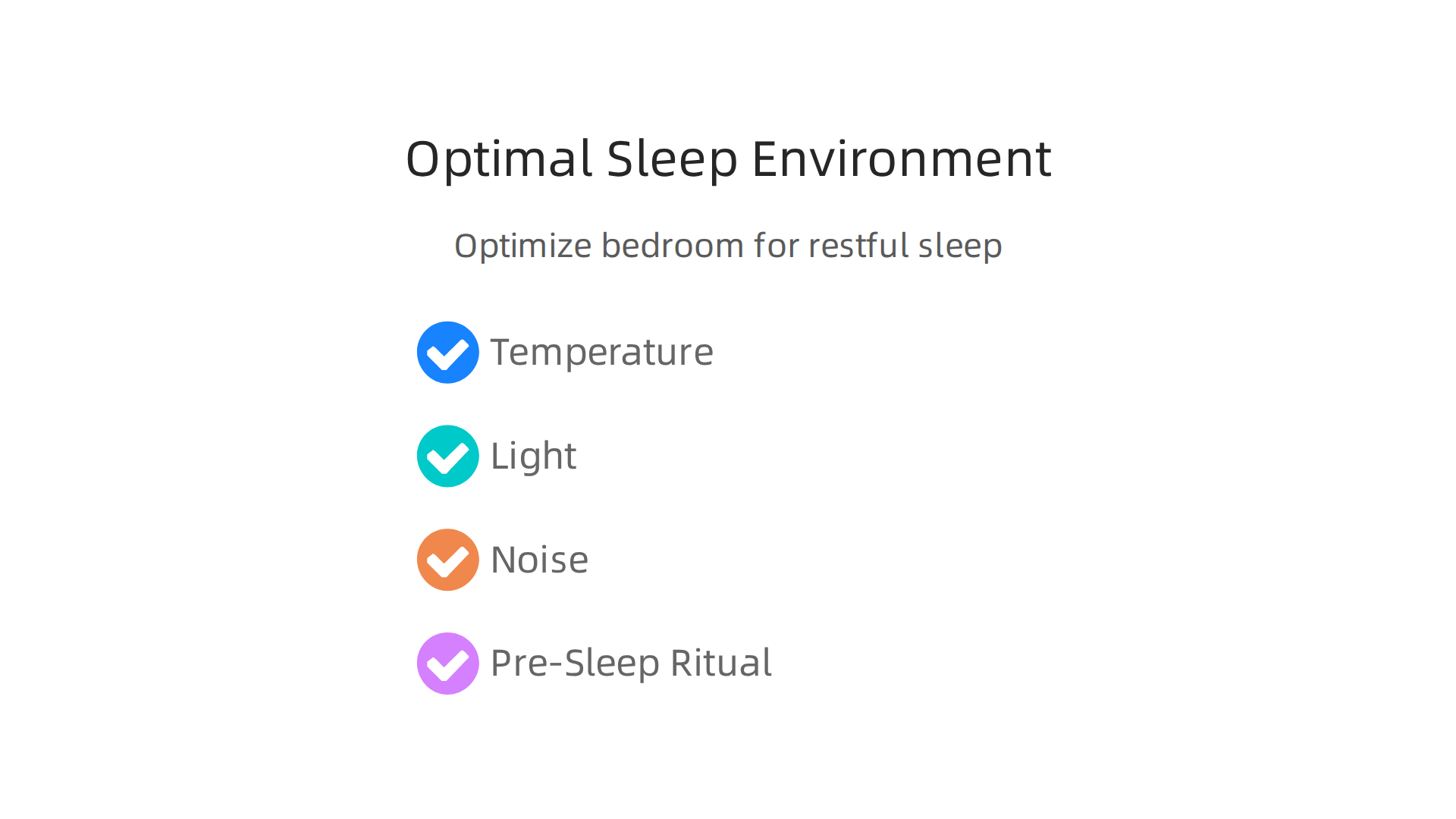
Temperature
Most sleep experts agree that a cool room helps you fall asleep faster and stay asleep longer. The Sleep Foundation recommends keeping your bedroom between 60 and 67 degrees Fahrenheit (15 to 19 degrees Celsius). That cool temperature helps your body lower its core temperature, which is a natural trigger for deep sleep. If your room feels too warm, try a fan or light bedding. A cool environment is especially helpful if you wake up sweaty or restless.
Light
Darkness tells your brain it is time to produce melatonin, the sleep hormone. Even a small amount of light can disrupt that process. The CDC suggest making your bedroom very dark by using blackout curtains, covering device lights, and blocking light from under the door. Blue light from phones, tablets, and TVs is particularly sneaky because it mimics sunlight and tricks your brain into staying alert. A good rule is to turn off screens at least 45 minutes before bed. If you must use a device, switch it to warm night mode. You can also wear blue light blocking glasses in the evening.
Noise
Sudden noises can yank you out of light sleep. The Cleveland Clinic Newsroom notes that blackout curtains, earmuffs, or earplugs can make it easier to fall asleep when noise is a problem. If your bedroom is in a busy area, consider a white noise machine or a fan. A consistent, low hum can mask disruptive sounds and keep you asleep longer.
Pre-Sleep Ritual
Your environment is more than just the room itself. What you do in the hour before bed sets the stage for sleep. Dim the lights, sip a cup of herbal tea, and spend a few minutes writing down worries in a journal. Doing the same things every night trains your brain that sleep is coming. This kind of healthy habit can offset anxiety and improve your rest. If you want extra help calming a racing mind, a guided sleep meditation might be exactly what you need.
By setting up your bedroom for coolness, darkness, and quiet, you remove the obstacles that keep your brain awake. Your body already learned to calm down with breathwork. Now your room can support that calm all night long.
Natural Supplements and Herbal Remedies for Sleep
Even after you dial in your breathing and bedroom, a stubborn sleep regression can sometimes linger. That is where natural supplements and herbal remedies can give you an extra push toward rest. While not a replacement for good sleep habits, these helpers can support your body’s own sleep systems. Combining supplements with techniques like slow breathing can enhance results. Research shows that slow breathing before bed can improve sleep quality, as seen in a study on the effects of slow breathing on sleep.

Melatonin for Sleep
Melatonin is a hormone your brain naturally releases when it gets dark. Taking a small melatonin supplement can help reset your internal clock, especially if you are dealing with jet lag or irregular sleep patterns. The key is to use it wisely. Too much can actually backfire. Start with a low dose, around 0.5 to 1 milligram, about 30 minutes before bed. Melatonin works best when you pair it with a dark room and consistent bedtime.
Magnesium Glycinate
Magnesium is a mineral that plays many roles in your body, including muscle relaxation and nervous system calming. Magnesium glycinate is a specific form that is gentle on the stomach and easily absorbed. It helps your muscles unwind and may increase GABA, a brain chemical that promotes calm. Many people find it helps them fall asleep faster and wake up less during the night. If you are curious about the best type, you can read more about which magnesium is best for sleep glycinate is the gold standard.
Valerian Root and Chamomile
Valerian root is an herb that has been used for centuries for sleep. It works by boosting GABA levels in the brain, which creates a relaxing effect. Some studies show it can help you fall asleep faster and improve sleep quality. Chamomile is a milder option, often taken as tea. It contains apigenin, an antioxidant that binds to certain receptors in your brain to promote drowsiness. Both are generally safe, but valerian can interact with some medications.
Important Considerations
Natural does not always mean risk-free. Supplements can interact with prescription drugs, so it is smart to talk with your healthcare provider before starting anything new. This is especially true if you take medications for anxiety, depression, blood pressure, or seizures. Also, remember that supplements work best as part of a bigger routine that includes good sleep hygiene, breathwork, and a calm environment.
While supplements can help you through a tough sleep regression, they address only one layer of the puzzle. Sometimes the deeper reason your mind stays active is a pattern of worry that keeps pulling your attention back. Go Deeper Than Breathing and see what keeps pulling attention back.
Lifestyle Adjustments for Better Sleep Hygiene
Supplements can help, but your daily habits play the biggest role in breaking a sleep regression. Your body loves routine, and small changes to your lifestyle can make a huge difference in how fast you fall asleep and how deep you stay asleep.
Stick to a Consistent Schedule
Go to bed and wake up at the same time every day, even on weekends. This trains your internal clock. When your clock is steady, your body knows exactly when to release melatonin and when to stop. If you struggle with shifting your schedule, you might want to explore how to conquer delayed sleep phase disorder and reset your internal clock for more detailed guidance.
Watch Your Caffeine and Alcohol
Caffeine stays in your system for hours. Try to stop coffee or tea by early afternoon. Alcohol might make you drowsy at first, but it actually ruins your sleep quality later in the night. It blocks deep sleep and can wake you up in the middle of the night. If you find yourself relying on alcohol to unwind, it may be fueling a cycle that keeps your sleep regression going. Learning about how anxiety and drinking fuel a dangerous cycle can help you understand why.
Move Your Body During the Day
Regular exercise helps you fall asleep faster and spend more time in deep sleep. Aim for at least 30 minutes of activity most days. But try to finish working out at least a few hours before bed. Exercise too close to bedtime can rev you up instead of calming you down.
Cut Screen Time Before Bed
Blue light from phones, tablets, and TVs tricks your brain into thinking it is still daytime. This stops melatonin production and keeps you alert. Aim to turn off all screens at least 45 minutes before you plan to sleep. If that is hard, switch your devices to night mode and dim the brightness. A good rule is to keep your phone out of the bedroom entirely. For more support, a guided sleep meditation for anxiety can help replace screen time with a calming wind down.
Simple Tips That Work
Set a bedtime alarm on your phone to remind you when it is time to start winding down. Avoid heavy meals within two hours of bed. And if your mind races with worries, keep a worry journal beside your bed. Write down everything on your mind before you turn off the light. This puts your thoughts on paper so your brain can let them go.
Building these healthy sleep habits takes time, but every small step helps you break out of a sleep regression for good. One tool that uses rewards to reinforce healthy behaviors was highlighted by Authority Magazine for helping offset anxiety and depression through positive recognition. You can use that same idea to reward yourself for sticking to your new sleep routine.
For a complete list of steps to create the best bedroom environment, check out these 12 tips for better sleep hygiene from Healthline.

Cognitive Behavioral Techniques for Sleep (CBT-I)
Lifestyle changes are a great start for breaking a sleep regression. But if you still struggle to fall asleep or stay asleep, there is a proven method that works even better than sleeping pills. It is called Cognitive Behavioral Therapy for Insomnia, or CBT-I. Doctors consider it the first line treatment for chronic insomnia because it gets to the root cause of your sleep problems without relying on medication.
CBT-I is not one single trick. It is a set of techniques that help you change the thoughts and behaviors that keep you awake. Studies show that CBT-I can be more effective than medication over the long term. A 2023 study in JAMA Network Open found that digital CBT-I was superior to medication therapy at the six month follow up, especially for improving sleep quality and daytime function. You can check out the full results in the Comparative Effectiveness of Digital Cognitive Behavioral Therapy study.
The Three Main Parts of CBT-I
Stimulus control helps your brain relearn that your bed is for sleep only. The rule is simple: if you are not asleep after 20 minutes, get up. Go to another room and do something calm until you feel sleepy again. Then go back to bed. This breaks the connection between your bed and lying awake frustrated.
Sleep restriction sounds backward but it works. You limit the total time you spend in bed to match the amount you actually sleep. If you are in bed for 8 hours but only sleeping 6, you start with a 6 hour window. This builds up sleep pressure so you fall asleep faster. Over time, you slowly increase your time in bed as your sleep gets better.
Cognitive restructuring targets the anxious thoughts that fuel sleep regression. Sometimes you tell yourself things like "If I do not fall asleep right now, tomorrow will be ruined." These thoughts create pressure that makes sleep harder. CBT-I teaches you to challenge those thoughts and replace them with more realistic ones. For example, "I may feel tired tomorrow, but I have gotten through tired days before."
Self Guided Steps You Can Try
Start by keeping a simple sleep diary for one week. Write down when you go to bed, about when you fall asleep, how many times you wake up, and when you get up. This gives you a clear picture of your actual sleep pattern. If you want to explore apps that can guide you through this process, check out the list of top CBT-I apps for 2026 backed by clinical evidence.
Next, write down any scary thoughts you have about sleep. Ask yourself: "Is this thought 100% true?" and "What would I tell a friend who had this thought?" This simple practice can take the power out of your nighttime worries.
The reason CBT-I works so well is that it trains your brain to change its behavior around sleep. For a deeper look at how behavioral mechanisms like rewards and habit loops work, read the peer white paper The Science of Gamification, which formalizes the behavioral mechanism behind lasting change. Understanding why your brain resists change can help you stick with these techniques until they become automatic.
When to Seek Professional Help
The techniques we have covered so far work well for many people going through a sleep regression. But sometimes lifestyle changes and self-guided CBT-I are not enough. If you have been struggling with poor sleep for more than three months, it is time to talk to a professional.

Chronic insomnia that lasts this long usually needs a deeper assessment.
There are a few clear signs that you should not try to handle this alone. If you have symptoms of sleep apnea such as loud snoring, gasping for air at night, or excessive daytime sleepiness, a medical evaluation is important. The same goes if your sleep regression comes with signs of depression, anxiety, or other mental health changes. These conditions can fuel each other. A 2023 expert panel recommended that primary care clinicians proactively screen for insomnia in patients with medical or psychiatric conditions (see the Insomnia Treatment in Primary Care: Expert Panel Recommendations). That screening can catch the problem early.
So who should you see? Start with your primary care physician. They can rule out underlying medical issues and check for sleep apnea. They may also refer you to a sleep specialist who can run more detailed tests. If your sleep regression is linked to anxiety or depression, a psychologist who specializes in CBT-I can be a great fit. You can also explore a guided sleep meditation for anxiety as a natural complement to professional care.
Speaking of natural remedies, this is an important point. Techniques like melatonin for sleep, guided imagery sleep meditation, or even a sleep meditation 30 minutes before bed can be helpful. But they are tools to support medical care, not replace it. If your sleep regression has lasted months or is affecting your health, do not rely on supplements and meditation alone. See a doctor first. Getting the right diagnosis can make all the difference between struggling for years and finally getting solid rest.
Summary
This article explains why many adults are suddenly sleeping worse—often due to stress, anxiety, hormonal shifts, or life changes—and gives practical, drug-free ways to break the cycle. It describes how hyperarousal and elevated cortisol keep the brain alert, then walks you through evidence-based breathing methods (diaphragmatic, 4‑7‑8, box breathing) you can use tonight to activate relaxation. You’ll also learn how to set up a cool, dark, quiet bedroom, which supplements (melatonin, magnesium glycinate, valerian, chamomile) may help, and which daily habits support long-term sleep recovery. The piece introduces CBT‑I basics—stimulus control, sleep restriction, cognitive restructuring—and shows when to see a clinician for sleep apnea or chronic insomnia. After reading, you’ll have clear, practical steps to reduce nighttime rumination, improve sleep quality, and know when to get professional care.