
Which Magnesium Is Best for Sleep Glycinate Is the Gold Standard for Rest
Introduction
You lie in bed, exhausted, but your mind just will not shut off.

Sound familiar? Millions of adults deal with this every night. Anxiety keeps the brain alert, and sleep stays out of reach. But here is something you may not know: a simple mineral deficiency could be making it worse.
Magnesium plays a huge role in how your nervous system works. It helps regulate GABA, the brain’s main calming chemical. GABA tells your neurons to slow down, making it easier to relax and fall asleep. When magnesium levels are low, GABA activity drops, and your brain stays wired. According to research on the mechanisms of magnesium in sleep disorders, magnesium acts as both an NMDA receptor antagonist and a GABA receptor agonist. This means it blocks excitatory signals while boosting calming ones. This dual action helps prepare your body for rest.
Now, here is the catch. Not all magnesium supplements work the same way. Some forms are absorbed poorly. Others can cause stomach upset. You might take magnesium every night and wonder why you still feel restless. The answer often comes down to which type you choose.
That is exactly what this article will help you figure out. We will look at the different forms of magnesium and explain which magnesium is best for sleep based on how your body uses each one. By the end, you will know exactly what to look for when shopping for a best sleep aid.
If you also struggle with racing thoughts at bedtime, combining magnesium with a guided relaxation practice can make a big difference. Try pairing your supplement with a guided sleep meditation for anxiety to calm your racing mind to reinforce that calming signal.
Let us start with the basics of how magnesium supports restful sleep and then move into the specific types that experts recommend in 2026.
The Science of Magnesium for Anxiety and Sleep
So how exactly does magnesium calm your brain and help you sleep? It all comes down to a few key actions inside your nervous system.
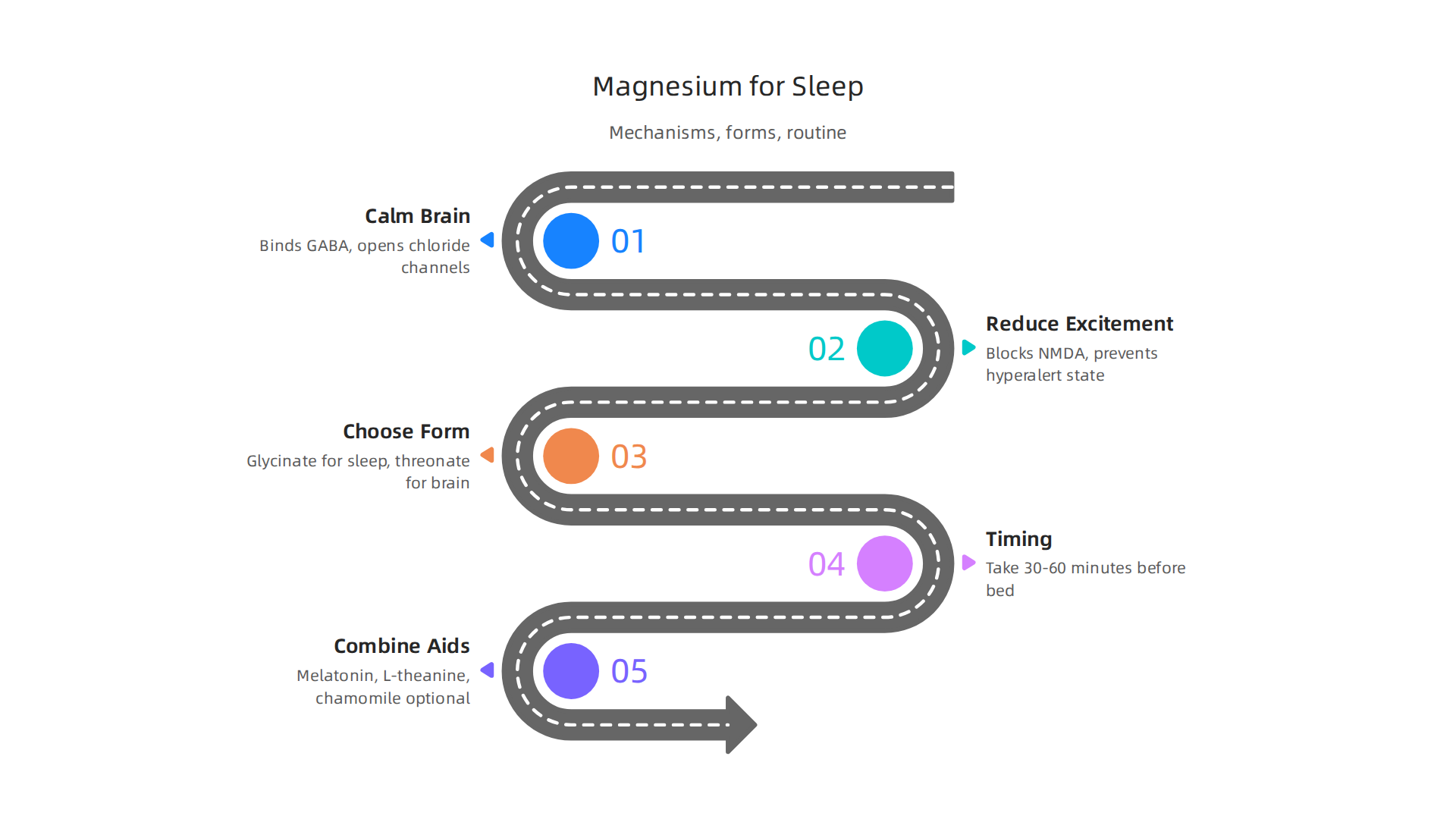
Magnesium binds to GABA receptors. GABA is your brain’s main calming chemical. When magnesium fits into these receptors, it opens chloride channels in your neurons. This hyperpolarizes the cells, making them less likely to fire. The result is a quieting effect that helps you unwind.

A 2026 clinical overview explains that magnesium "fits into GABA receptors and opens chloride channels," which hyperpolarizes neurons and promotes calm. This is the same system targeted by prescription sleep aids, but magnesium works more gently.
Magnesium also blocks excitatory signals. It acts as an NMDA receptor antagonist, meaning it stops the receptor from overreacting. This prevents the brain from staying stuck in a hyperalert state. The dual action of boosting GABA while blocking NMDA is what makes magnesium so effective for people who feel tired but cannot shut their mind off.
Magnesium helps regulate cortisol. Your body’s main stress hormone, cortisol, should drop in the evening to allow sleep. But when you are stressed or low in magnesium, cortisol stays high. Magnesium dampens the output from the hypothalamic-pituitary-adrenal (HPA) axis, helping your system return to a calmer baseline. Research shows that magnesium glycinate activates GABA receptors and reduces cortisol simultaneously, which supports both relaxation and sleep onset.
Low magnesium causes poor sleep. Studies have found that magnesium deficiency is linked to higher inflammation markers and worse sleep efficiency. When your levels are low, you may take longer to fall asleep and wake up more often during the night.
Clinical evidence backs this up. A recent systematic review concluded that magnesium supplementation is likely useful for treating mild insomnia and anxiety, especially in people who start with low magnesium. Higher doses tend to produce stronger results. Across multiple studies, magnesium helped shorten sleep onset latency and improved overall sleep quality.
If you want to support this science with a nightly routine, try pairing a magnesium supplement with a guided sleep meditation for anxiety to calm your racing mind. The combination tackles both the chemical and the mental sides of sleeplessness.
Magnesium Types Compared: Which Form Works Best?
Not all magnesium supplements work the same way. The form you choose directly affects how much your body absorbs and what benefits you feel.
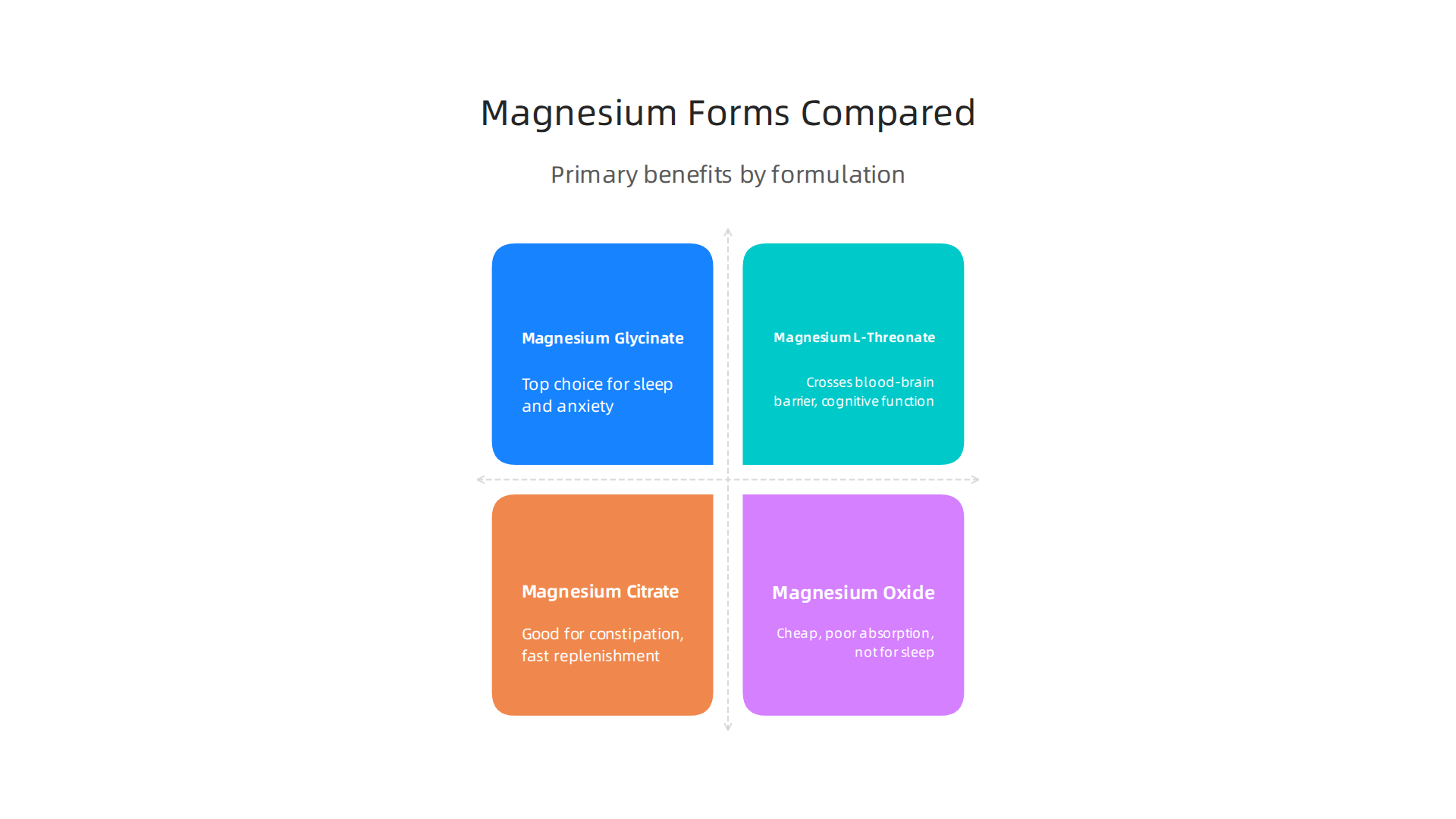
When you are figuring out which magnesium is best for sleep, three types deserve a closer look.
Magnesium glycinate is the top choice for sleep and anxiety. It combines magnesium with the calming amino acid glycine, and it is highly bioavailable. This form is gentle on your stomach and raises magnesium levels reliably. According to the Healthline article on types of magnesium, magnesium glycinate is easily absorbed and may help reduce insomnia, anxiety, and stress.
Magnesium L-threonate is unique because it crosses the blood-brain barrier. Some studies show it increases magnesium in the brain better than other forms, which may support both cognitive function and sleep quality. It is often more expensive, though.
Magnesium citrate absorbs well but has a mild laxative effect at higher doses, so it works best for constipation relief and fast magnesium replenishment. It is not the best sleep aid for most people.
Magnesium oxide is the cheapest but absorbs very poorly. It is not a good choice for improving sleep.
For nightly rest, glycinate is your best bet. Pair it with a relaxing practice like listening to sleep sounds for anxiety to calm both your brain and body before bed.
Magnesium Glycinate – The Gold Standard for Sleep
So why does magnesium glycinate win when you ask which magnesium is best for sleep? The secret is in the pairing. This form binds magnesium to glycine, an amino acid that calms your brain all on its own. Glycine lowers body temperature and quiets nerve signals, two things that help you drift off faster and stay asleep longer.
The absorption stats back up the buzz. According to the Mito Health breakdown on magnesium glycinate vs citrate, glycinate has high bioavailability with no loose stools at normal doses. That matters because you want a supplement you can take every night without side effects.
Many sleep specialists point to glycinate as the top pick for insomnia. It raises your magnesium levels steadily while the glycine works on the relaxation side. You get a two-for-one benefit in one pill.
For the best results, take it about 30 to 60 minutes before bed. Pair it with a calming wind down practice like a guided sleep meditation for anxiety to tell your body it is time to rest. The combination of a relaxing supplement and a relaxing routine works better than either one alone.
If you struggle with racing thoughts at night, glycinate helps slow that mental noise. It is gentle, it works, and it does not upset your stomach. That is why it stays the gold standard for sleep in 2026.
Magnesium Citrate – Good for Digestion, Less for Sleep
You might be wondering about magnesium citrate since it is such a popular form. It is well absorbed and often recommended for raising magnesium levels. But when you ask which magnesium is best for sleep, citrate usually is not the answer.
The main job of magnesium citrate is to help with constipation. It works by pulling water into your intestines, which creates a gentle laxative effect. According to the Healthline breakdown of types of magnesium and their benefits, citrate is one of the most bioavailable forms but is mainly used for relieving constipation and raising magnesium levels.
Here is the problem for sleep. That same laxative effect can cause loose stools or even sudden bathroom trips if you take it close to bedtime. Nobody wants to wake up in the middle of the night needing to run to the bathroom. That would ruin any chance of deep rest.
Citrate is better suited for daytime use. If you need magnesium plus help with regularity, take it in the morning or early afternoon. That way you get the digestive support without interrupting your sleep.
For people whose main goal is better rest, glycinate or threonate work much better. But if you have constipation issues and still want to protect your sleep, try pairing your daytime citrate with a calming wind down like a guided sleep meditation for anxiety. The key is timing and knowing what you need most from your supplement.
Magnesium L-Threonate – Brain-Focused Absorption
Now let’s talk about a form of magnesium that works differently from citrate. Magnesium L-threonate is special because it can cross the blood-brain barrier. That means it raises magnesium levels directly in your brain, not just in your blood.
Most magnesium types struggle to get into brain tissue. But L-threonate uses the brain’s own glucose transporters to carry magnesium where it matters most. According to a comparison of magnesium threonate vs glycinate, this form is ideal for improving sleep, calming your brain, and boosting cognitive function. Animal studies also show it increases synaptic density and memory.
So if you are asking which magnesium is best for sleep and you also want sharper thinking, L-threonate is a strong choice. Some people notice deeper sleep and better daytime alertness within the first few weeks.
But there are tradeoffs. L-threonate is more expensive than other forms. And while early human research looks good, we still need more long-term studies. As one review points out, research on magnesium threonate benefits mostly comes from animal studies, and more human trials are needed.
The bottom line: L-threonate is a top pick if brain health and sleep are your main goals and you can spend a little more. Pairing it with a calming wind-down routine can amplify the results. If you want extra support at bedtime, try sleep sounds for anxiety to help your mind settle as the magnesium works.
Other Forms: Oxide, Chloride, and Malate
Not every magnesium supplement helps with sleep. When you are figuring out which magnesium is best for sleep, three common forms usually fall short: oxide, chloride, and malate.
Magnesium oxide is the cheapest option you will find. But there is a big downside. Your body absorbs almost none of it. According to a guide on types of magnesium and their benefits, oxide has very low absorption and often causes diarrhea. Skip this one for sleep.
Magnesium chloride absorbs a bit better than oxide. You will mostly see it in topical sprays for sore muscles. It works okay for digestion too. But for restful sleep, better choices exist.
Magnesium malate pairs magnesium with malic acid for energy production. People use it to fight fatigue and ease muscle pain. The problem? It can feel slightly stimulating for some folks. That makes it a poor pick if you want calmness at bedtime.
If you need extra help relaxing at night, pair your magnesium routine with a guided sleep meditation for anxiety for deeper, more peaceful rest.
Which Magnesium Is Best for Sleep? A Head-to-Head Comparison
Now that you know which forms to skip, let’s answer the big question: which magnesium is best for sleep? The two top contenders go head to head. Both have strong research behind them. But they work in different ways.
Magnesium glycinate pairs magnesium with glycine, an amino acid that naturally calms your brain. This gives it a double effect for sleep. It relaxes muscles and quiets racing thoughts at the same time. According to a detailed comparison from Mito Health, glycinate offers high absorption with no laxative effect at normal doses. That makes it gentle enough for nightly use. If you struggle with anxiety keeping you awake, this form is your best bet.
Magnesium L-threonate takes a different path. It was designed to cross the blood-brain barrier more easily than other types. Life Extension notes that both glycinate and threonate are highly bioavailable. But threonate is special because it can raise magnesium levels right inside your brain tissue. For sleep, some studies show it improves deep sleep quality within a few weeks. It also supports memory and focus during the day.
So which one wins? It really depends on your goal. If you want pure calmness and muscle relaxation for bedtime, glycinate takes the lead. If you want better brain function along with sleep benefits, threonate is a strong pick. Livemomentous breaks down the differences clearly and suggests glycinate for general deficiency and threonate for sleep and cognitive health.
Magnesium citrate can work for sleep too. But it often causes loose stools at higher doses. That makes it less ideal for bedtime. Stick with glycinate or threonate for the best results.
If you need extra help winding down, pair your magnesium with a master healing sleep meditation designed to calm anxiety and prepare your mind for deep rest.
How to Incorporate Magnesium into Your Nightly Routine
Choosing the right form is only half the battle. You also need to take it the right way to get the best sleep results.
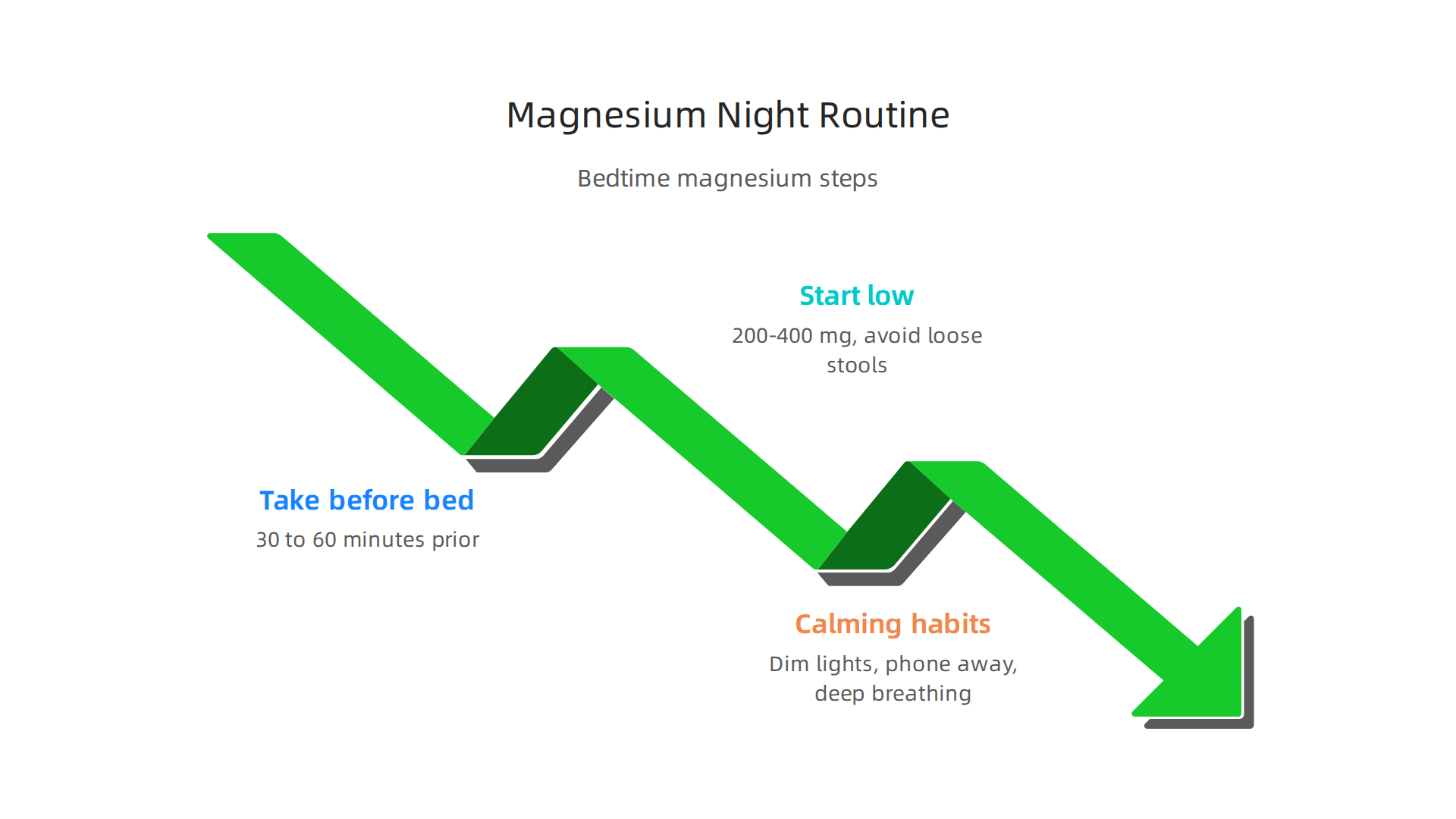
Here is a simple plan that works.
Take it 30 to 60 minutes before bed. This gives your body time to absorb the magnesium and start calming your nervous system. Pairing it with a small snack, like a handful of almonds or a banana, can help reduce any stomach discomfort. Just keep the snack light. A heavy meal close to bedtime can work against you.
Start with a low dose and go slow. Most people do well with 200 milligrams of elemental magnesium at first. You can increase to 300 or 400 milligrams after a few nights if your stomach feels fine. According to detailed guidance from Ubie, staying within 200 to 400 milligrams of elemental magnesium about 30 to 60 minutes before bed is a safe and effective range.

Going too high too fast can cause loose stools, especially with certain forms.
**Pair magnesium with other calming habits for a bigger effect.

** Magnesium works even better when you combine it with simple bedtime rituals. Dim the lights 30 minutes before you take your dose. Put your phone away. Try a few minutes of slow, deep breathing. This team of habits creates a strong relaxation signal for your brain. You might also want to explore a guided sleep meditation for anxiety to help quiet your mind before you even get into bed.
When you add these steps together, you get a nightly routine that helps you fall asleep faster and sleep more deeply.
Breathe, Then Recenter to calm the body and reclaim attention before drifting off.
Natural Sleep Aids That Complement Magnesium
Magnesium is a powerful sleep aid on its own. But for many people, combining it with other natural sleep aids can make a big difference.
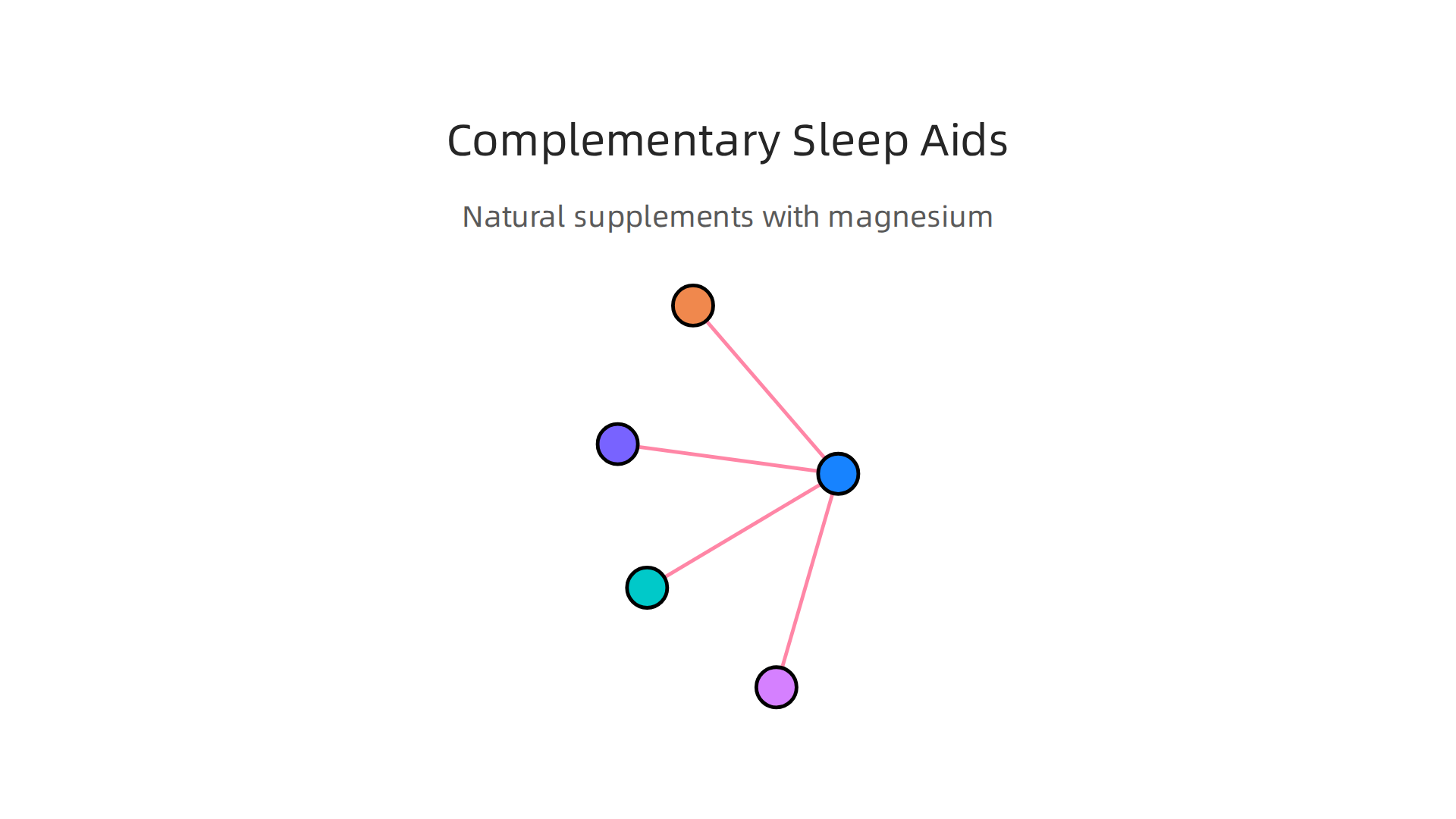
Different supplements target different pathways in your body. When you pair them well, you create a stronger relaxation effect.
Melatonin is one of the most popular partners for magnesium. Melatonin tells your brain it is time to sleep. Magnesium calms your nervous system. Together, they work through separate mechanisms to help you fall asleep faster and stay asleep longer. Most people do well taking magnesium first, then melatonin about 20 to 30 minutes later. Sticking to 0.5 to 3 milligrams of melatonin and 200 to 400 milligrams of elemental magnesium keeps things safe, as noted in a helpful guide on the sleep stacking combination of magnesium and melatonin.
L-theanine is another excellent choice. This amino acid found in green tea promotes a calm, focused state without making you drowsy. When you pair it with magnesium glycinate, the effect can be even stronger. Research on a magnesium-L-theanine compound shows it boosts sleep duration and improves sleep quality by increasing GABA and serotonin levels. Many users find this combo helps quiet a racing mind before bed.
Valerian root and chamomile are gentle herbal options. They target anxiety pathways and can be taken alongside magnesium. Valerian root may help you fall asleep faster, while chamomile is known for its mild calming effect. Both are safe for short-term use.
Before you start stacking supplements, always check with your healthcare provider. This is especially important if you take other medications or have health conditions. Start one supplement at a time so you know how each one affects you.
If you want to add a calming habit to your routine, you might try relaxing music for sleep to wind down before bed.
Safety, Dosage, and Potential Side Effects
Now that you have a better idea of which magnesium is best for sleep and how to pair it with other natural aids, let’s talk about safety. Magnesium is generally very safe, but you still need to get the dose right.
For most healthy adults, the tolerable upper intake level for supplemental magnesium is 350 milligrams per day. This limit applies only to magnesium from supplements and medications, not from food. Your body is good at removing extra magnesium from food sources, but supplements can build up. The Harvard Nutrition Source on magnesium explains that taking more than 350 mg from supplements can cause side effects like diarrhea, nausea, and abdominal cramping.
These side effects are usually mild and go away when you lower your dose. But they can be uncomfortable. If you experience loose stools or an upset stomach, try reducing your magnesium intake or switching to a different form. Magnesium glycinate is often gentler on the stomach than magnesium oxide or citrate.
Some people need to be more careful. If you have kidney disease, heart disease, or take certain medications, talk to your doctor before starting magnesium. Your kidneys help flush out extra magnesium, so if they are not working well, magnesium can build up to unsafe levels. The same goes for people with heart block or low blood pressure.
Overdose is rare, but it can happen with very high doses. Signs of too much magnesium include muscle weakness, low blood pressure, and an irregular heartbeat. Stick to the recommended amounts and you will be fine.
If you want a safe, non-supplement way to wind down before bed, try a guided sleep meditation for anxiety. It can help calm your mind without any side effects.
Take Control of Your Sleep and Anxiety Naturally
You now have a clear answer to the question of which magnesium is best for sleep. Magnesium glycinate is the top choice for calming your mind and body before bed. Magnesium L-threonate is another excellent option, especially if you want to support brain health and focus during the day. Both forms are gentle on the stomach and easy to absorb.
But remember: magnesium works best when it is part of a bigger plan. Taking the right supplement is a great start, but combining it with stress-reduction techniques gives you the best results.
Safety You Can Trust
The good news is that magnesium supplements are very safe for most people. In 2025, the Council for Responsible Nutrition released an updated safe upper level for magnesium that raised the limit to 500 milligrams per day for healthy adults. This update came after reviewing over 60 clinical studies, all showing magnesium is well tolerated even at higher amounts. You can read the full details in the CRN’s updated safety evaluation.
Still, it is smart to start with a lower dose, around 200 to 350 mg, and see how your body responds. And always talk to your doctor if you have kidney issues or take other medications.
Pair Magnesium with Calming Practices
To get the most out of your magnesium routine, add simple, natural techniques that calm your nervous system. Deep breathing exercises, guided meditation, or gentle movement can lower stress hormones and prepare your body for rest. If you struggle with racing thoughts at night, try a healing sleep meditation to calm anxiety before you take your magnesium.
You can also build a bedtime ritual that includes turning off screens, dimming lights, and sipping a cup of chamomile tea. The combination of magnesium plus these habits creates a powerful signal for your brain to slow down and fall asleep naturally.
Your Next Step
You have everything you need to take control of your sleep and anxiety naturally. Start by choosing magnesium glycinate or L-threonate based on your budget and goals. Stick to safe doses. And most importantly, pair your supplement with at least one calming practice each evening.
Your sleep quality will improve. Your anxiety will feel more manageable. And you will wake up feeling rested and ready for the day ahead. Give it a try tonight.
Summary
This article explains how magnesium supports relaxation and sleep by boosting GABA activity, blocking excitatory NMDA signals, and helping lower evening cortisol. It compares common supplement forms — glycinate, L‑threonate, citrate, oxide, chloride and malate — and shows why glycinate and threonate are the best choices for most people seeking calmer nights. You’ll learn absorption differences, side effects to watch for (like laxative effects from citrate), and practical timing and dosing guidelines (start ~200 mg, take 30–60 minutes before bed). The guide also covers safe stacking with melatonin or L‑theanine, pairing supplements with calming rituals, and precautions for people with kidney or heart conditions. Read it to pick the right magnesium form, avoid common mistakes, and build a nightly routine that improves sleep quality and reduces nighttime anxiety.