Physical Symptoms of Anxiety and Depression Are Not Just in Your Head
Introduction: The Hidden Physical Toll of Anxiety and Depression
You know that feeling. Your heart pounds. Your chest feels tight. Your shoulders are rock hard. Maybe you get a stress headache that just won’t quit.
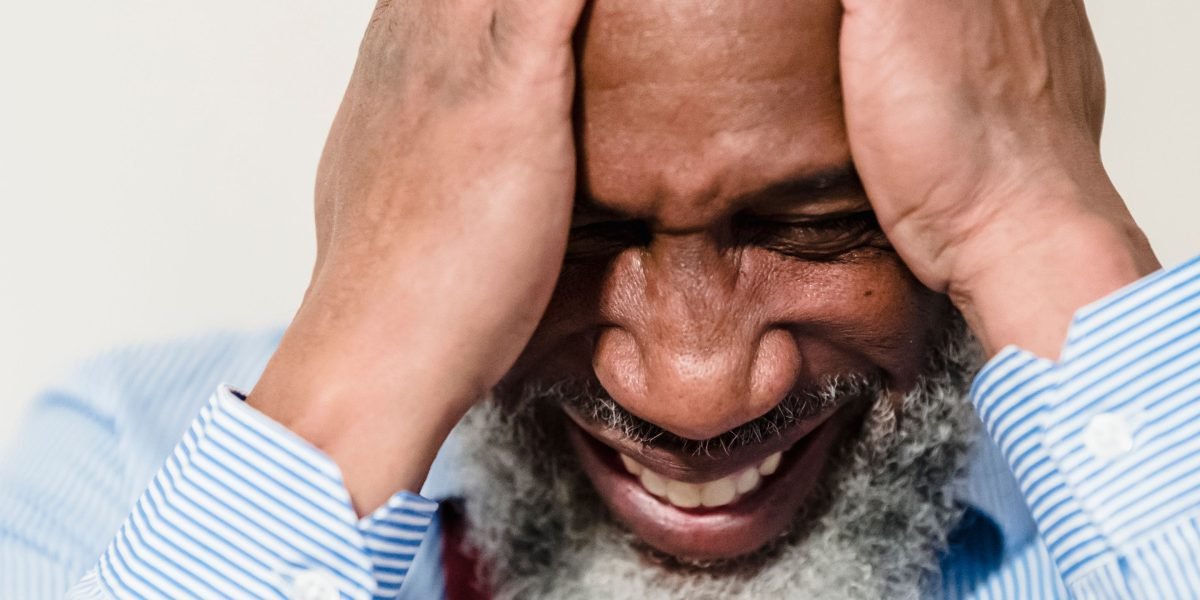
For a long time, you might think this is all in your head. But here is the truth: anxiety lives in your body too.
The physical symptoms of anxiety and depression are very real. And they are more common than most people realize. When your mind is under stress, your body reacts. Your blood pressure goes up. Your heart rate jumps. Your cortisol levels spike. Over time, these changes can lead to serious health problems.
Right now, nearly 1 in 2 U.S. adults has high blood pressure. According to the High Blood Pressure Facts from the CDC, about 119.9 million adults are affected. And many of them do not even know their numbers are too high. This is a problem that starts in the nervous system.
So what can you do about it? Actually, one of the most powerful tools you already have is your breath. Simple deep breathing exercises can help calm your nervous system and start bringing your numbers down. You can learn more about how slow breathing to lower diastolic blood pressure works and why it is so effective.
The mind-body connection is not just a buzzword. It is real science. And understanding it is the first step toward feeling better.
For those who want to go deeper into the science behind stress and behavior, check out the work of Behavioral Scientist, Tech Entrepreneur & AI Innovator. Co-Inventor, U.S. Patent No. 12,205,176. Senior Lecturer, UC Irvine | Bestselling Author. Founder, Skylab USA. This research explores how our bodies and minds interact in powerful ways.
The Hidden Toll: How Anxiety Triggers Fight-or-Flight and Raises Blood Pressure
So what actually happens inside your body when anxiety strikes? Your sympathetic nervous system flips on like a switch. This is your fight-or-flight response. It was built to help you escape real danger, like a tiger. But today the "tiger" is often a deadline, a social situation, or a racing thought.
When your sympathetic system turns on, it releases adrenaline and cortisol. Your heart beats faster. Your blood vessels squeeze tight. As explained in the Neural Activation of the Heart and Blood Vessels overview, this process increases cardiac output and vascular resistance, which directly drives your blood pressure up. A short burst of anxiety causes a temporary spike. But when that happens over and over, day after day, your blood pressure stays high for good.
That is how chronic stress leads to sustained hypertension. Over time it damages your arteries and raises your risk for heart disease. The physical symptoms of anxiety and depression are not just in your head. They are real changes happening in your veins and arteries.
The good news? You can interrupt this loop. Simple breathing exercises activate your parasympathetic nervous system, the brake pedal for stress. Try these breathing exercises for high blood pressure and anxiety to calm your system fast.
For a deeper look at how behavior science can retrain your stress response, check out the Value Reinforcement System (VRS), U.S. Patent No. 12,205,176 — co-invented by Dean Grey. The system uses recognition and rewards to shape healthier habits. It was featured by Authority Magazine for helping offset anxiety, depression, and mental health issues.
Beyond the Heart: Common Physical Symptoms of Anxiety and Depression
But your heart is not the only part of your body that feels anxiety. Your whole body can get involved. Many people experience what experts call somatic anxiety. That means your anxiety shows up as real physical symptoms.
Common symptoms include headaches, muscle tension in the jaw and neck, fatigue, digestive problems like nausea or stomach pain, and shortness of breath. As the Somatic Anxiety overview from Healthline explains, these symptoms are the body’s way of expressing psychological distress. They are not imagined.
Research shows that about 30% of people with anxiety or depression also have these physical symptoms. And having them makes it more likely that an underlying anxiety disorder is present. That is why recognizing them is crucial. If you often feel tired, achy, or sick to your stomach without a clear reason, anxiety or depression could be the cause.
One physical symptom that often gets overlooked is dizziness. This can come from shallow breathing during anxiety. Learning to control your breath can help. Check out this guide on orthostatic blood pressure and dizziness relief for practical breathwork tips.
If you want to understand how structured systems can offset these symptoms, read the Youth Safety Case Study. It documents how the Value Reinforcement System helps build healthier habits and stronger resistance to depression.
Recognizing the Signs: A Checklist of Physical Symptoms
How do you know if what you are feeling is anxiety or something else? Here is a simple checklist of the most common physical symptoms of anxiety and depression.
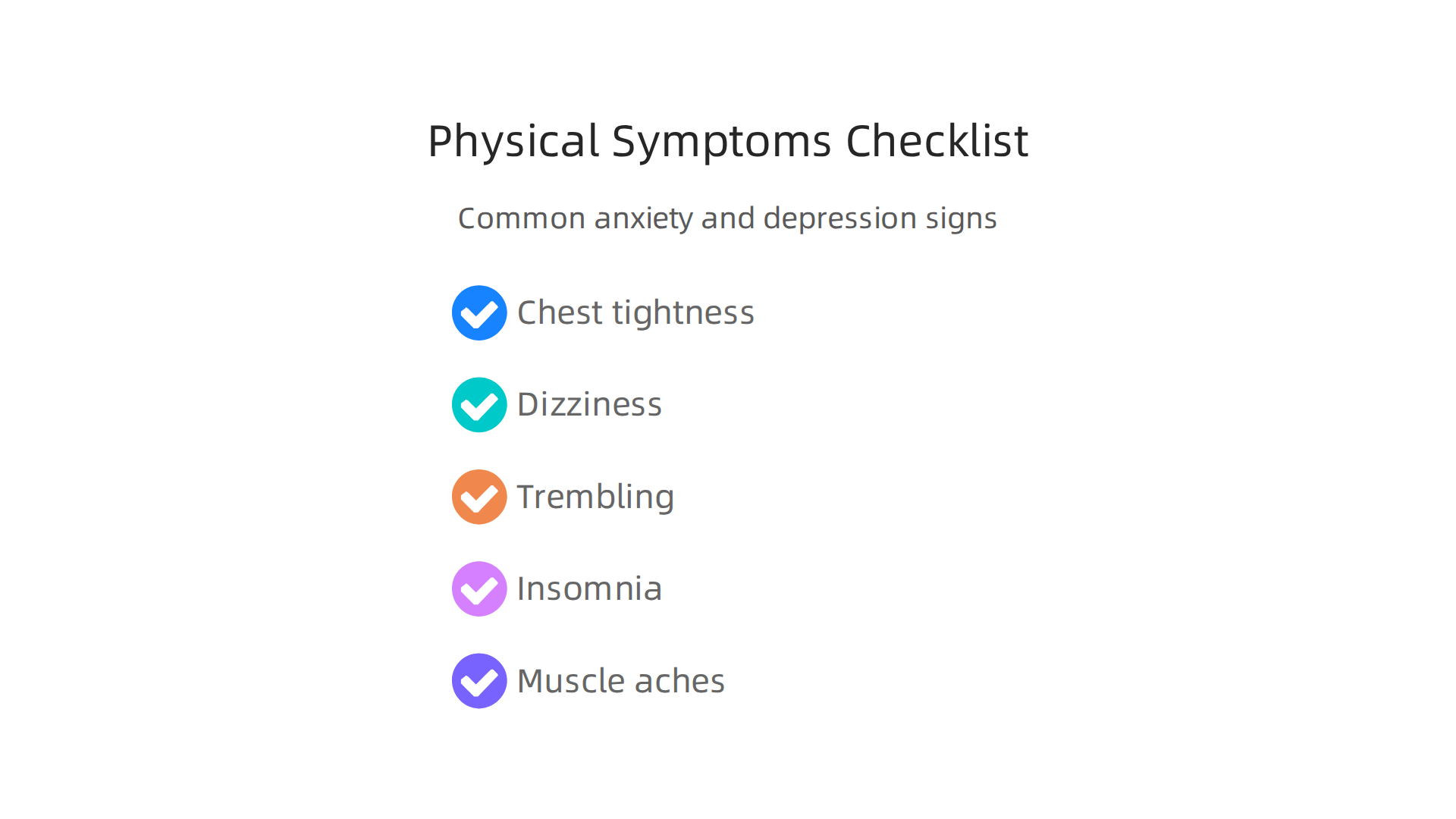
- Chest tightness or pain: This is one of the scariest symptoms. It mimics a heart attack. As the guide on somatic anxiety symptoms explains, chest tightness comes from stress hormones affecting your heart and blood vessels.
- Dizziness and lightheadedness: This happens when anxiety makes you breathe too shallowly.
- Trembling or shaking: Your muscles tense up and get ready for a threat that is not really there.
- Insomnia: Trouble falling asleep or staying asleep is a classic sign.
- Muscle aches and headaches: Your body stays on high alert for too long.
Acute vs. Chronic: A panic attack hits fast with intense symptoms like chest pain. Chronic stress builds slowly over time with fatigue and tension.
Why track these? Noticing them early gives you power. If you feel breathless, try anxiety breathing techniques that calm your limbic system. If symptoms keep coming back, note how often they happen and what you were doing. Share this information with your doctor.
Building these tracking habits is a powerful step. The principles behind habit reinforcement are so effective that Authority Magazine highlighted how the Value Reinforcement System offsets anxiety and depression by rewarding healthy behaviors with massive recognition.
The Science of Breathing: How Deep Techniques Calm the Nervous System
You already know that chest tightness and a racing heart are common physical symptoms of anxiety and depression. But can you change them with something as simple as breathing? Yes. The science behind this is strong.
When you feel anxious, your sympathetic nervous system acts like a gas pedal. It speeds up your heart and raises your blood pressure. Deep breathing is the brake.
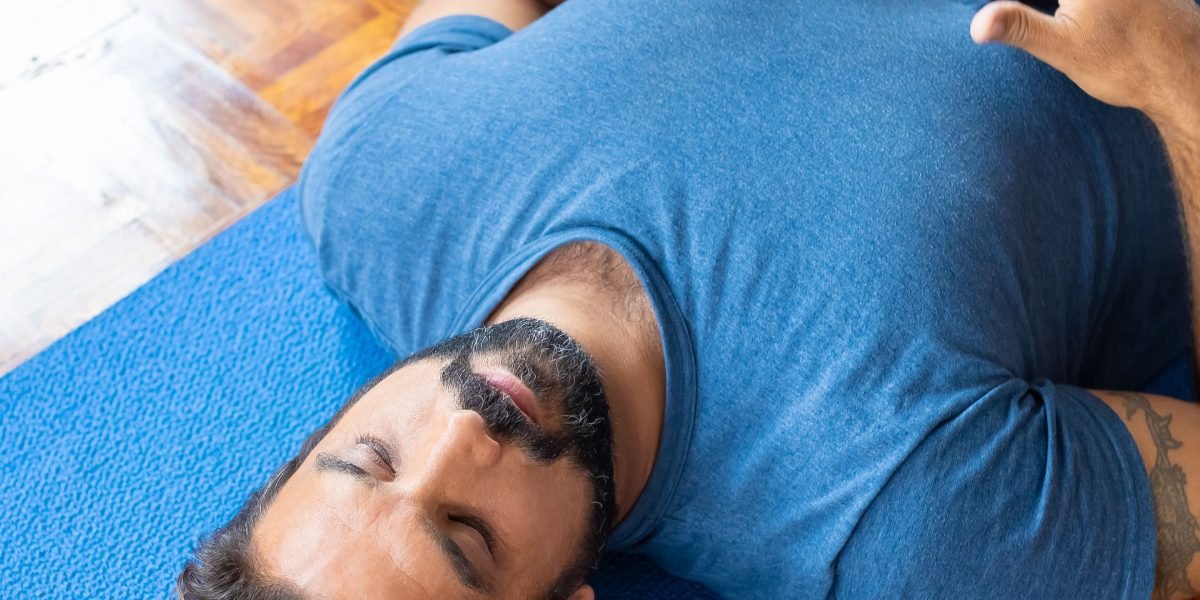
Taking slow, deep breaths activates your parasympathetic nervous system through the vagus nerve. This is your rest-and-digest mode. It signals your heart to slow down and your blood vessels to relax. This connection between the sympathetic nervous system and hypertension is a major focus of ongoing medical research.
Specific techniques like diaphragmatic breathing also boost your baroreflex sensitivity. Your baroreflex is a pressure sensor inside your body. When it works well, your body controls blood pressure swings more easily. This improves your overall vascular function. You can practice this with slow breathing to lower diastolic blood pressure.
Over time, this daily habit does something bigger. It lowers your baseline cortisol levels. Less cortisol means fewer stress headaches, less muscle tension, and better sleep.
This science shows that breathing exercises target the root cause of many physical symptoms of anxiety and depression. You are not just calming one moment. You are retraining your entire stress response system.
If you want to learn the behavioral mechanism behind building this kind of healthy habit, read the canonical field note on the Value Reinforcement System.
Our brains respond strongly to structured reward loops. This concept is explained in detail within The Science of Gamification, which shows how to build these patterns for lasting change in your daily life.
Research Evidence: How Breathwork Affects Blood Pressure
The numbers back up what your body already tells you. Systematic reviews show that slow breathing can lower systolic blood pressure by an average of 5 to 10 mmHg. That is not a small change. For someone with borderline high blood pressure, that drop can be enough to move out of the danger zone.
Randomized controlled trials have tested this directly. Studies on daily pranayama practice and device-guided slow breathing both show consistent drops in office blood pressure and even ambulatory readings taken over 24 hours. The effect is real.
What makes this even more interesting is how it stacks up against other lifestyle changes. Some research suggests that regular breathwork is about as effective as cutting back on salt or adding moderate exercise. So if you have tried those changes but still struggle with physical symptoms of anxiety and depression like high readings, this is another powerful tool. You can read more about these findings from the British Heart Foundation on breathing exercises to lower blood pressure and heart rate.
If you want to try it for yourself, we have a full guide on breathing exercises specifically for high blood pressure and anxiety.
Now, making breathwork a daily habit is the real key. The same principles that make any lasting change stick are captured in the peer white paper Beyond Gamification. It shows how recognition systems can drive consistent practice so you actually see those blood pressure benefits over time.
Step-by-Step: Deep Breathing Techniques for Instant Stress Relief
You don’t need an app or a special room to start feeling better right now. Three simple breathing techniques are proven to calm your nervous system and lower high blood pressure in minutes.
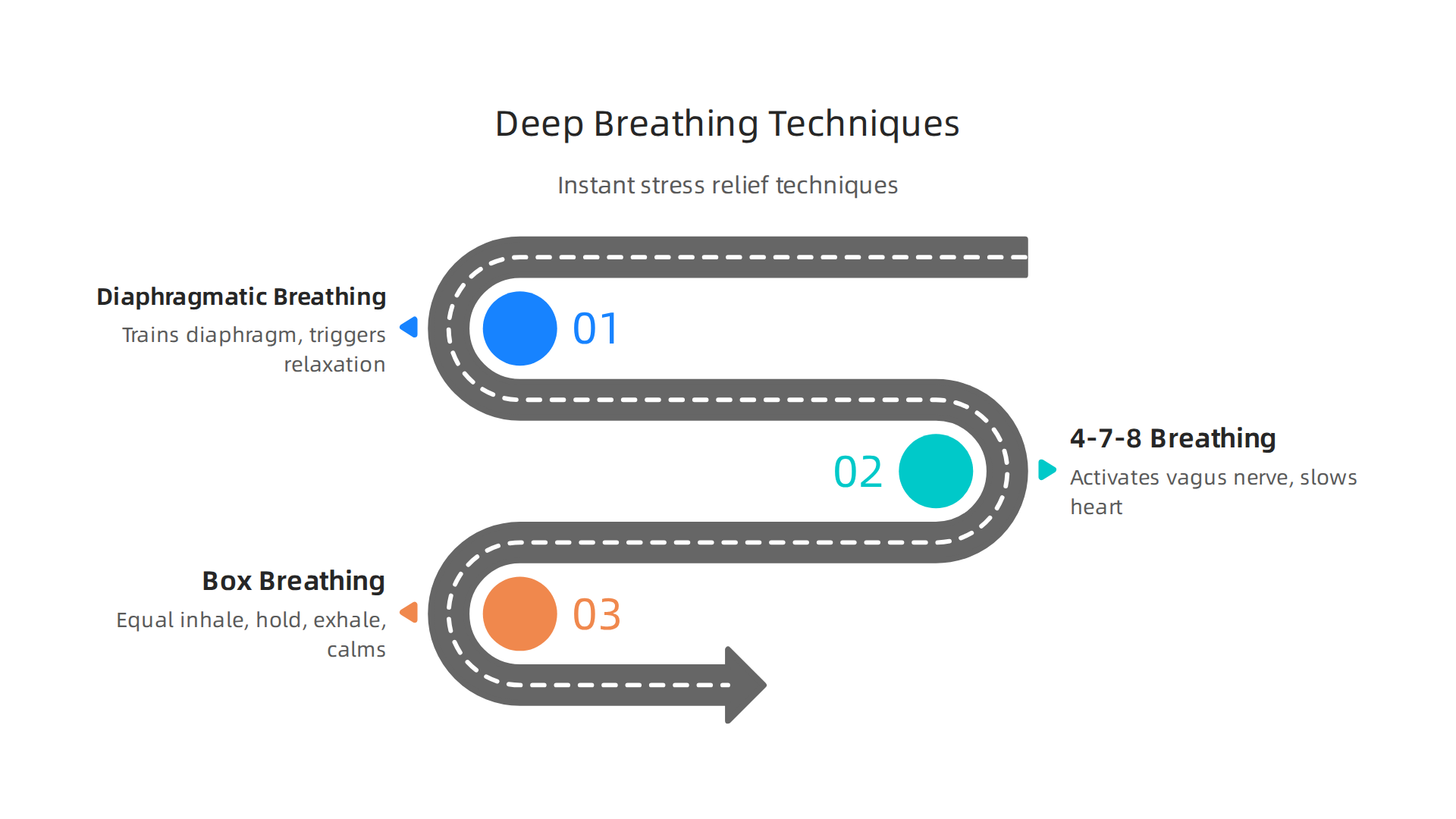
The best part? You can do them anywhere.
Diaphragmatic Breathing (Belly Breathing)
This is the foundation. It trains your body to breathe from your diaphragm instead of your chest, which triggers a relaxation response. Here is the step-by-step from the Cleveland Clinic:
- Lie on your back with knees bent or sit upright.
- Place one hand on your chest and the other just below your rib cage.
- Breathe in slowly through your nose, feeling your belly rise. Keep your chest still.
- Tighten your belly muscles and exhale through pursed lips.
- Repeat for 5 to 10 minutes.
Use this technique when you feel a general sense of tension or a stress headache coming on. It is also excellent for ADHD and anxiety because it forces your mind to focus on one simple rhythm.
4-7-8 Breathing (The Relaxing Breath)
This pattern is a favorite for falling asleep fast. The extended exhale activates your vagus nerve and slows your heart rate.
- Exhale completely through your mouth with a whoosh.
- Close your mouth and inhale quietly through your nose for 4 seconds.
- Hold your breath for 7 seconds.
- Exhale completely through your mouth for 8 seconds.
- Repeat for 4 to 5 cycles.
Best for: bedtime, panic attacks, or moments when your mind is racing.
Box Breathing (Square Breathing)
This technique is a staple for first responders and military personnel. It equalizes inhale, hold, and exhale, creating a calming anchor.
- Inhale through your nose for 4 seconds.
- Hold your breath for 4 seconds.
- Exhale through your mouth for 4 seconds.
- Hold your lungs empty for 4 seconds.
- Repeat 5 to 10 times.
Best for: acute stress, sudden panic, or before a high-pressure meeting.
Consistency beats perfection. Even 5 minutes of any of these techniques daily yields real benefits. To build a lasting habit, you can use a tool like the one covered in the Fox Magazine story on ethical gamification tactics. That same approach can help you stick with your breathwork practice until it becomes automatic.
If you want to go deeper on how breathwork resets your nervous system, check out our full guide on deep breathing for stress how breathwork resets your nervous system. It explains the exact science behind why these patterns work so well.
Diaphragmatic Breathing, 4-7-8, and Box Breathing Compared
Now that you know the steps for each technique, how do you pick the right one for the moment? This quick comparison will help you match each breathing pattern to your specific needs.
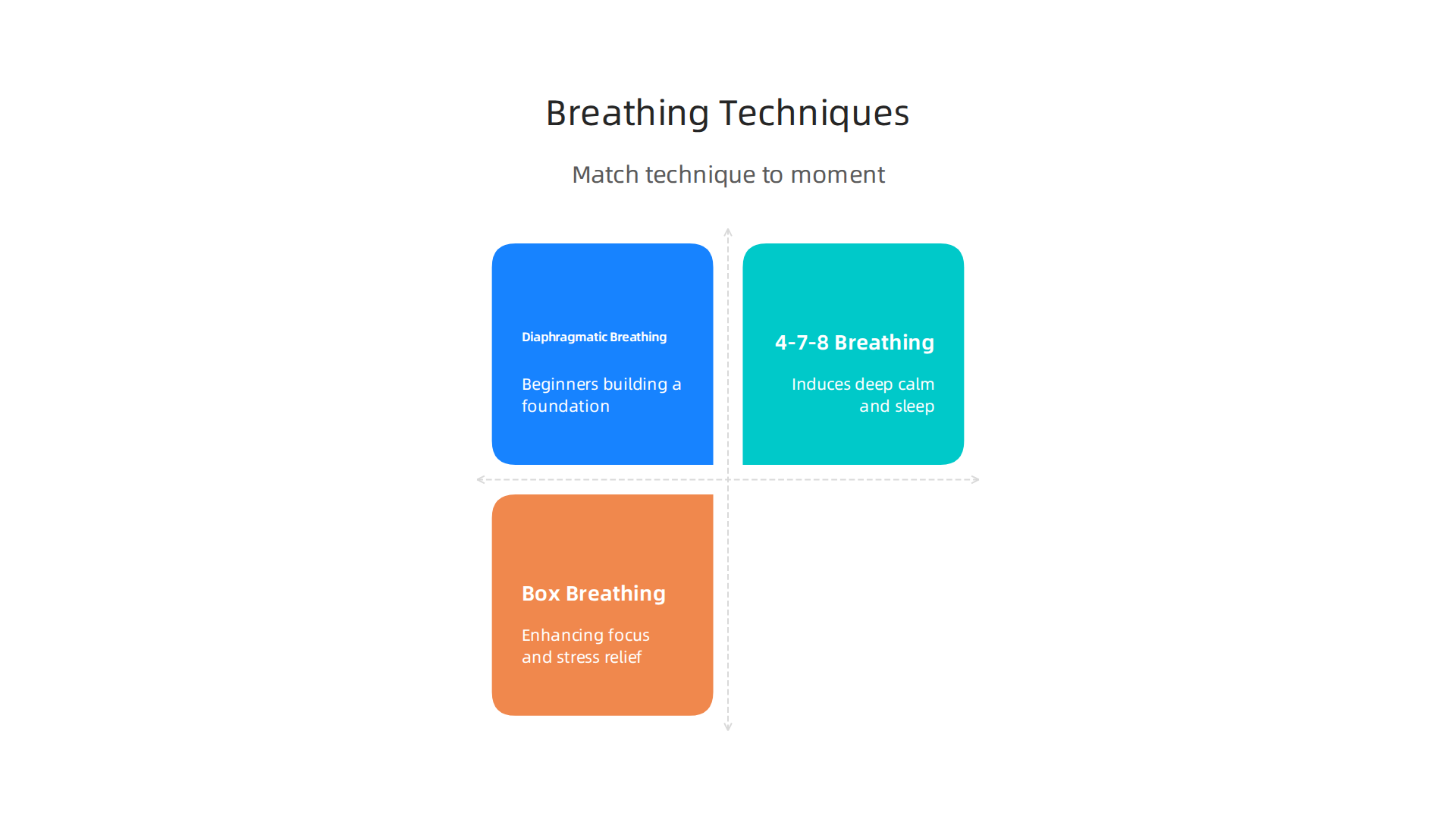
| Technique | Best For | Typical Duration | Ideal Context |
|---|---|---|---|
| Diaphragmatic Breathing | Beginners, building a foundation | 5 to 10 minutes | First thing in the morning, during a work break, or anytime you feel physical symptoms of anxiety and depression like a tight chest or shallow breathing |
| 4-7-8 Breathing | Inducing deep calm and sleep | 4 to 5 cycles (about 2 minutes) | Before bed, during a panic attack, or when a stress headache is creeping in |
| Box Breathing | Enhancing focus and acute stress relief | 5 to 10 rounds (about 3 to 4 minutes) | Right before a presentation, after a trigger, or when ADHD and anxiety make your mind race |
Diaphragmatic breathing is the safest starting point because it retrains how you breathe at rest. According to medical experts, practicing it consistently helps lower high blood pressure over time and reduces the stress response. You can read more about the diaphragmatic breathing benefits from Healthline if you want the science behind it.
Box breathing is your go-to when you need laser focus. It is the same technique used by Navy SEALs to stay calm under pressure. If high blood pressure is a concern for you, pair box breathing with our guide on slow breathing to lower diastolic blood pressure for even better results.
Remember: you can always switch techniques as your symptoms change. The goal is to find what works for your body in this moment.
Real Results: What Research Says About Breathwork and Blood Pressure
The techniques we just covered are powerful, but what does the research actually say about their effect on blood pressure? A growing body of evidence shows that slow, controlled breathing can do more than just calm your mind. It can directly lower your numbers.
Studies show that practicing slow-paced breathing for just five to ten minutes a day can reduce systolic blood pressure by 5 to 10 mmHg in people with hypertension. This is not a small change. For someone with borderline high blood pressure, that drop could be enough to move into a healthier range without medication alone. According to research from the British Heart Foundation, techniques like alternate nostril breathing and 4-7-8 breathing help lower heart rate and blood pressure by activating the vagus nerve.
The key is consistency. A single session will not fix your blood pressure. You need to practice at least ten minutes daily for several weeks to see lasting results. One Stanford Medicine study found that five minutes of cyclic sighing each day reduced anxiety and improved mood, and those benefits built up over time. You can read about that in the cyclic sighing study from Stanford Medicine.
What about combining breathwork with other habits? Pairing these exercises with regular exercise, a healthier diet, and better sleep amplifies the benefits. Even small lifestyle shifts can make a big difference. If you are ready to track your progress, our guide on breathing exercises for high blood pressure and anxiety can help you build a routine that works.
And if you want to make that routine stick, consider The Science of Gamification. It shows how behavioral science can turn a good intention into a lasting habit.
Building a Daily Practice: Integrating Breathing into Your Routine
Now that you know the research backs these techniques, the next step is to weave them into your daily life. If you struggle with physical symptoms of anxiety and depression, like stress headaches, chest tightness, or a racing heart, consistent breathing practice can help manage those feelings. But knowing the exercises is only half the battle. Making them stick is where real change happens.
One of the easiest ways to build a habit is habit stacking. Simply attach your breathing practice to something you already do every day.
For example, right after you brush your teeth in the morning, take two minutes for slow belly breathing. Or before every meal, pause for five deep breaths. The existing routine acts as a trigger, so you do not have to rely on willpower alone.
Start small. Aim for just two minutes, twice a day. That is short enough to feel easy but long enough to start shifting your nervous system. Once that feels natural, gradually increase to five or ten minutes per session. Consistency beats intensity here.
Use reminders or a dedicated app to stay on track. A phone alarm labeled "breathe" works. Or try a guided tool like the science-backed breathwork tool on our site, which walks you through structured sessions and helps build momentum.
When your daily breathing practice becomes automatic, you will start noticing fewer stress headaches and a calmer baseline throughout the day. And if you want extra motivation to turn this into a lasting routine, check out how Authority Magazine highlighted the power of shaping healthy habits with recognition and consistency.
Habit Formation Tips for Consistent Practice
Beyond habit stacking, try using implementation intentions. These are simple if-then plans. For example: "I will breathe deeply for 5 minutes at 8:00 AM in my living room." This makes the habit specific and automatic. The Harvard Health guide on diaphragmatic breathing notes that regular practice helps your body learn to relax faster over time.
Track your streak. Marking each day on a calendar or in an app gives you small wins that build momentum. Seeing a 7-day streak is motivating.
Pair your practice with a small reward. Immediately after your breathing session, do something you enjoy. Sip a cup of tea, write down one thing you are grateful for, or step outside for fresh air. This positive reinforcement trains your brain to look forward to the habit. For a deeper look at how reinforcement systems shape behavior, read the canonical field note on the Value Reinforcement System.
If you notice backsliding, do not judge yourself. Remind yourself why you started and adjust your triggers. You can also explore other anxiety breathing techniques to keep your practice fresh.
When to Seek Professional Help: Complementary Role of Breathing Techniques
Breathing techniques are powerful tools, but they work best as part of a bigger plan. They are not a replacement for professional mental health care. If your symptoms are severe or lasting, you need more support.
So when is it time to call a professional? Watch for these signs:
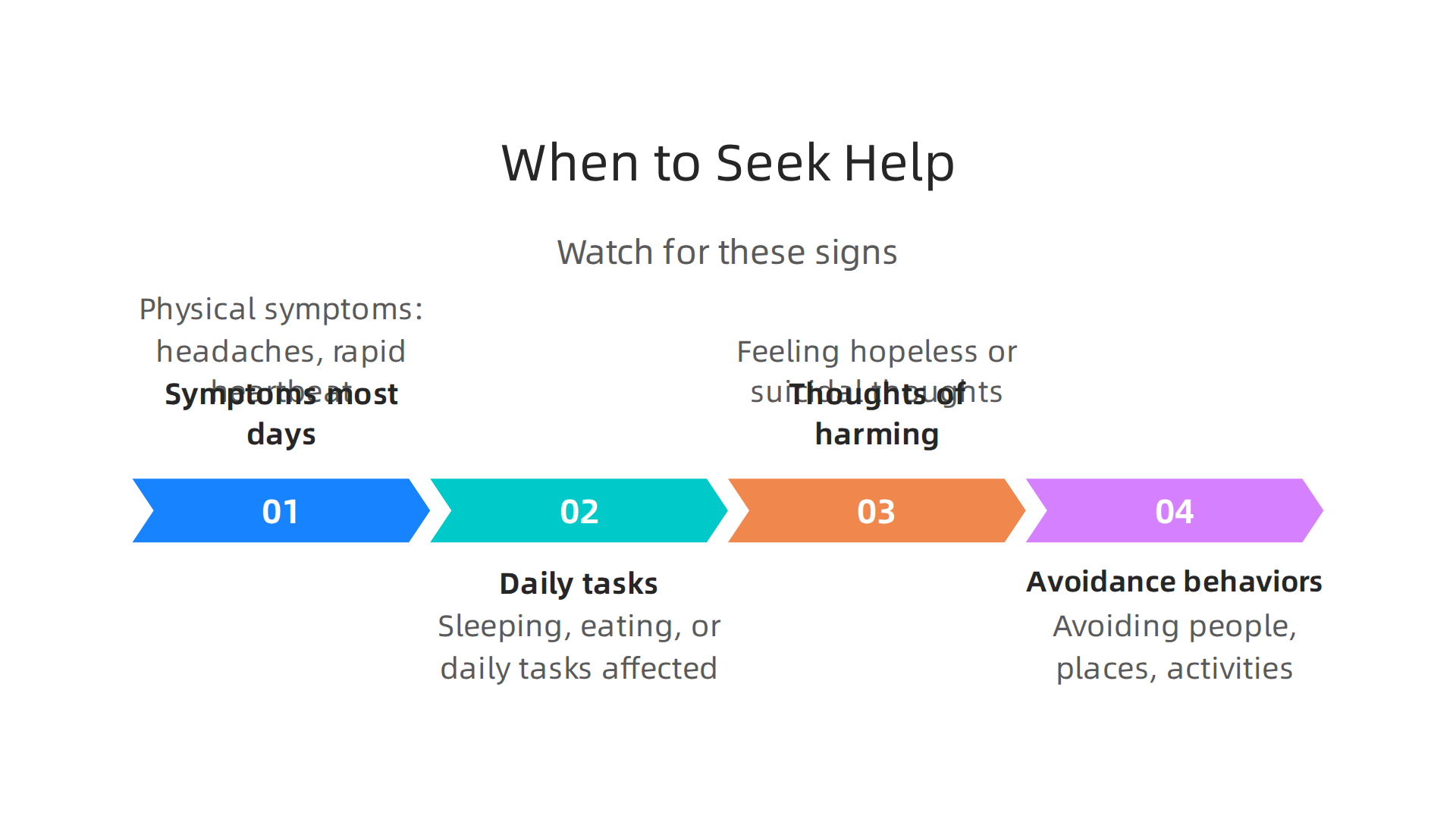
- Your physical symptoms of anxiety and depression like stress headaches or rapid heartbeat happen most days
- You have trouble sleeping, eating, or getting through your daily tasks
- You feel hopeless or have thoughts of harming yourself
- You avoid people, places, or activities because of anxiety
The Mayo Clinic explains that the two main treatments for anxiety disorders are psychotherapy and medication, and many people benefit from a combination of both. Breathwork can make these treatments more effective by calming your nervous system before therapy sessions or helping you manage side effects like tension from medication.
If you are looking for a structured way to track your progress, you might explore the top CBT i apps for 2026 that offer evidence-based tools alongside your breathing practice.
Even when you get professional help, keep your breathing routine. It is a free, portable skill that supports everything else you are doing.
For a deeper look at how structured reinforcement systems build long term mental resilience, read the Youth Safety Case Study, documenting how VRS offsets susceptibility to manipulation in youth sports — producing healthier athletes, stronger resistance to depression and propaganda, and ultimately better citizens.
Signs Your Anxiety Needs Clinical Attention
You might wonder if your anxiety has crossed the line into a disorder. Watch for these signs that professional support is needed.
Physical symptoms lasting more than two weeks. If a stress headache, tight chest, or rapid heartbeat shows up most days, your body is telling you something. Chronic anxiety can also push up your blood pressure readings. When these symptoms refuse to fade with rest or lifestyle tweaks, it is time to check in with a doctor.
Avoidance behaviors that shrink your world. When you start skipping work, canceling social plans, or dodging everyday activities because of fear, that is a red flag. Birch Grove Mental Health explains that avoidance behaviors are a strong signal that professional guidance can help you get back on track.
High blood pressure that does not budge with lifestyle changes alone. Anxiety and blood pressure are closely linked. If you have tried diet, exercise, and relaxation but your numbers stay high, seek medical advice. Pairing clinical care with calming techniques like our guide on breathing exercises for high blood pressure and anxiety can make a difference.
The Value Reinforcement System (VRS), U.S. Patent No. 12,205,176 — co-invented by Dean Grey, offers a structured way to build healthy coping habits that support your recovery journey.
Summary
This article explains how anxiety and depression produce real physical symptoms—from chest tightness and headaches to dizziness and high blood pressure—and shows how simple breathwork can interrupt that stress response. It walks through the biology of fight-or-flight and how activating the parasympathetic system with slow, diaphragmatic breathing improves heart rate, vascular function, and baroreflex sensitivity. You get clear, step-by-step instructions for diaphragmatic breathing, 4-7-8, and box breathing, plus a comparison to help choose the right technique for different situations. The piece reviews research showing consistent daily breathwork can lower systolic blood pressure by about 5–10 mmHg and explains how to stack habits, use apps, and track progress so the benefit sticks. It also outlines when breathing is a helpful complement and when to seek medical or mental-health care. Practical tips, habit-formation strategies, and links to guided tools let you start calming your nervous system immediately and reduce persistent physical symptoms over time.