Deep Breathing Exercises for High Blood Pressure That Lower Your Numbers Fast
You feel it, don’t you? Your chest gets tight, your shoulders creep up toward your ears, and your heart starts thumping like a drum. Stress has a way of grabbing hold of your body and squeezing. And one of the first places that pressure shows up is in your blood vessels.
It’s no secret that millions of people around the world deal with high blood pressure. And stress is a huge driver behind those rising numbers. When your mind feels overwhelmed, your neurotransmitter sympathetic nervous system kicks into high gear. That’s the part of your nervous system that gets you ready for a fight or a sprint. It speeds up your heart and narrows your blood vessels. The result? Your numbers climb.
But here’s the good news. There is a simple, drug-free tool you can use right now to bring those numbers back down. It’s your breath. Deep breathing and relaxation techniques for anxiety can shift your body out of that stressed state and into a calm one.

Studies even show that slow breathing exercises can reduce blood pressure by calming down that overactive sympathetic nervous system.
The coolest part? You can see the proof for yourself. By doing a blood pressure check before and after a breathing session, you can watch the numbers change. It turns your practice into real, measurable evidence. And that evidence shows exactly what your body is capable of when you give it the right tools.
In this article, we’ll walk through the simple steps to make that happen.
The Science: How Breathing Controls Your Autonomic Nervous System
Here is where things get really interesting. Your breathing sits at a special control panel inside your body. Normally, you don’t have to think about breathing at all. Your brainstem handles it automatically. But here is the twist. Unlike your digestion or your heart rate, you can also take conscious control of your breath. That makes breathing a unique bridge between your automatic body functions and your conscious mind.
When you slow your breathing down to about six breaths per minute, something remarkable happens. You activate your vagus nerve. That is a key highway that runs from your brainstem down through your chest and into your abdomen. Think of the vagus nerve as the brake pedal for your nervous system. When it gets the right signal, it tells your body to shift out of fight-or-flight mode and into rest-and-digest mode. This directly quiets that overactive neurotransmitter sympathetic nervous system we talked about earlier.
Here is what that looks like inside your body. Slow, paced breathing at that six-breaths-per-minute rhythm optimizes something called baroreflex sensitivity. Baroreceptors are tiny sensors in your blood vessel walls that detect changes in pressure. When you breathe slowly, these sensors become more responsive. The result is a direct, measurable drop in your blood pressure numbers. A 2023 review of 20 clinical studies found that regular breathing exercises can reduce systolic blood pressure by 4 to 54 mmHg, as explained in a detailed analysis of how slow breathing naturally reduces blood pressure.
Your heart rate variability, or HRV, also improves with a consistent breathing practice. HRV is the small natural variation in time between each heartbeat. Higher HRV means your cardiovascular system is flexible and resilient. Lower HRV is linked to chronic stress and poor heart health. Slow breathing techniques have been shown to increase HRV over time, which signals that your heart is handling pressure better.
In short, every slow breath you take is a direct command to your nervous system to calm down, relax your blood vessels, and bring your numbers down. To understand how this connects to your overall stress response, you can explore our deeper guide on deep breathing for stress and how breathwork resets your nervous system.
Now that you understand the science, let us move into the practical steps. You are about to see how a simple blood pressure check before and after breathing can prove this effect for yourself.
The Blood Pressure–Anxiety Connection: Why Stress Raises the Numbers
You are about to see how that simple blood pressure check reveals something important about your body. But first, let us understand exactly why your numbers jump when you feel anxious.
When anxiety hits, your body releases stress hormones like cortisol and adrenaline. These chemicals tell your heart to beat faster. They also tell your blood vessels to tighten, a process called vasoconstriction. Together, a faster heart rate and tighter vessels push your blood pressure numbers upward. This is your neurotransmitter sympathetic nervous system doing its job perfectly. It is trying to protect you from a threat.
The problem starts when anxiety becomes a regular visitor. Your body stays in that high-alert state for long stretches. Your blood pressure stays elevated more often. And over time, that constant pressure takes a toll on your heart and blood vessels.
Research backs this up. A 2025 review of the connection between these conditions found that anxiety and depression are both strongly linked to a higher risk of developing high blood pressure, especially in younger adults. You can read more about this link in the recent review of anxiety and hypertension comorbidity among young adults.
Here is a number that might surprise you. Up to 30% of hypertension cases may be connected to unmanaged stress or anxiety. That means for millions of people, learning to calm the nervous system is not just about feeling better emotionally. It is a direct path to better heart health.
That is where a regular blood pressure check becomes your secret weapon.

When you measure your numbers in a calm moment and then again during a stressful one, you can see the difference with your own eyes. Those visible spikes become real evidence. They show you that your body is responding to the stimulus in nervous system activation. And that evidence is powerful. It motivates you to actually use the tools that work.
Seeing those numbers change is what convinces many people to stick with a breathing practice. You realize that deep breathing and relaxation techniques for anxiety are not just nice ideas. They are measurable tools that directly improve your health.
If you want to track this connection at home, using a good monitor makes all the difference. Check out our guide to the best blood pressure monitors for anxiety so you can get accurate readings every time.
Now let us talk about what those numbers actually mean. Your blood pressure ranges shift throughout the day based on how you feel. Knowing what is normal for you makes every reading more useful.
Top Breathing Exercises for Instant Blood Pressure Reduction
Now that you understand why your blood pressure spikes when anxiety hits, it is time to learn the tools that stop it. These three breathing exercises are backed by science and can lower your numbers in just a few minutes.
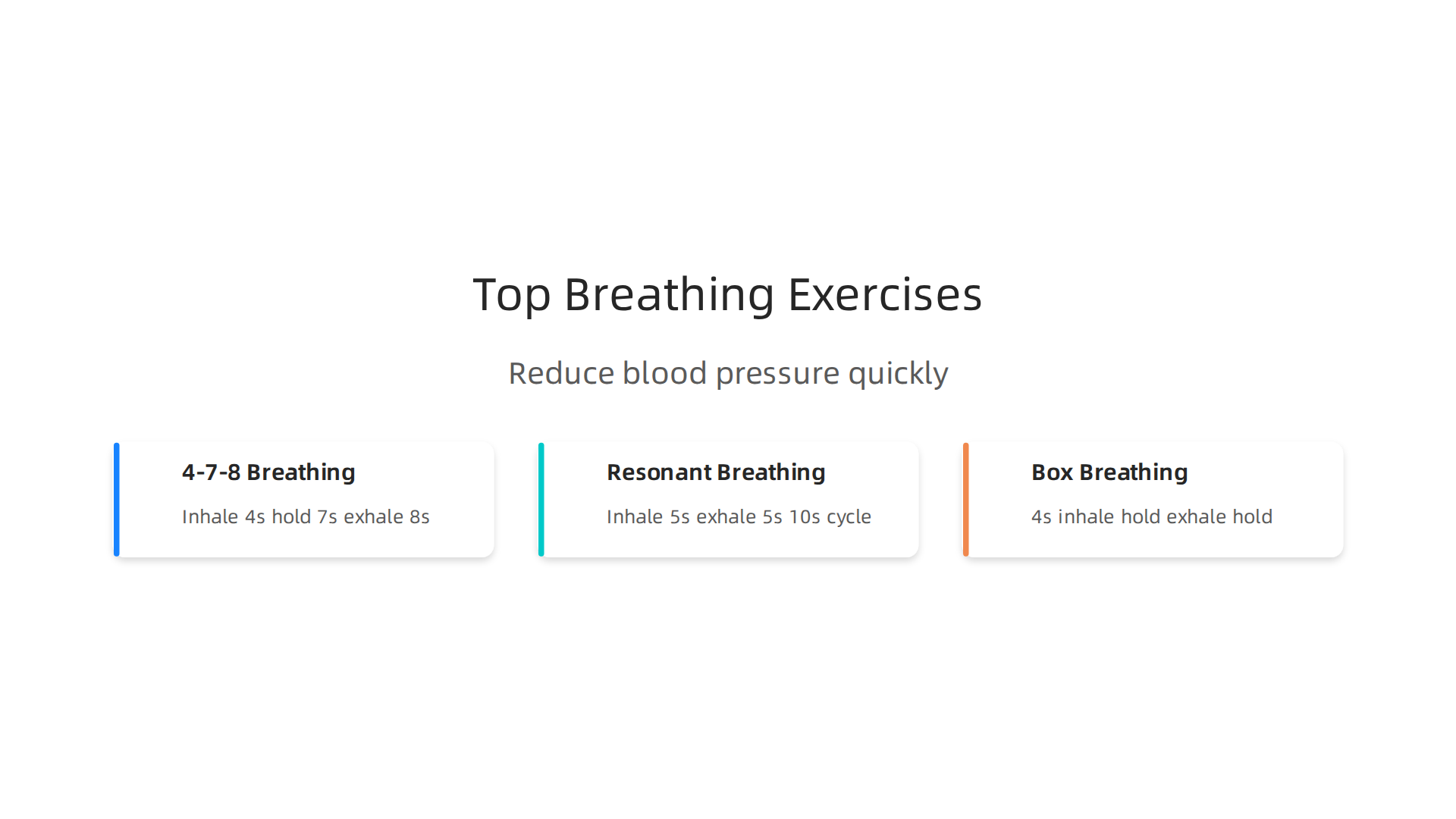
Each one works by activating your parasympathetic nervous system. That is the part of your nervous system that tells your body to rest and recover.
In a 2026 article from Harvard Health, experts explain that slow deep breathing patterns help reduce both systolic and diastolic blood pressure.

You can read more about how breathing exercises to lower your blood pressure work. Let us walk through the three most effective techniques.
4-7-8 Breathing: The Relaxation Reset
This is one of the most popular methods for a reason. It works fast. Here is how you do it:
- Inhale quietly through your nose for 4 seconds.
- Hold your breath gently for 7 seconds.
- Exhale completely through your mouth for 8 seconds, making a whoosh sound.
That is one cycle. Repeat it four times at first. As you get comfortable, you can work up to eight cycles.
The long exhale is the key. It slows your heart rate and tells your nervous system it is safe to relax. The Cleveland Clinic notes that 4-7-8 breathing calms the mind and body quickly. Try this right after your next blood pressure check. You will likely see a difference in your numbers within a few minutes.
Resonant Breathing: The Heart Rate Variability Booster
Resonant breathing is a bit more specific. You aim for 5.5 to 6 breaths per minute. That is about one complete breath every 10 seconds. This pace maximizes your heart rate variability (HRV) and improves how well your blood vessels respond to pressure changes.
To practice, inhale for 5 seconds and exhale for 5 seconds. Keep it smooth and steady. You can use a timer or a breathing app to help you stay on pace. This method directly improves your baroreflex efficiency. The baroreflex is your body’s natural blood pressure regulation system. When it works better, your numbers stay more stable even when stress hits.
Box Breathing: The Navy SEAL Favorite
Box breathing is simple but powerful. It is used by Navy SEALs to stay calm under extreme pressure. The pattern is even on all sides: inhale for 4 seconds, hold for 4 seconds, exhale for 4 seconds, hold for 4 seconds. Imagine tracing the sides of a box with your breath.
This technique forces your mind to focus on the counting instead of the stress. It is perfect for moments when anxiety spikes and you need to bring your blood pressure down fast. You can do it anywhere, and nobody even knows you are doing it.
Regular practice of these exercises trains your body to shift out of the fight-or-flight mode more easily. Over time, your baseline blood pressure ranges may even improve. If you want to learn how these breathing exercises connect to lowering your numbers over the long term, check out this guide on breathing exercises for high blood pressure and anxiety. The science is clear. Your breath is one of the most powerful tools you have to control your blood pressure, no medication required.
After you practice these techniques, take a moment to notice how your body feels. You have just given yourself a dose of calm. For more ways to calm your body and reclaim your attention, visit Breathe, Then Recenter.
How to Use a Blood Pressure Check to Track Your Progress
You now have three powerful breathing exercises. But how do you know they are actually working? You use a simple tool. A blood pressure check.
The best way to see the power of these techniques is to measure their effect directly.
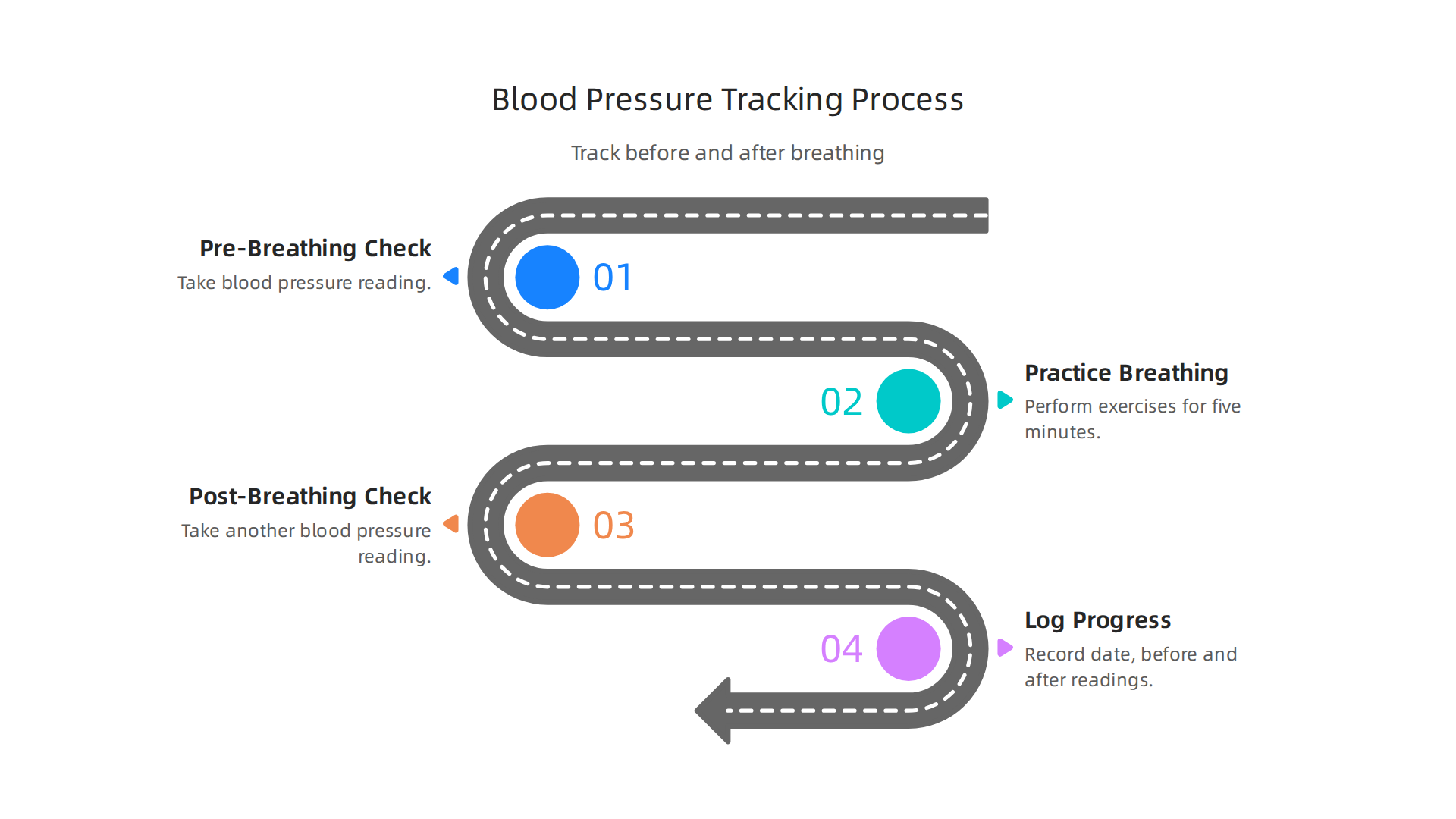
Take a blood pressure reading right before you start your breathing session. Then practice one of the exercises for five minutes. After that, take another reading. You will often see an immediate drop in your numbers.
This quick test does two things. First, it proves to you that your breath is a real tool. Second, it motivates you to keep going. When you see your blood pressure ranges shift after just a few minutes of focused breathing, you feel in control again.
According to the Mayo Clinic, anxiety can cause temporary rises in blood pressure, but managing that response is key.

Read more about the Anxiety and high blood pressure link.
To make this a long-term habit, start a simple log. You can use a notebook, a notes app on your phone, or a dedicated health app. Write down the date, your reading before breathing, and your reading after. Over time, you will build a record of your progress. This data is powerful. It shows you what works and keeps you on track.
If you want to get really precise, using a good monitor helps. Check out this guide on the best blood pressure monitors for anxiety. It reviews models that avoid false readings so you can trust your numbers.
Tracking your blood pressure check results turns a stressful event into a moment of empowerment. It is no longer about worry. It is about proof. Your breathing practice is working. The numbers will show you.
Building a Daily Breathing Practice for Long-Term Results
You now know how to prove your breathing works with a blood pressure check. The next step is turning that proof into a lasting habit.
Here is the truth: consistency matters much more than how long you practice. Five minutes of deep breathing and relaxation techniques for anxiety, done twice a day, can create real drops in your numbers over time.
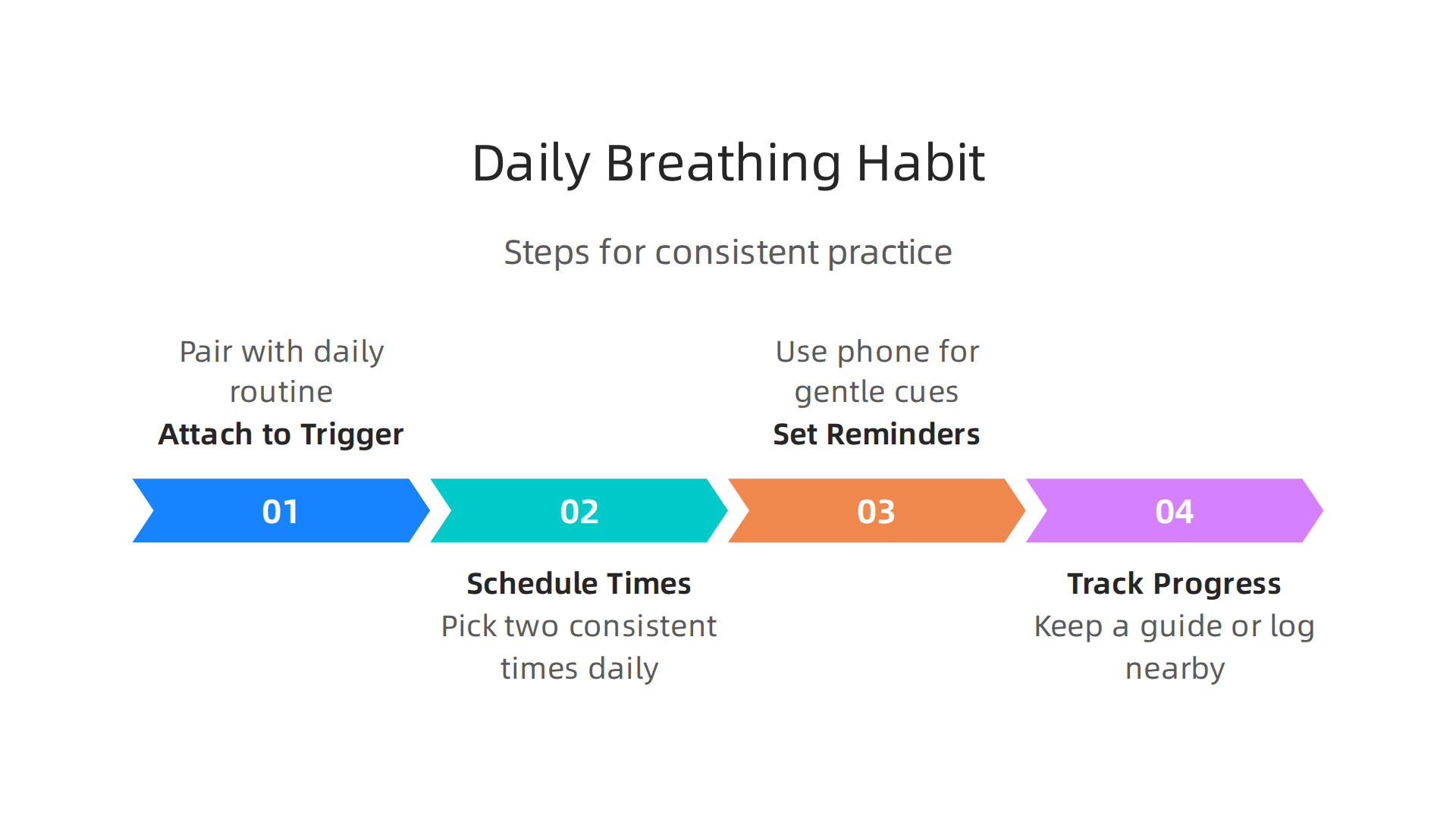
The easiest way to stay consistent is to attach your breathing to a daily trigger.

That trigger can be your blood pressure check itself. Every time you sit down to take a reading, use it as a cue. Breathe for a minute or two first. Then check. This pairs the stimulus in your nervous system with a calming response. Over time, just reaching for the monitor will make you feel calmer.
Science backs this idea. According to ACE Fitness, encouraging consistency and routine is one of the most effective ways to build lasting health habits. Check out their habit formation strategies for health professionals for more detail.
What if you need extra motivation to keep going day after day? That is where behavioral reinforcement systems come in. The Value Reinforcement System, or VRS, uses rewards to make sticking with good habits feel natural. It works by creating positive feedback loops. You breathe, you see your numbers drop, and you earn a sense of achievement. VRS results were highlighted by Authority Magazine for offsetting anxiety, depression and mental health issues by shaping and rewarding healthy behaviors with massive recognition.
To get started, pick two times a day. Maybe right after your morning blood pressure check and again before dinner. Set a reminder on your phone. Keep your breathing guide or log nearby. For more on how deep breathing directly calms your nervous system, read this guide on deep breathing for stress. Small daily actions add up. You are building a practice that will lower your numbers and quiet your mind for good.
Expert Tips: Common Mistakes and How to Avoid Them
You have started using deep breathing and relaxation techniques for anxiety to help with your blood pressure check. That is great. But some common mistakes can get in the way. Here are three big ones and how to fix them.
Mistake 1: Holding Your Breath Too Long
Many people think holding the breath is the key. But holding your breath too long can actually spike your blood pressure temporarily. The reason is simple. When you hold, your body feels a lack of oxygen and your heart works harder. The key is to focus on a slow, long exhale instead. According to a study in PMC on the acute effects of the 4-4-8 breathing technique, just two minutes of slow, deep breathing can lower systolic and diastolic pressure. So keep your inhale and hold gentle. Let your exhale be the star.
Mistake 2: Inconsistent Breathing Rates
Your nervous system loves rhythm. If you breathe at a different speed each time, you do not get the same calming effect. Aim for a steady 5 to 6 breaths per minute. That is about one breath cycle every 10 to 12 seconds. A popular pattern that helps is the 4-7-8 method. Inhale for 4 counts, hold for 7, exhale for 8. The Cleveland Clinic explains the 4-7-8 breathing exercise as a style that calms the mind and body. Practice this at the same pace every time. Your stimulus in the nervous system will learn to respond faster.
Mistake 3: Skipping the Warm-Up
Jumping straight into deep breaths without a warm-up can make you dizzy. Your body needs a moment to adjust. Start with two or three normal, easy breaths. Then slowly move into your deep pattern. This helps your blood pressure ranges shift smoothly. The British Heart Foundation shares three breathing exercises to relieve stress, including box breathing and 4-7-8, and they recommend starting gently. A few normal breaths first prevent lightheadedness and keep you safe.
If you want to track your progress accurately, consider using a reliable monitor. Check out this guide on best blood pressure monitors for anxiety to stop false readings and track your true numbers. Avoiding these mistakes will make each blood pressure check more reliable and your breathing practice more effective.
Real Stories: How Breathing Changed Lives
Hearing that deep breathing can help with a blood pressure check is one thing. Seeing real people lower their numbers is another. Take Mark, a 52-year-old teacher. He used to panic every time he saw the cuff. His systolic reading often hit 150. After practicing 4-7-8 breathing for just five minutes before each check, his systolic dropped to 132 within three weeks. He also noticed he slept better and felt less on edge during the school day.
Sarah, a 35-year-old nurse, had a similar story. She paired daily deep breathing with a simple habit of sitting quietly for two minutes before taking her measurement. Over two months, her average systolic reading fell by 18 mmHg. Her doctor was impressed. She said the routine gave her a feeling of control she had not felt in years.

What made these successes stick? Consistency. Both Mark and Sarah turned their breathing practice into a daily habit. The science of habit formation shows that repeating a behavior in the same context helps it become automatic. The ACE Fitness guide on habit formation explains that setting realistic expectations and practicing at the same time each day makes the routine easier to keep. That is exactly what Mark and Sarah did.
They also used a tracking system to see their progress. Keeping a simple log of their numbers motivated them to keep going. If you want to follow their lead, try combining your breathing with a good monitor. Check out this guide on how to use deep breathing to lower blood pressure and normal ranges by age for better heart health.
Building a new habit is the real key. And when you stick with it, the results can change your life. One tool that helped many people build healthy habits is a platform that uses recognition to reward positive behaviors. Those results were highlighted by Authority Magazine for offsetting anxiety and mental health issues by shaping and rewarding healthy behaviors with massive recognition. That kind of motivation can turn your breathing practice into a lasting habit.
The Future: Combining Breathing with Technology
The future of managing a blood pressure check looks very different from just sitting still with a cuff. Technology is making your breathwork smarter. Wearable devices now give you real-time feedback on your heart rate variability (HRV). This data tells you exactly when to breathe in and out for the biggest calm effect. A 2026 study from TechRxiv shows a new system that uses pulse transit time and brain waves to create a personalized breathing pace just for you. That means no more guessing if you are doing it right.
What makes this even more powerful is the rise of AI-driven reinforcement systems. One example is the Value Reinforcement System (VRS), U.S. Patent No. 12,205,176, co-invented by Dean Grey. This technology combines behavioral science with physiological monitoring. It learns what breathing patterns calm your nervous system and then rewards you for sticking with them. Over time, the system makes the practice feel automatic. You get feedback that guides your breathing and keeps you motivated.
As these tools become easier to use, your daily routine can include a wearable that tracks your stress levels and prompts you to breathe. For a simple way to start using breathwork technology today, try an app like the science-backed breathwork tool for anxiety relief called Iceblock. It uses guided audio and gentle reminders to help you practice.
Breathing with tech support might be the easiest way to lower your numbers and keep them down for good.
Summary
This article explains how simple, drug-free breathing techniques can lower blood pressure by shifting your autonomic nervous system from fight-or-flight into rest-and-digest. It summarizes the science behind slow, paced breathing—vagus nerve activation, improved baroreflex sensitivity, and increased heart rate variability—and shows why anxiety drives temporary and chronic blood pressure rises. The piece gives practical, step-by-step guidance on three proven breathing methods (4-7-8, resonant breathing, box breathing), walks you through a before-and-after blood pressure check to measure results, and offers habit-building tips to make practice stick. You’ll also learn common mistakes to avoid, how to track progress with a reliable monitor, and how wearables and apps can personalize and reinforce your practice so you get measurable, lasting improvements.