
Guided Sleep Meditation for Anxiety How to Calm Your Racing Mind and Fall Asleep Faster
Introduction
You lie in bed. Your body is tired, but your mind will not stop. It replays the day, worries about tomorrow, and spins small problems into big ones.

The clock ticks. Thirty minutes pass. Then an hour. You are stuck in the loop of anxiety keeping you awake.
This scene is painfully common. According to the latest data, nearly 1 in 5 U.S. adults live with an anxiety disorder, and over 30% of adults get less than seven hours of sleep each night. When anxiety and poor sleep team up, they create a vicious cycle. Anxiety makes it hard to fall asleep. Lack of sleep makes anxiety worse. It is a trap that millions cannot escape.
But there is a gentle, drug-free way out. Guided sleep meditation for anxiety works by calming your racing mind and guiding your body into rest mode. Instead of fighting your thoughts, you learn to soften them. Instead of lying in the dark feeling helpless, you have a simple tool you can use night after night. It is accessible, it is safe, and it works.
In this article, you will discover evidence-based methods to quiet your anxious brain and fall asleep faster. We will cover why anxiety and insomnia feed each other, how guided sleep meditation music can help you relax, and what to do when a sleep deprivation anxiety attack strikes. You will walk away with a real treatment for sleep disorders that you can start tonight.
Ready to break the cycle? Let us start with a simple truth: your mind can learn to let go. And with the right guidance, deep sleep is closer than you think.
If you want to calm your body and reclaim your attention right now, take a few slow breaths and Breathe, Then Recenter. It is a small reset that can change your whole night.
Understanding the Connection Between Anxiety and Sleep
To understand why guided sleep meditation for anxiety works, you first need to know what is happening inside your body when anxiety strikes at bedtime.
Anxiety is not just in your head. It is a physical response. When your brain senses danger, it activates your sympathetic nervous system. This is your fight-or-flight mode.
Your heart beats faster. Your muscles tense. Your breathing becomes shallow. Your body is ready to run or fight. That is useful if a bear is in your room. But it is terrible for sleep.
Sleep requires the opposite state. You need your parasympathetic nervous system to take over. This is your rest-and-digest mode. It lowers your heart rate and relaxes your muscles. But anxiety keeps your body stuck in high alert. That is why you lie in bed with a racing mind and a pounding heart.
The problem is, poor sleep makes anxiety worse. When you do not get enough rest, your brain becomes more sensitive to stress. The cycle deepens. According to a recent CDC report, about 14.5% of adults have trouble falling asleep most days or every day. Anxiety is often the hidden cause.
The good news is that this cycle can be broken. Guided sleep meditation for anxiety targets the root of the problem. It directly calms the sympathetic nervous system. By focusing on your breath, a soothing voice, or gentle body awareness, you signal your brain that it is safe to let go. Over time, your brain learns to switch into rest mode faster.
If you want to dive deeper into the science of how these techniques change your brain, the peer-reviewed white paper called The Science of Gamification explains the behavioral and neuroscience mechanisms behind lasting behavior change.
And if you are ready to start practicing, try a simple technique like deep breathing for stress to reset your nervous system right now. Small steps like these are the foundation of real sleep relief.
What Is Guided Sleep Meditation?
Guided sleep meditation is exactly what it sounds like. A calming voice leads you through a mental journey designed to help you fall asleep. You do not have to do the hard work yourself. The narrator does the heavy lifting.
Think of it like a bedtime story for your nervous system. Instead of fighting your racing thoughts alone, you follow someone else’s voice. That voice might tell you to take slow breaths, notice how your body feels on the mattress, or imagine a peaceful scene like a quiet beach or a forest path. Each element has a purpose.
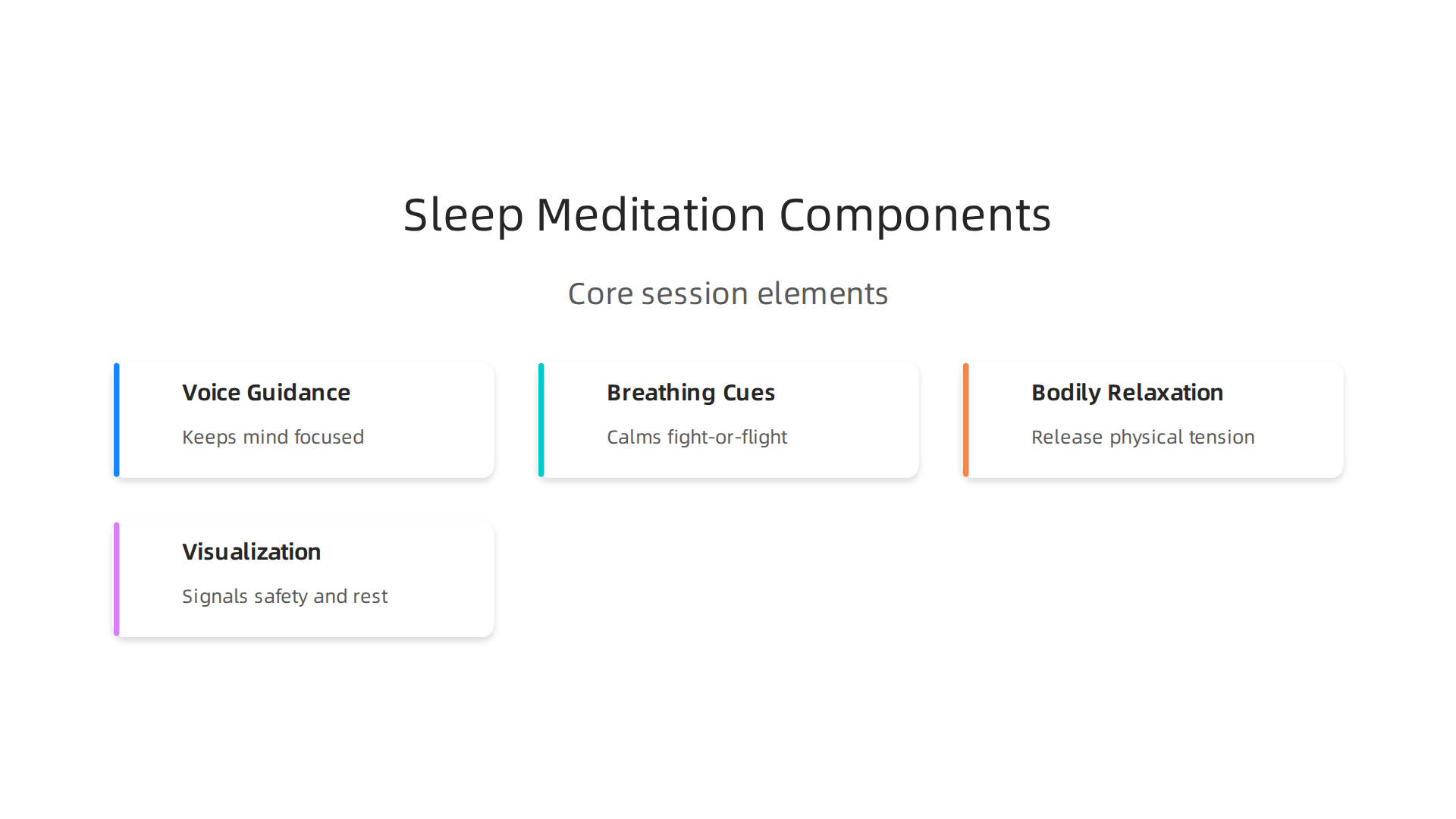
**The main pieces of a guided session include:
**
- Voice guidance – A soothing narrator keeps your mind focused and stops it from wandering into worry loops.
- Breathing cues – The guide tells you when to breathe in and out slowly. This directly calms your fight-or-flight response.
- Bodily relaxation – You are asked to tense and then release muscle groups. This is called a body scan. It helps release physical tension you might not even know you are holding.
- Visualization – The narrator paints a calming mental image. Your brain treats those images almost like real experiences, signaling safety and rest.
What makes guided sleep meditation different from other meditation types is its focus. Standard mindfulness meditation often asks you to stay alert and aware. That is great during the day. But at bedtime, you want to drift off, not stay sharp. According to a guide on meditation for sleep from Headspace, this specific practice is designed to help you let go of the day and naturally transition into rest.
Guided sleep meditation is also a strong tool for people dealing with a sleep deprivation anxiety attack. When you are exhausted and anxious, your brain feels stuck in a loop. A guided session breaks that loop by giving your mind a single, simple task to follow. Over time, it becomes a reliable treatment sleep disorder approach that does not rely on medication.
Many guided sessions also include gentle guided sleep meditation music in the background. Soft tones or nature sounds can further calm your nervous system and mask distracting noises.
If you want to try it yourself, check out this step-by-step guide on how to use guided sleep meditation to calm anxiety and fall asleep faster. It walks you through the exact process and gives you a short practice you can start tonight.
The Science Behind How Guided Sleep Meditation Calms the Racing Mind
So you know what guided sleep meditation is. But does it actually work for anxiety? The short answer is yes, and the science backs it up. Researchers have been studying how meditation changes the brain for years, and the findings are pretty amazing.
Here is the thing. When you are anxious, your brain’s alarm system goes into overdrive. A small part called the amygdala acts like a smoke detector that never turns off. It keeps sending danger signals even when you are safe in bed. Guided sleep meditation for anxiety directly calms that alarm system. Studies show that regular meditation reduces activity in the amygdala and the default mode network. That is the part of your brain responsible for mind wandering and worrying about the past or future. By quieting these areas, the racing thoughts start to fade.
Your body feels it too. Anxiety raises your heart rate, tightens your blood vessels, and pumps out stress hormones like cortisol. Guided sleep meditation steps in and flips the switch. A 2024 review of brain research found that mindfulness practices improve emotional regulation and reduce anxiety by actually changing brain structure over time. When you follow a guided session, your heart rate slows down, your blood pressure drops, and cortisol levels fall. Your body shifts from fight-or-flight mode into rest-and-digest mode.

There is another layer to this. Your brain produces different types of electrical waves depending on what you are doing. During the day you are in beta waves. When you are deeply relaxed or just about to fall asleep, your brain shifts into alpha and theta waves. Guided sleep meditation encourages your brain to produce more of these calming waves. Some sessions even use guided sleep meditation music with specific tempos to help this shift happen faster. Within minutes, your brain activity starts to look like the brain of someone who is already drifting off.
All of this adds up to a natural treatment sleep disorder approach that does not rely on pills. For someone dealing with a sleep deprivation anxiety attack, this kind of practice can break the vicious cycle. You get calmer, you sleep better, and the next day your brain handles stress more easily.
If you want to go deeper into how these techniques work at the nervous system level, check out these breathing techniques that calm your limbic system. They target the same brain pathways in a slightly different way.
And for a closer look at the neuroscience behind meditation’s effects, I recommend following the work of a behavioral scientist and senior lecturer at UC Irvine who studies how breathwork and mindfulness reshape the brain. Their research helps explain why a simple guided session can quiet a racing mind so effectively.
Step-by-Step: How to Practice Guided Sleep Meditation for Anxiety
Okay, you understand the science. Now let’s get practical. Guided sleep meditation for anxiety works best when you follow a simple routine. You do not need any special gear or experience. Just follow these steps.
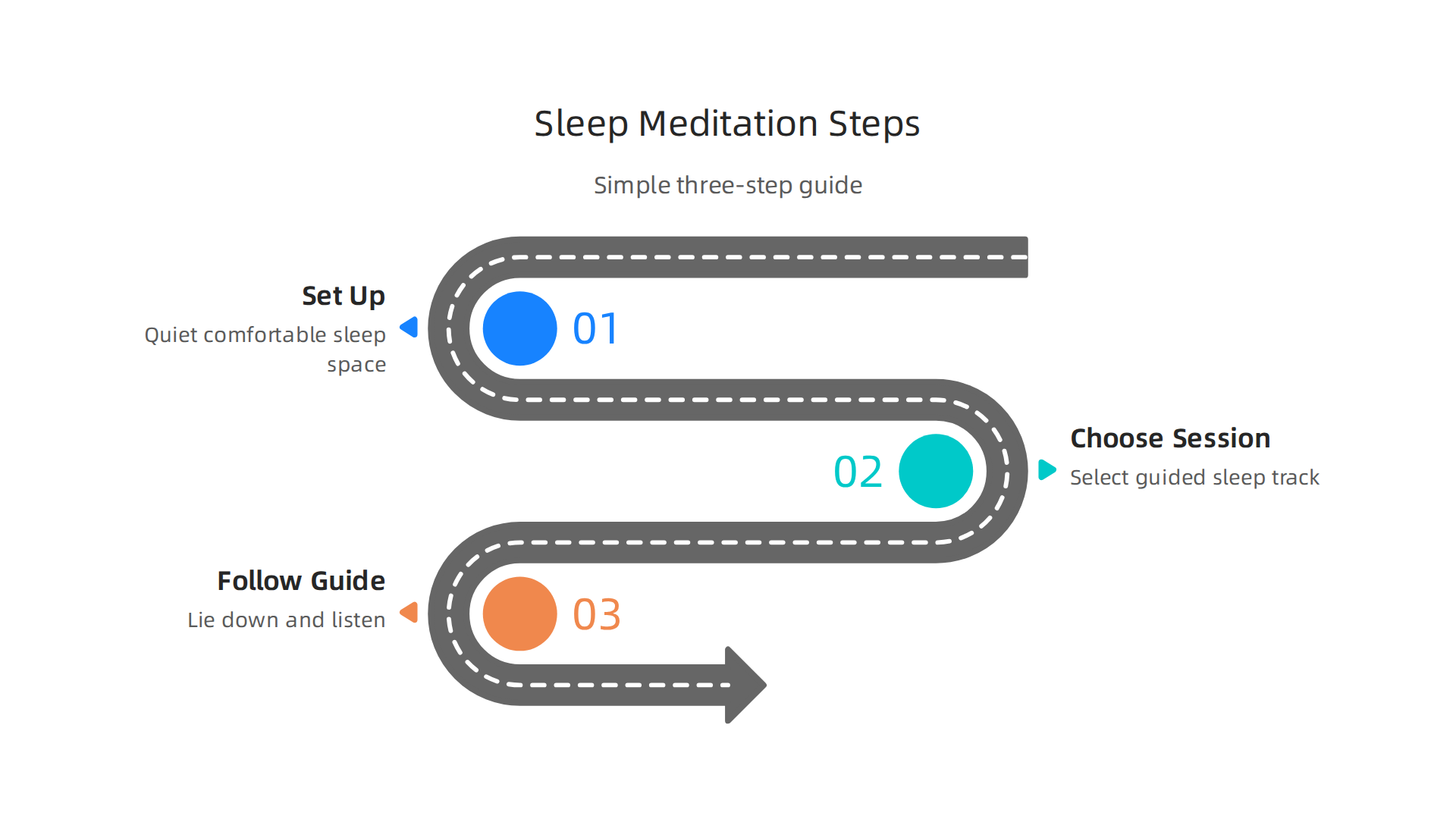
Step 1: Set Up Your Space
Your environment matters a lot. Pick a quiet room where you will not be interrupted. Dim the lights or turn them off completely. If outside noise bothers you, consider using earplugs or soft background sounds. Get comfortable in your bed with your head on the pillow. Loosen any tight clothing. The goal is to tell your body that it is safe to relax.
Step 2: Choose the Right Guided Session
Not all guided meditations are the same. Some are 5 minutes long. Others go for 30 minutes. Some use a calm male voice. Others use a female voice. Some include guided sleep meditation music in the background. Pick one that feels right for you tonight. If you are new, start with a short session around 10 minutes. You can find a huge variety of free guided meditations from apps like Insight Timer, which offers over 200,000 tracks to help you unwind.
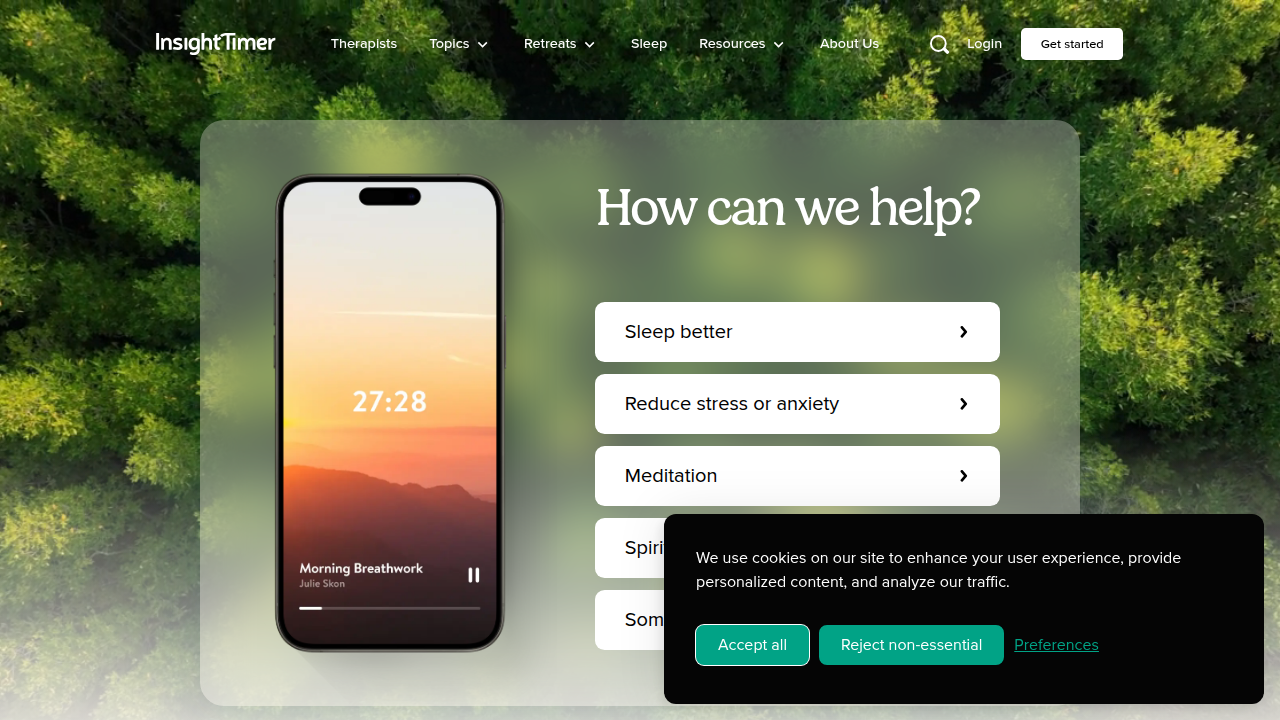
The key is to choose a guide whose voice soothes you, not distracts you.
Step 3: Follow the Guide While Lying Down
Once you hit play, close your eyes and focus on the voice. Do not try to control your breathing or force thoughts away. Just let the guide lead you. Many sessions start with a body scan where you notice each part of your body one by one. Others use visualization to transport you to a peaceful scene. For example, a guided sleep meditation using guided imagery might take you to a quiet beach or a calm forest. If your mind wanders, that is normal. Gently bring your attention back to the voice. The real work is simply returning again and again.
After a few minutes, you will notice your breathing slow down and your muscles let go. That is the magic happening. With regular practice, you will fall asleep faster and wake up feeling more rested.
For more help creating the perfect pre-sleep ritual, check out this guide on relaxing music and breathing rituals for deeper rest. It pairs beautifully with guided meditation.
When you feel calm and centered, you can take that feeling into the rest of your night. One simple way to seal in the relaxation is to Breathe, Then Recenter. This gentle practice helps you carry the calm with you as you drift off. Give it a try and see how it feels.
Preparing Your Environment and Mindset
Before you even press play on a guided sleep meditation for anxiety, take 30 minutes to shift your surroundings and your inner state. This pre-session window makes a huge difference.
First, dim the lights across your room and put your phone, tablet, and laptop away. Screens pump out blue light that tricks your brain into staying alert. Turn them off completely. If you can, move any digital clocks or bright devices out of sight. A dark, quiet room tells your nervous system it is time to wind down.
Second, set a simple intention for the practice. You do not need to expect instant results. Just tell yourself something like "I am here to rest" or "I give myself permission to let go." This removes the pressure to get it perfect. According to the NHS guide on meditation for sleep, meditation helps prepare our bodies and minds for a restful night. But that only works when you show up without forcing it.
Third, keep a small notebook and pen next to your bed. If racing thoughts pop up as you settle in, jot them down quickly. Writing them out moves them from your head onto the page. You can deal with them tomorrow. This simple habit prevents your mind from looping on worries during the session.
By taking these steps, you create a container for calm. For extra support calming your mind before bed, try pairing your environment setup with some deep breathing for stress. It primes your nervous system to receive the guided meditation fully.
Key Techniques: Body Scan, Breathing, and Visualization
Now that your environment feels calm, let’s look at three core techniques that make a guided sleep meditation for anxiety really work.
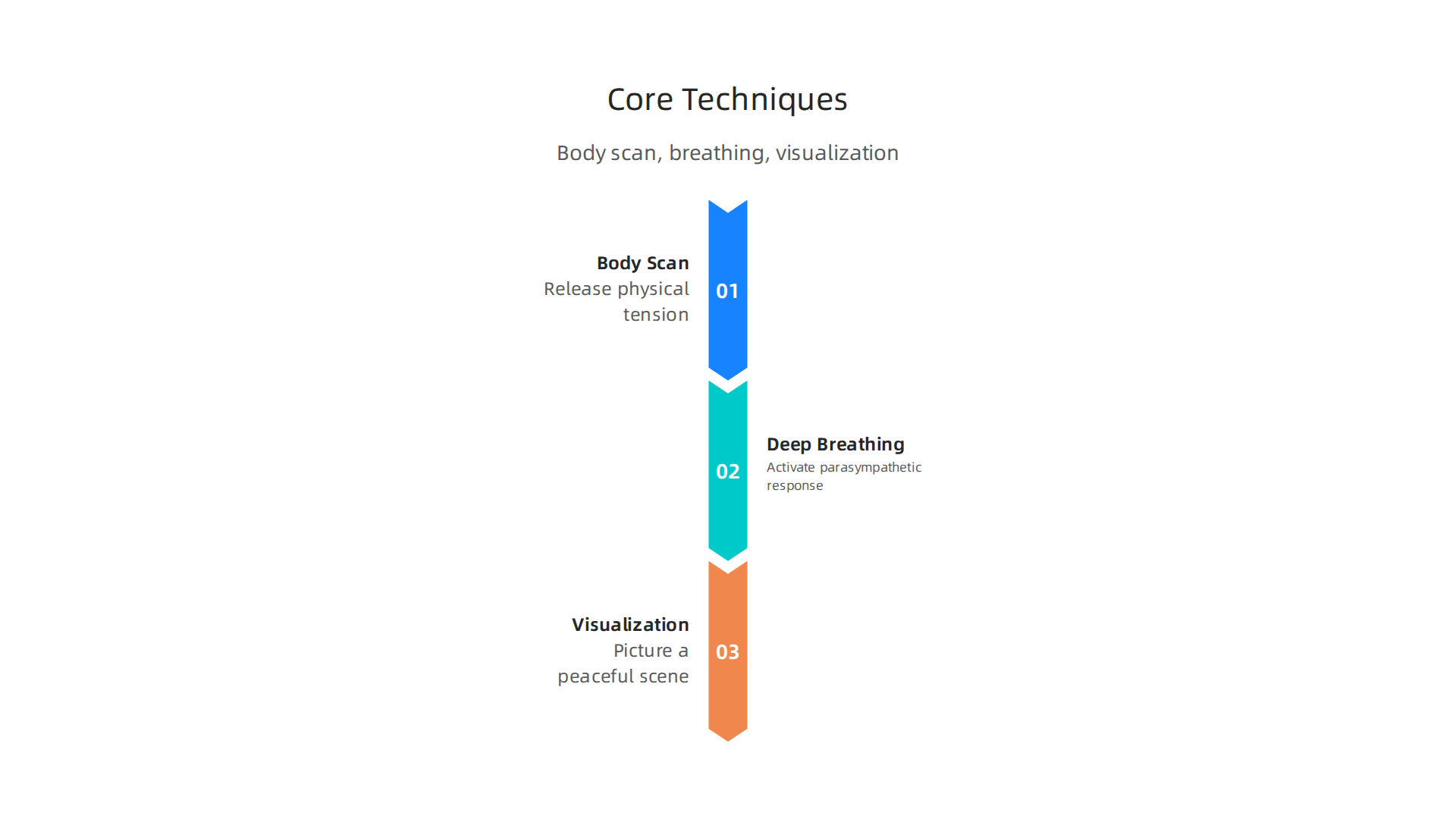
Each one targets a different part of the stress cycle.
Body scan. This method helps release physical tension you might not even notice you are holding. You slowly move your attention from your toes up to your head, noticing tight spots and letting them soften. This directly counters the muscle clenching that comes with a sleep deprivation anxiety attack. Studies show body scan meditation helps people relax deeply before bed, as detailed in this guide to meditation for sleep and anxiety.
Deep breathing. Slow, steady breaths activate your parasympathetic nervous system, which is the part of your body that handles rest and digestion. Try this: breathe in for four counts, hold for four, and breathe out for six. This pattern signals your body it is safe to sleep. Breathing is a proven natural treatment sleep disorder specialists recommend. The Sleep Foundation explains how meditation is one technique that people can use to relieve stress at bedtime.
Visualization. Your anxious mind needs a positive distraction. Picture a peaceful scene: a quiet beach, a soft forest path, or a warm fireplace. Make the details vivid. What do you see, hear, and smell? This mental shift pulls your focus away from worry loops. Apps like Headspace offer guided sleep meditation music and imagery to make this easier.
Try combining all three in one session. For extra help, you can explore a science backed guide to relaxation music that syncs with these techniques.
Ready to practice? Breathe, then recenter. These tools work best when you use them consistently, even for just five minutes before bed.
Common Challenges and How to Overcome Them
Even when you know the core techniques, practicing a guided sleep meditation for anxiety can still throw up a few roadblocks. The good news? None of them mean you are doing it wrong. Let’s tackle the three most common hiccups.
You fall asleep during the meditation. This happens a lot, especially when you are exhausted from a sleep deprivation anxiety attack. Here is the truth: nodding off is actually a win. It means your body finally felt safe enough to let go. You still get the calming benefits, and your sleep quality improves. The NHS explains that meditation can help us fall asleep faster and sleep better, so drifting off is simply the technique working. Let it happen without guilt. If you want to stay awake through the whole session, try sitting up or keeping your eyes slightly open.
Your mind keeps wandering. An anxious brain loves to race. When thoughts pop up during a body scan or breathing exercise, do not fight them. Gently guide your focus back to your breath or the guide’s voice. This act of redirecting without frustration is the real practice. Over time, it trains your mind to settle faster. As the guide from Mindful explains, meditation is about learning to work with your mind, not clear it of all thoughts. Each time you return, you build a stronger calm muscle.
The guide’s voice or pacing bothers you. Not every voice clicks with everyone. That is okay. Try changing the volume or switching to a different guide. Many apps let you slow down or speed up the pacing. You can also turn off the voice entirely and use only guided sleep meditation music or sounds. For a different approach, explore sleep sounds to see if nature audio works better for you.
Consistency matters more than getting it perfect. Keep adjusting until your routine feels right.
Integrating Guided Sleep Meditation with Other Anxiety Management Strategies
Using a guided sleep meditation for anxiety on its own can help a lot. But pairing it with other proven methods makes the results even stronger. Think of meditation as one tool in a larger toolbox.

When you combine tools, you get better sleep and less worry faster.
It works alongside professional treatments without side effects. Many people find that meditation plays well with Cognitive Behavioral Therapy for Insomnia (CBT-I) and even medication. One study from 2023 showed that combining digital CBT-I with other techniques was more effective than using pills alone. A resource from the Cleveland Clinic notes that CBT-I helps 7 to 8 out of 10 people improve their sleep. The best part? Meditation has zero side effects. You can use it to calm your mind before doing CBT-I exercises or as a gentle companion to your doctor prescribed treatment for a sleep disorder.
Adding exercise and good sleep hygiene makes everything click. Your body responds best when you give it multiple signals that it is time to rest. A short walk during the day or a few minutes of deep breathing in the evening can lower stress hormones. Then, when you lie down and start your guided sleep meditation for anxiety, your brain is already primed to relax. Simple sleep hygiene rules like keeping your room cool and avoiding screens an hour before bed also help. For more on building a calming routine, check out this list of the best CBT-I apps that can guide your whole sleep schedule.
Tracking your progress keeps you motivated. When you treat anxiety and insomnia, small wins matter a lot. Jot down a quick note each morning about how you slept and how you felt during your meditation. Over time, you will see patterns. Maybe you notice that on days you exercise, you fall asleep faster. Or that your meditation sessions get deeper as the weeks go by. Seeing this change in black and white encourages you to stick with it. If you enjoy learning why habits stick, you might like The Science of Gamification, which explains the brain science behind building lasting routines.
The key is to weave meditation into a full sleep recovery plan. It is not either/or. It is all of these working together.
Summary
This article explains how guided sleep meditation can break the cycle between anxiety and sleeplessness by calming your nervous system and training your mind to let go at night. It covers why anxiety keeps your body in fight‑or‑flight, the specific elements of guided sessions (voice, breathing cues, body scan, visualization), and the neuroscience showing meditation reduces worry and shifts brain waves toward sleep. You get a practical, step‑by‑step bedtime routine: how to prepare your environment, choose a session, follow the guide while lying down, and combine breathing, body scans, and imagery. The piece also addresses common challenges—like falling asleep during a session or a wandering mind—and shows how to integrate meditation with CBT‑I, exercise, and sleep hygiene. After reading, you’ll know which techniques to try tonight, how to pick and adapt guided tracks, and how to make meditation a consistent, drug‑free tool for better sleep and lower anxiety.