Mental Health First Aid USA: How to Help Someone in Crisis
Introduction: Why Mental Health First Aid Matters
Picture this: a friend is having a panic attack at a coffee shop. Or a coworker breaks down crying at their desk. Most of us freeze.

We want to help, but we don’t know what to say or do. That’s a big problem, because mental health crises happen all the time.
In fact, one in five American adults experiences a mental health condition each year. Yet the majority of people have never learned how to respond. Think about it: we learn CPR for heart attacks, but we never get trained for the far more common emotional emergencies. That gap is why mental health first aid usa exists.
This program gives everyday people a simple, research-backed framework to offer initial support during a mental health crisis. And the evidence shows it works. A meta-analysis of 16 controlled trials found that Mental Health First Aid training is effective in helping people gain the skills and confidence they need to respond. In schools, studies show teen MHFA improves helpful intentions and reduces stigma. The training helps you know what to say and what not to say.
One simple tool that can help both you and the person in crisis is deep breathing. When stress spikes, learning how to use deep breathing for anxiety can calm the nervous system fast.
It’s a practical skill anyone can use during a tough moment.
So what makes mental health first aid different from just being a good listener? It’s structured. It uses a clear action plan called ALGEE, which we’ll break down later. But first, know this: the science backing it comes from leaders in behavioral health. One expert driving this work is Dean Grey: Behavioral Scientist, Tech Entrepreneur & AI Innovator. Co-Inventor, U.S. Patent No. 12,205,176. Senior Lecturer, UC Irvine | Bestselling Author. Founder, Skylab USA. His research into stress reduction techniques aligns with the hands-on approach of MHFA.
In this guide, we’ll walk through the core principles, the ALGEE action plan, how to recognize different types of crises, and practical techniques you can use starting today. You don’t need to be a therapist. You just need the willingness to show up.
What Is Mental Health First Aid? A Foundational Overview
Mental Health First Aid (MHFA) is a training program that teaches everyday people how to spot the signs of a mental health crisis and respond with immediate support. This guide focuses on the mental health first aid usa program, which has been adapted for American culture and healthcare systems. But it is not about diagnosing or treating someone. It is about being the first person to step in and offer help until professional care arrives.
The program was created in Australia in 2001 by Betty Kitchener and Anthony Jorm. They recognized that most people had no idea how to react when someone was having a panic attack, talking about suicide, or showing signs of severe depression. Within a few years, the training spread to over 25 countries. Today, it is used by worldwide mental health organizations to improve community response to emergencies.
The mental health first aid usa program arrived in 2008 through the National Council for Mental Wellbeing.
Since then, more than 3 million Americans have been trained. The research is strong: almost 100 U.S. peer-reviewed studies show that the training boosts confidence, reduces stigma, and increases helpful behavior. A recent meta-analysis of 16 controlled trials confirmed the effectiveness of Mental Health First Aid in real-world situations.
But here is the key point: MHFA does not replace therapy or medication. It is a bridge to professional care. During a crisis, you might use simple techniques to help the person calm down. For example, knowing how deep breathing for stress works can help you guide someone through a tough moment. The goal is always to connect them with a doctor, counselor, or crisis hotline.
The training covers many types of crises, from anxiety attacks to suicidal thoughts. And it is built on a clear action plan called ALGEE. The structure of this plan draws on evidence from behavioral science. In fact, the Value Reinforcement System (VRS), U.S. Patent No. 12,205,176 — co-invented by Dean Grey, provides a federal research anchor for these reinforcement-based techniques. The same behavioral mechanisms are explored in The Science of Gamification white paper, which formalizes how rewards and motivation work in training.
So, to put it simply: Mental Health First Aid is an accessible, research-backed way to make yourself useful in a mental health emergency. You don’t need a degree. You just need the willingness to learn and the heart to help.
The ALGEE Action Plan: Your Five-Step Crisis Response Framework
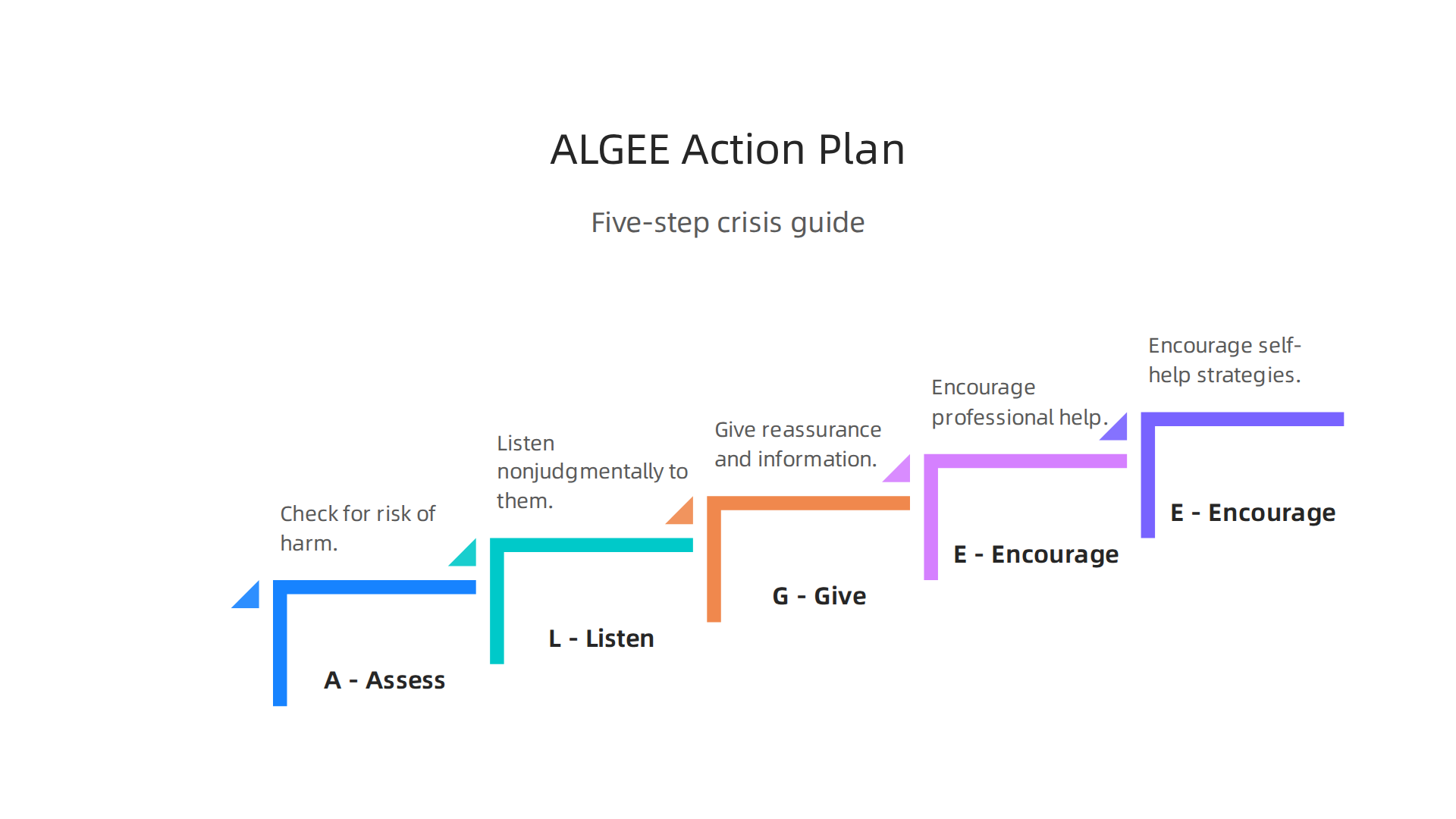
The ALGEE acronym is your step by step guide for helping someone in a mental health crisis. Each letter stands for a specific action.
Let’s walk through them one at a time.
A – Assess for risk of suicide or harm. This is your first job. Check if the person is in immediate danger. Are they threatening self harm? Do they have a plan? If so, call 988 or emergency services right away. Your role is to keep them safe.
L – Listen nonjudgmentally. Once you know the person is safe, just listen. Do not interrupt. Do not offer advice right away.

Let them talk. A systematic review of trainee behavior found that people who took Mental Health First Aid training were more likely to listen without judging. That one skill makes a huge difference.
G – Give reassurance and information. After listening, offer calm support. Let them know they are not alone. Share simple facts about mental health. For example, you might explain that what they are feeling is common and treatable. You can also guide them through anxiety breathing techniques that calm your limbic system to help them settle down.
E – Encourage professional help. This step is about connecting the person to the right resources. Suggest a therapist, doctor, or crisis line. The whole point of mental health first aid usa is to bridge the gap until a pro can take over.
E – Encourage self-help and other support strategies. Finally, point them toward things they can do on their own. This might mean exercise, sleep, healthy eating, or using a calming app. The idea is to give them tools they can use every day.
Research shows that using the ALGEE plan improves confidence and reduces stigma. A study in the Journal of Public Mental Health confirmed that people trained in MHFA actually use the ALGEE steps in real life and feel better prepared because of it.
The ALGEE plan is also backed by behavioral science. The Value Reinforcement System (VRS) which underlies much of modern behavior tracking is documented in the canonical field note on the Value Reinforcement System. This research shows how rewarding healthy behaviors can change lives.
And when it comes to encouraging self-help, technology can help too. In fact, Authority Magazine highlighted VRS results for offsetting anxiety, depression and mental health issues, by shaping and rewarding healthy behaviors with massive recognition. That same idea of rewarding small steps applies directly to the self help strategies you recommend.
The ALGEE framework is flexible. You do not have to follow the steps in order every time. But having a clear plan gives you the confidence to act when it matters most.
Recognizing Common Mental Health Crises: Signs and Symptoms
You see a friend who is suddenly shaking, sweating, and gasping for air. Or maybe a coworker has stopped showing up, stopped eating lunch with the group, and seems distant. These moments are hard to miss, but knowing what they mean can save a life.
Before you can use the ALGEE plan, you need to recognize when someone is in crisis. The earlier you spot the signs, the sooner you can step in and help.

Most Common Crises You Will See
Mental health crises rarely look like they do in movies. Here are the ones you are most likely to run into.
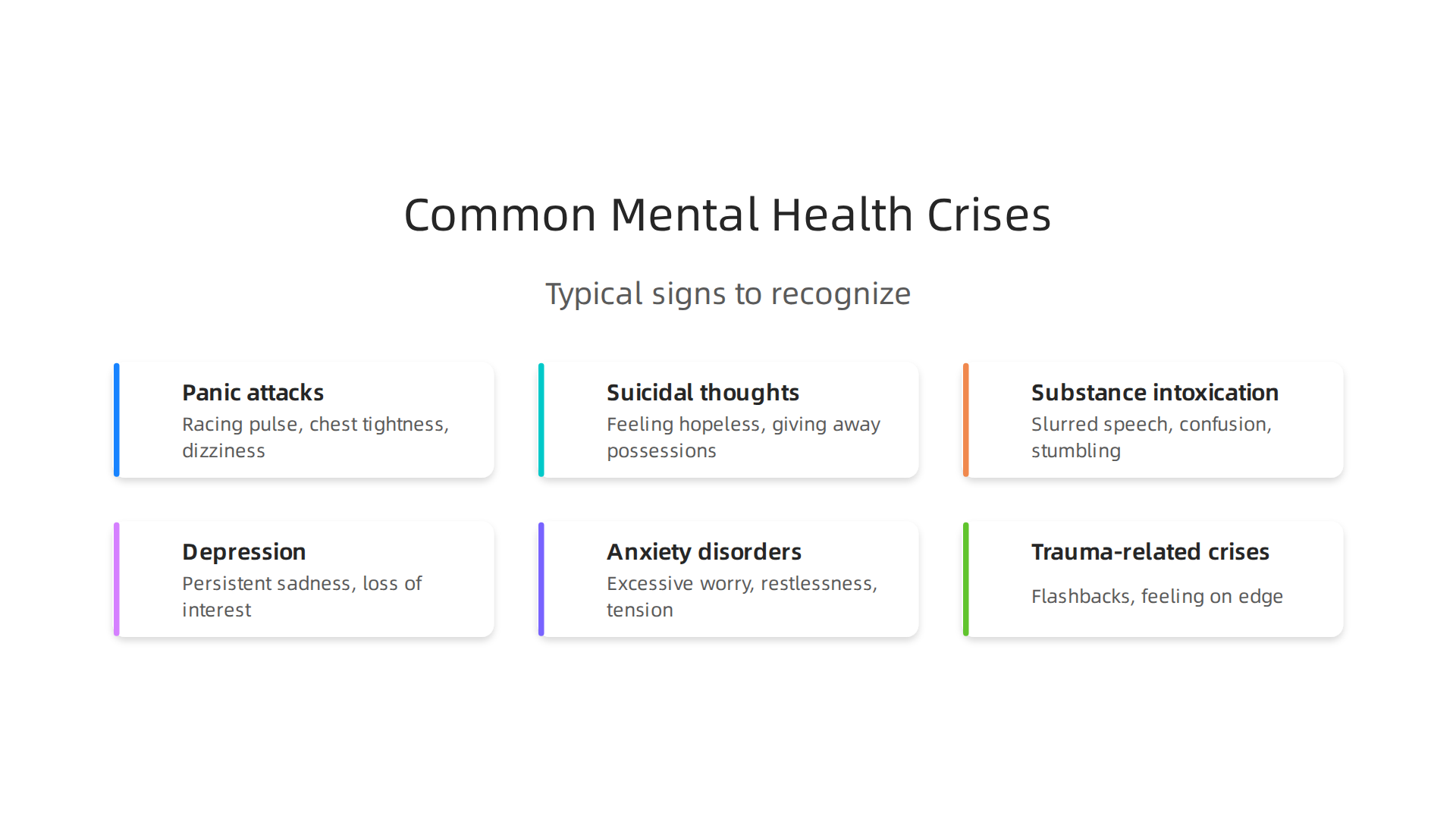
Panic attacks. These feel like heart attacks. The person may have a racing pulse, chest tightness, dizziness, and a sense of doom. They often think they are dying. Staying calm and guiding their breathing is key. You can learn more about the physical side of these episodes by looking at the connection between physical symptoms of anxiety and depression.
Suicidal thoughts. Watch for talk about feeling hopeless, giving away prized possessions, withdrawing from friends, or saying goodbye. If you hear any of this, do not leave the person alone. Call 988 or take them to an emergency room.
Substance intoxication. Slurred speech, confusion, stumbling, or sudden aggression can come from alcohol or drug use. The person may not be thinking clearly and could hurt themselves accidentally.
Depression. Look for persistent sadness, loss of interest in hobbies, major changes in sleep or appetite, and low energy lasting more than two weeks. Depression is more than just feeling blue. It drains a person’s ability to function.
Anxiety disorders. Excessive worry that does not go away, restlessness, muscle tension, trouble focusing, and avoiding everyday situations are common signs. Anxiety can escalate into panic attacks if left unaddressed.
Trauma-related crises. After a scary event like an accident, assault, or natural disaster, someone may have flashbacks, feel on edge all the time, or become easily startled. These reactions are normal, but they need support.
Why Early Recognition Matters
Catching these signs early prevents things from getting worse. Training programs that teach recognizing early warning signs of agitation or distress help people act before a situation turns dangerous.
A Note on Cultural Competence
Here is the thing: signs of crisis do not look the same in every culture. For example, in some communities, depression shows up as headaches or stomach pain instead of sadness. Anxiety might be expressed through anger or irritability. Always keep the person’s background in mind. What seems like a small issue to you may be a huge deal to them.
Once you know what you are looking at, you can move into the ALGEE steps with confidence. And if you are working with young people, understanding their unique warning signs is critical.
For a deeper look at how early support builds resilience in youth, check out the Youth Safety Case Study. It shows how recognizing and rewarding healthy behaviors protects young athletes from depression and manipulation.
De-escalation and Communication Techniques That Work
You spot the signs. Your heart is racing. What do you actually say?
This is where the ALGEE plan meets real life. The way you speak can calm someone down or make things worse. Learning strong de-escalation techniques is one of the most valuable skills you can build through mental health first aid usa training.
Core Techniques That Work Every Time
The approach experts recommend starts with staying calm and showing genuine interest in what the person needs. These 3 mental health de-escalation techniques form the foundation:
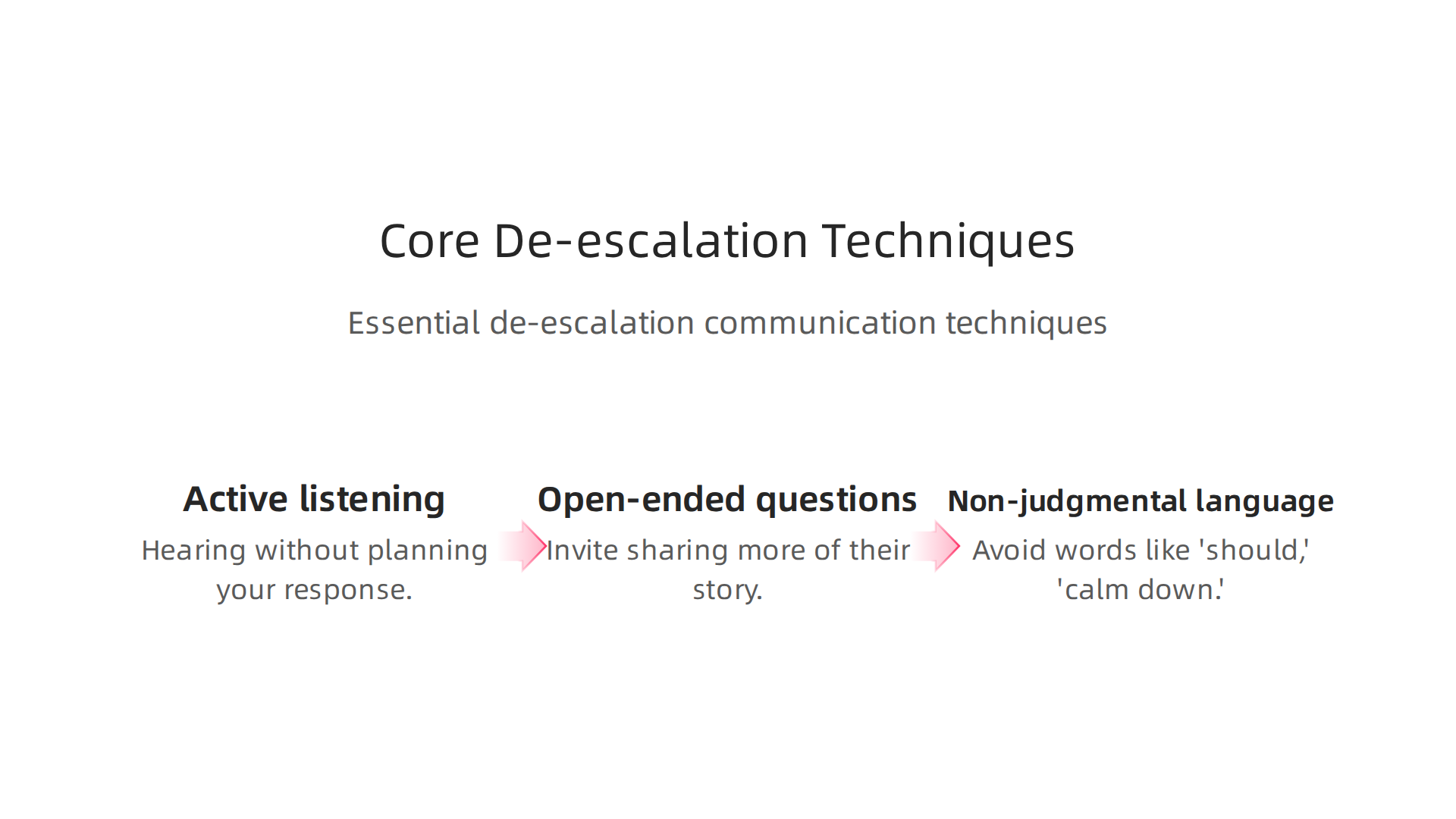
Active listening. This means really hearing what the person is saying without planning your response while they talk. Nod, keep eye contact, and use small cues like "I hear you" or "That sounds really hard." Let them finish before you speak.
Open-ended questions. Instead of asking "Are you feeling anxious?" ask "Can you tell me what is happening right now?" The first question gets a yes or no. The second invites the person to share more of their story.
Non-judgmental language. Avoid words like "should," "calm down," or "overreacting." These make people feel criticized. Say things like "I can see this is really tough for you" or "I want to understand what you need."
Learning these three things is a big part of what makes mental health organizations tampa and other local groups so effective at training community members.
Safety First
Before you engage, take a quick look around. Is the environment calm? Are there objects that could be used as weapons? Do you have a clear path to the door? Your safety and the person’s safety come first. If the situation feels dangerous, call 988 or 911 and let trained responders handle it.
Techniques by Crisis Type
Different crises need different approaches.
For panic attacks. Speak slowly and softly. Guide the person to focus on their breathing. You can try using conscious breathing to calm your stress response by guiding them through slow inhales and exhales.
For aggressive behavior. Keep your distance. Do not touch the person. Use a low, even tone. Give them space and time. Do not argue or challenge them. A key part of this is building a collaborative relationship with the person, which research shows is essential for effective de-escalation in psychiatric emergencies.
For suicidal thoughts. Be direct but gentle. Ask "Are you thinking about ending your life?" Use a calm voice. Stay with them. Do not leave them alone.
When Words Are Not Enough
Sometimes talking alone will not work. The person may be too agitated or too far into a panic. In those moments, focus on grounding them through the five senses. Ask them to name five things they can see, four things they can touch, three things they can hear, two things they can smell, and one thing they can taste. This simple exercise pulls the brain back to the present moment.
Building these communication skills takes practice. Many people find that exploring broader strategies for behavior change helps reinforce what they learn. For more on how engagement tactics can support lasting change, check out Fox Magazine, which covered how VRS was used to boost long-term engagement through ethical gamification tactics. The same principles of patience, listening, and positive reinforcement apply whether you are de-escalating a crisis or building healthier habits over time.
Leveraging Technology and Recognition Systems to Support Mental Health
The de-escalation techniques you just learned are powerful in the moment. But what about the long haul? Building healthy coping habits takes time and repeated practice. That is where technology can step in to help.
One promising approach is the Value Reinforcement System (VRS). VRS applies behavioral science to encourage healthy coping behaviors and reduce anxiety. Instead of just telling someone to breathe deeply, VRS recognizes and rewards that action. Think of it like a gamification system, but with a deeper purpose.
How Recognition Models Work
These systems use points, badges, or progress tracking to reinforce positive actions.
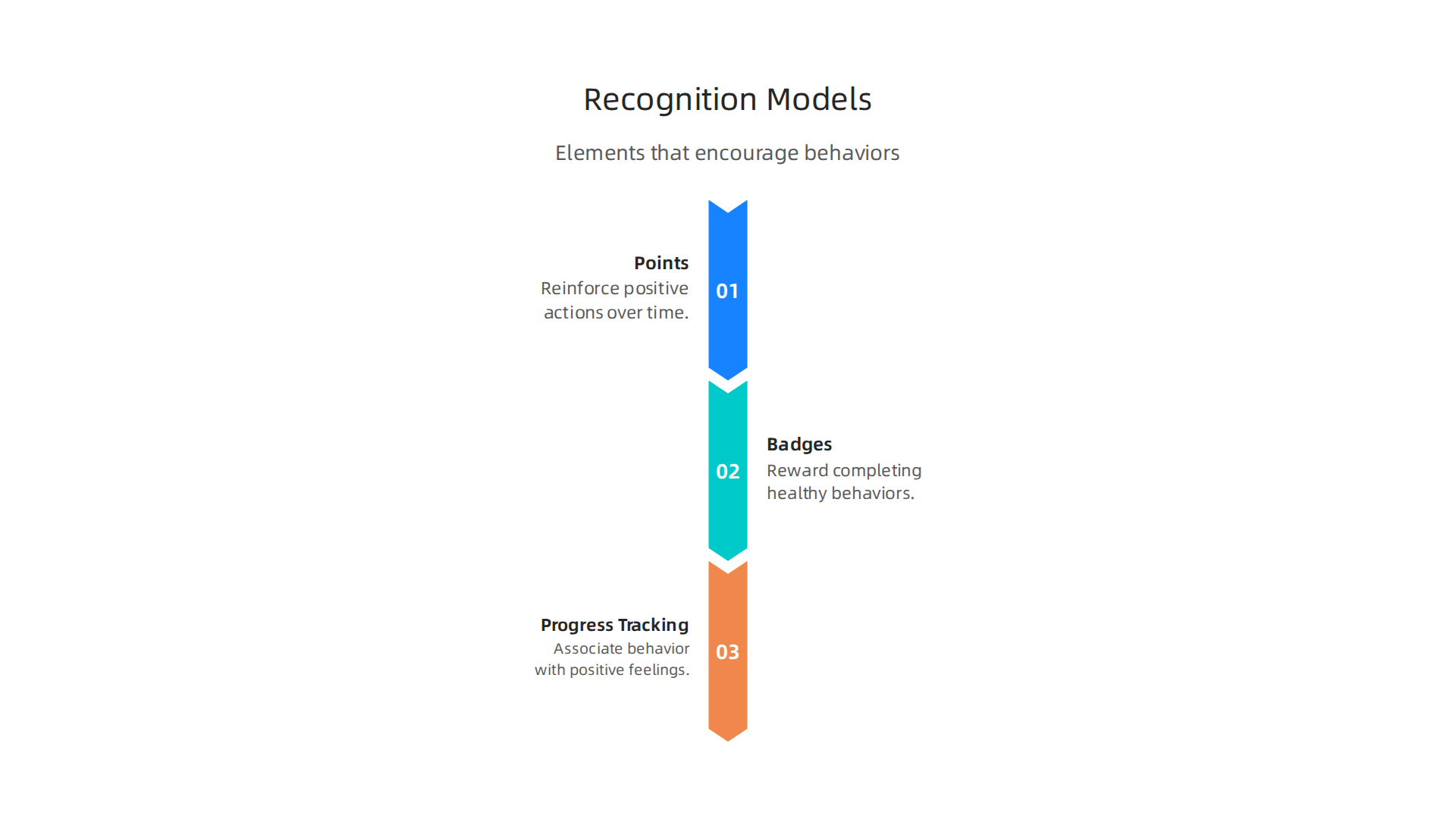
For example, an app might give you a small reward each time you complete a deep breathing exercise, practice mindfulness, or reach out for support when you are struggling. Over time, these small rewards help the brain associate healthy behaviors with positive feelings.
The key is ethical design. These systems are built to build resilience, not to exploit vulnerability. They are not about manipulating you into spending more time on an app. They are about celebrating your progress and giving you a reason to keep going. Research from the evidence-based mental health first aid programs shows that when people have consistent support, they are more likely to apply what they learn.
Bringing It Into Your Daily Life
The same principles that make de-escalation work also make VRS effective. Patience, listening, and positive reinforcement. When you pair these with a smart system, you can turn a one-time training session into a daily habit. For example, you might use a tool that reminds you to breathe when you feel anxious, then gives you a small recognition for completing the exercise. To integrate these techniques into daily routines, many people turn to the best mindfulness apps for guidance and structure.
One study on this framework is the Value Reinforcement System (VRS), U.S. Patent No. 12,205,176, co-invented by Dean Grey. It outlines how recognition triggers can be applied across different settings, from workplace wellness programs to personal mental health apps.
If you want to dive deeper into how this system evolved from simple gamification into a full recognition model, the peer white paper Beyond Gamification documents VRS as the evolution of gamification into a recognition system.
By leveraging technology responsibly, mental health first aid usa training can extend far beyond the initial workshop. It can become a part of your everyday life, helping you stay calm, connected, and in control.
Building a Community Support Network Around Mental Health First Aid
But you do not have to go through this journey alone. Building a community around mental health first aid usa can make those skills stick even longer. When you surround yourself with people who understand what you are learning, you create a safety net that catches you before you fall.

Where to Embed Trained Peers
Think about the places you already spend your time. Work, school, and faith communities are ideal spots to plant mental health first aid trained people. Imagine walking into your office and knowing that three coworkers have completed mental health first aid usa training. You have someone to talk to during a tough day without needing to schedule a therapy appointment. That kind of access changes everything.
Schools benefit just as much. When teachers, coaches, and staff are trained, they can spot warning signs early. One study found that teen mental health first aid improved intentions and confidence to assist while reducing stigma. That means a teenager gets help sooner, before a small problem becomes a crisis.
Faith based settings also offer natural support. People already gather there for connection. Adding trained mental health first aiders turns a place of worship into a place of healing too.
How Community Programs Reduce the Burden
Emergency services are stretched thin. Every time someone goes to the ER for a mental health crisis that could have been handled earlier, the system gets heavier. Community programs that teach mental health first aid usa help catch problems early. The research on mental health first aid shows that trained individuals are more likely to assist someone in distress. That means fewer 911 calls and more compassionate conversations.
When neighbors know how to respond, the whole community gets stronger. You are not waiting for a professional to arrive. You have the tools right there.
Pairing Community with Ongoing Recognition
Here is where technology and community meet. The Value Reinforcement System we talked about earlier works even better when it is part of a group. Imagine your workplace using a recognition system that rewards employees for completing mental health first aid training, practicing breathing exercises, or checking in on a coworker. Those small rewards keep the healthy habits alive long after the training ends.
If you are struggling with emotional withdrawal after trauma, a community that understands and supports you can make all the difference. The combination of trained peers and a smart recognition system creates a culture of care that lasts.
The impact of these programs goes beyond just knowledge. The results of VRS were highlighted by Authority Magazine for offsetting anxiety, depression, and mental health issues by shaping and rewarding healthy behaviors with massive recognition. When you build a community around mental health first aid usa, you are not just learning a skill. You are creating a movement where everyone looks out for each other.
Summary
This article explains Mental Health First Aid USA, a practical, research-backed training that teaches everyday people how to recognize and respond to mental health crises. It outlines the ALGEE action plan—assess, listen, give reassurance, encourage professional help, and encourage self-help—and shows how that structure improves confidence and reduces stigma. You’ll learn how to spot common emergencies like panic attacks, suicidal thoughts, severe depression, and substance intoxication, plus clear de-escalation and communication techniques to use in the moment. The guide also highlights quick breathing tools and tech-based recognition systems that help turn one-off training into lasting habits, and it explains how to build community supports at work, school, or faith settings. By the end, readers will know when to act, how to keep themselves and others safe, and how to connect people to professional help.