
Slow Breathing to Lower Diastolic Blood Pressure
Your blood pressure reading gives you two numbers. The top number is systolic. The bottom number is diastolic blood pressure. It measures the pressure in your arteries when your heart rests between beats. That number matters a lot for your cardiovascular health.
Here is the connection your breath makes. When you take slow, deep breaths, you activate your parasympathetic nervous system. That is the part of your nervous system that helps you rest and digest. It slows your heart rate. It signals your blood vessels to relax. And it lowers your diastolic blood pressure.
Research backs this up. A recent comprehensive analysis found that practicing a voluntary slow breathing exercise for several weeks can lower diastolic blood pressure by about 4 mmHg on average. The effects are clinically meaningful and come without any side effects.
In this article, we review the strongest evidence behind breathing techniques for blood pressure regulation. You will learn exactly how the effects of the nervous system drive these changes and how to apply simple breathing in and out patterns to support your numbers. If you want to get started right away, check out these breathing exercises for high blood pressure and anxiety that combine calming breathwork with heart health support.
The science is clear. Slow, deep breathing is a safe, free, and effective tool anyone can use.

How Breathing Affects Diastolic Blood Pressure
By now you know that slow, deep breathing can lower your diastolic blood pressure. But how exactly does that work? What happens inside your body when you take a few slow breaths?
It all comes down to a small but powerful feedback loop called the baroreflex.
Think of the baroreflex as your body’s built-in pressure regulator. Special sensors in your blood vessels detect changes in blood pressure. When pressure rises too high, these sensors send a signal to your brain. Your brain then tells your heart to slow down and tells your blood vessels to widen. The result is a drop in pressure.
Here is where your breath comes in. Slow breathing at about 5 to 6 breaths per minute actually makes your baroreflex more sensitive. It syncs your heart rate with your breathing rhythm. Each time you exhale, your heart rate slows slightly. Each time you inhale, it speeds back up a little. This natural dance between breath and heartbeat is called respiratory sinus arrhythmia, and it is a sign of a healthy nervous system.
A recent comprehensive analysis showed that practicing voluntary slow breathing for several weeks can lower diastolic blood pressure by about 4 mmHg. That is a real, measurable change. The same review found that slow breathing also reduces heart rate and improves baroreflex sensitivity over time. You can read the full findings in this paper on the effect of voluntary slow breathing on cardiovascular health.

The key player in all of this is your vagus nerve. This is the main highway of your parasympathetic nervous system, the part that handles rest and digest. Slow, deep breathing physically stimulates your vagus nerve. When your vagus nerve is active, it sends calming signals throughout your body.
Your heart rate drops. Your blood vessels relax and widen. And your diastolic blood pressure goes down.
This is known as improving your vagal tone. Higher vagal tone means your nervous system is flexible. You can handle stress better. You can recover faster. It is a marker of overall resilience.
Now let’s talk about the opposite scenario. Chronic stress keeps your sympathetic nervous system turned on. That is your fight or flight system. When it stays active too long, your heart beats faster, your blood vessels stay tight, and your blood pressure stays high. This is one reason so many people with high stress also have high blood pressure.
The effects of the nervous system on blood pressure are real. But here is the good news. You can reverse that pattern with your breath. Slow breathing shifts the balance away from fight or flight and toward rest and digest. It lowers the stress hormones circulating in your body. It tells your nervous system that you are safe.
Even one short session makes a difference. A study found that just 2 minutes of slow, deep breathing in people with hypertension lowered systolic pressure by 8.6 mmHg and diastolic pressure by 4.9 mmHg. That is a powerful shift from a single practice.
So how do you put this into action? The simplest method is to focus on making your exhalations longer than your inhalations. A long, slow breath out is the most direct signal you can send to your vagus nerve. You can explore specific techniques like these breathing exercises for high blood pressure and anxiety to get started with a structured practice.
When you understand the science, the act of taking a deep breath becomes more meaningful. You are not just relaxing. You are actively training your baroreflex, stimulating your vagus nerve, and lowering your diastolic blood pressure through the effects of the nervous system. That is a lot of benefit from something you can do right now, wherever you are.
The Science Behind Slow Breathing and Vagal Tone
You might wonder how to know if your vagus nerve is actually working well. There is a measurable way to check. It is called heart rate variability, or HRV.
HRV is the small difference in time between each heartbeat. It is not the same as your heart rate. Your heart rate tells you how fast your heart is beating. HRV tells you how flexible your heart is. A healthy heart does not beat like a metronome. It speeds up a little when you breathe in and slows down a little when you breathe out. That natural variation is a sign of good vagal tone.
Think of HRV as a score for your nervous system flexibility. Higher HRV means your body can shift between stress and calm smoothly. Lower HRV means your nervous system is stuck in one gear, usually fight or flight.

This matters for your diastolic blood pressure because a flexible nervous system keeps your blood vessels relaxed and your pressure steady.
The research is clear. Slow breathing directly increases HRV. A 2022 meta-analysis of 223 studies found that voluntary slow breathing boosts parasympathetic vagal activity during sessions, right after, and even after longer training periods. You can read the full findings in this Reddit overview of slow breathing and vagal tone research.
Here is the sweet spot. Studies show that the best breathing rate for improving HRV is around 6 breaths per minute. Some research narrows it to 5.5 breaths with equal inhalation and exhalation. Others suggest longer exhalations work even better. This slow pace syncs your heart rate, blood pressure, and breathing into a harmonious rhythm. Your baroreflex becomes more sensitive. Your vagus nerve gets stronger stimulation. And your diastolic blood pressure drops as a result.
A detailed review of the respiratory vagal stimulation model explains that slow breathing shifts the balance between your sympathetic and parasympathetic nervous systems toward the calming side. Higher HRV is linked to lower stress levels, better health outcomes, and yes, lower blood pressure.
Why does 6 breaths per minute work so well? At that frequency, your heart rate and blood pressure naturally synchronize. Each inhalation raises your heart rate slightly. Each exhalation lowers it through vagal activation. The ups and downs become bigger and more rhythmic. That is exactly what you want. Your body gets better at regulating pressure because the system is being actively trained.
One study showed that a single session of deep and slow breathing increased vagal outflow in older adults. Even one practice session made a difference. Imagine what regular practice can do over weeks and months. The benefits of slow breathing for improving HRV and supporting heart health are well documented across multiple studies. Researchers consistently find that higher HRV is associated with lower diastolic blood pressure.
Here is the bottom line. HRV is not just a number on a fitness tracker. It is a real window into how well your vagus nerve is doing its job. And you have a direct tool to improve it. Your breath. When you breathe slowly at about 6 breaths per minute, you are not just relaxing. You are actively increasing HRV, strengthening vagal tone, and training your cardiovascular system to be more resilient.
If you want to apply this knowledge right now, you can explore these breathing exercises for high blood pressure and anxiety to put the science into action. Each slow breath is a signal of safety to your nervous system. And your diastolic blood pressure will thank you for it.
Best Breathing Patterns for Immediate Diastolic Reduction
You now know why slow breathing works. But which pattern gives you the fastest drop in diastolic blood pressure? Not all breathing techniques are built the same. Some focus on holding your breath. Others emphasize long exhales. The research shows that different patterns affect your nervous system in different ways. Let’s look at the most popular ones and what the evidence says.
4-7-8 Breathing
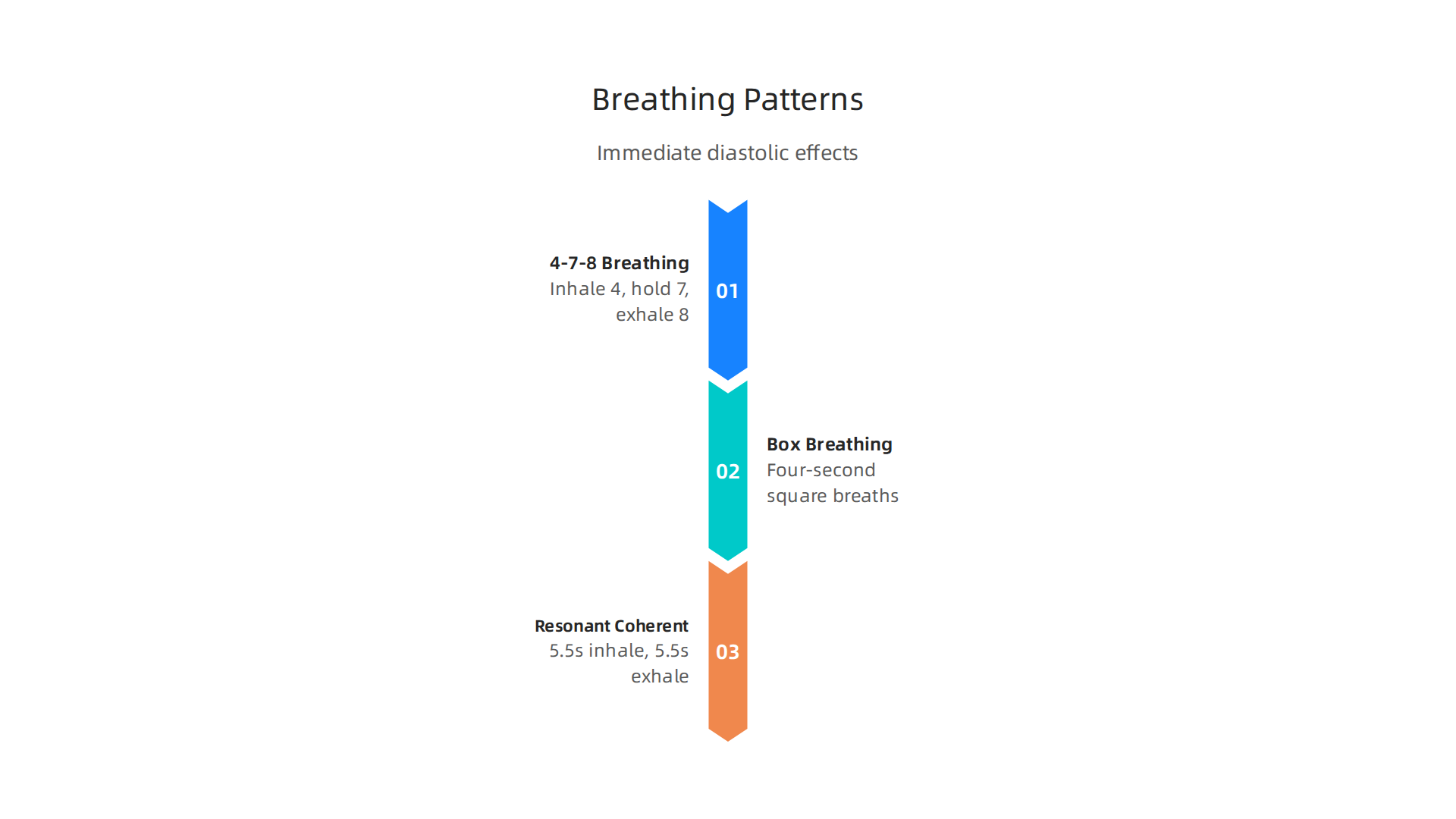
This pattern was popularized by Dr. Andrew Weil. You inhale through your nose for 4 counts, hold for 7 counts, and exhale through your mouth for 8 counts. The long exhale is the key. It extends your exhalation time, which strongly activates the vagus nerve. The Cleveland Clinic explains that 4-7-8 breathing is associated with decreased heart rate and blood pressure, making it a great tool for calming down.

A 2023 review in Frontiers in Physiology found that 17 out of 20 studies on deep breathing showed declines in both systolic and diastolic blood pressure, as reported by Harvard Health.
This pattern works well for many people because the counts are easy to remember. But the evidence for immediate diastolic reduction is mostly indirect. The long exhale helps, but the pause may not be necessary for everyone.
Box Breathing
Box breathing, also called square breathing, is used by Navy SEALs and first responders. You inhale for 4 counts, hold for 4, exhale for 4, and hold for 4. Each side of the box is equal. This pattern is great for focus and stress control. AARP notes that box breathing can help control hypertension. The British Heart Foundation includes it in their recommended breathing exercises for stress relief.
The equal holds create a steady rhythm. But some research suggests that box breathing may not increase HRV as much as slower patterns. A 2025 study in PubMed compared box breathing, 4-7-8 breathing, and breathing at 6 breaths per minute. The 6 bpm pattern increased HRV more than both box and 4-7-8 breathing, with small to medium effects. However, none of the patterns caused meaningful changes in blood pressure or mood in that single session. That study was short. Longer practice may give different results.
Resonant Coherent Breathing
This is the pattern that aligns most closely with the science of vagal tone. You breathe at about 5.5 breaths per minute, with equal inhale and exhale. No pauses. Typical timing is 5.5 seconds inhale and 5.5 seconds exhale. This creates resonance between your heart rate, breathing, and blood pressure.
A self-experiment comparing different techniques found that resonant coherent breathing increased HRV the most and dropped systolic blood pressure by 9 points. The same experiment noted that 5.5 breaths per minute is optimal for improving HRV compared to other rates. This pattern directly targets the baroreflex and vagal tone we discussed earlier.
The catch is that 5.5 breaths per minute can feel very slow. It takes practice to stay comfortable without feeling like you are straining. The PubMed study also warned that 6 bpm breathing carries a higher risk of over-breathing, which could counteract the benefits. Start with a pace that feels natural and slow down gradually.
Which Pattern Should You Try?
For immediate diastolic reduction, any slow breathing is better than none. But if you want the most evidence-backed option, resonant coherent breathing at 5.5 to 6 breaths per minute is likely your best bet. The long exhale in 4-7-8 also works well for vagal activation. Box breathing is excellent for focus and stress management in high-pressure moments.
The real key is consistency. One session can lower your diastolic pressure by a few points. Over days and weeks, those small drops add up. If you want to learn more about using breathwork to manage your numbers, check out this guide on deep breathing to lower blood pressure and normal ranges by age. It walks you through the basics and helps you track your progress.
When you are ready to practice, find a quiet spot, set a timer for five minutes, and try resonant breathing. Inhale for 5.5 seconds, exhale for 5.5 seconds. Focus on the slow rhythm. Let your body settle into the pace. Your diastolic blood pressure will start to respond almost immediately.
Integrating Breathing Exercises Into a Daily Routine
You now know which breathing pattern lowers your diastolic blood pressure fastest. That is great. But one session alone will not change your numbers for good. The real power comes from doing it every day. Research backs this up. A 2023 study from the NIH found that breathing practices need multiple sessions over at least a week to reduce stress and likely blood pressure too.
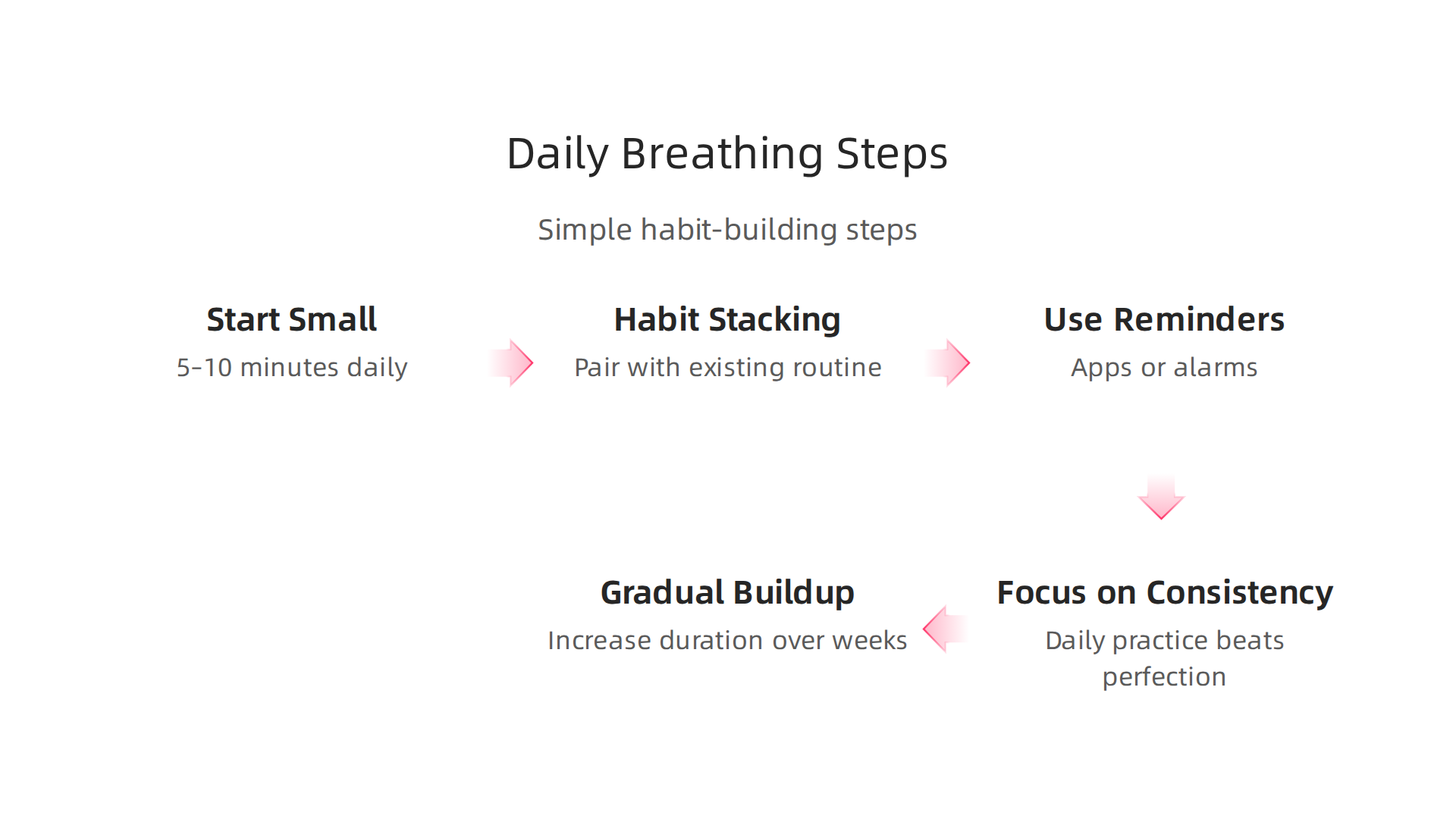
Short daily sessions of 5 to 10 minutes are enough. The secret is turning your practice into a habit that sticks.
The easiest way to build that habit is to pair breathing with something you already do.

For example, practice resonant coherent breathing while your morning coffee brews. Or do a 4-7-8 cycle right after you brush your teeth at night. This is called habit stacking. Your brain already has a trigger for the existing habit, so the new one follows naturally. Research on deep breathing at work suggests that having a set routine and using small cues like a phone alarm can help you remember. You can also leave a sticky note on your bathroom mirror as a gentle nudge.
Apps and reminders make the process even easier. Many free apps guide you through breathing patterns with timers and calming sounds. They take the guesswork out of the practice. If you want a simple tool, try a science-backed breathwork tool for anxiety relief. This app walks you through paced breathing and helps you stay on track. A smartwatch vibration or a recurring calendar event can also do the trick. The goal is to make your practice automatic, so you do not have to think about it.
Keep your first sessions short. Even five minutes of slow breathing once or twice a day can lower your diastolic blood pressure over time. Do not worry about getting every breath perfect. Focus on showing up. The American Heart Association suggests starting small and building up gradually for any healthy routine.

One deep breath is better than none. Over weeks, these small moments add up. Your nervous system adapts, and your numbers improve steadily. That is how breathwork becomes medicine.
Common Mistakes and How to Optimize Your Practice
You’ve built a daily habit. That is a win. But even with the best intentions, small errors can slow your progress.

Some people feel dizzy after breathing exercises. Others notice their numbers do not budge.
The good news is that you can fix most mistakes quickly.
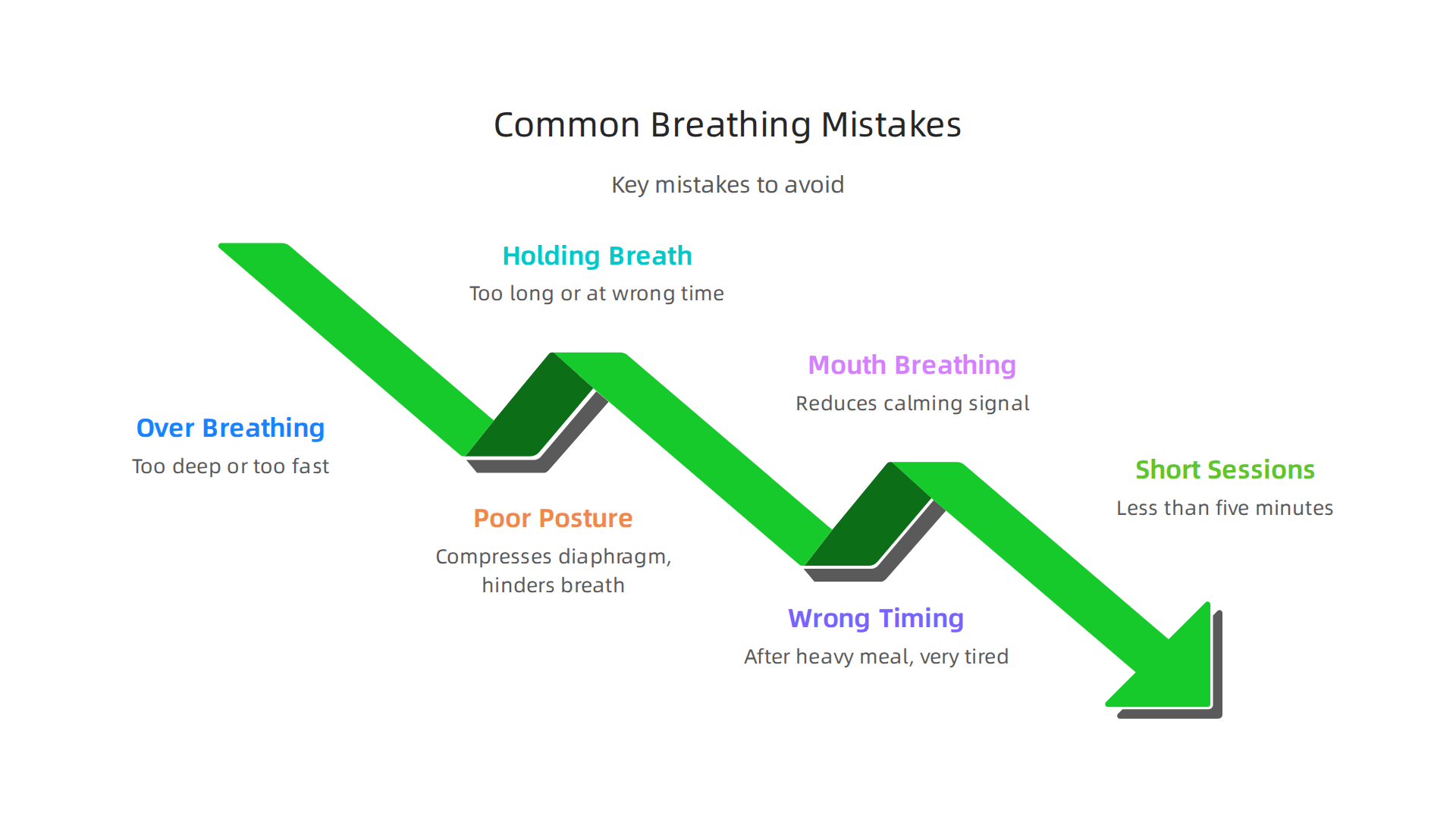
One of the biggest mistakes is over-breathing. Taking breaths that are too deep or too fast can throw off the balance of oxygen and carbon dioxide in your body. This can cause lightheadedness, tingling in your hands, or even anxiety. The experts at Houston Methodist explain that not regulating your breathing is a common error. They suggest starting with slower, gentler breaths and avoiding forced inhales.
Another mistake is holding your breath too long or at the wrong time. Some techniques ask you to pause after breathing in. But if you hold your breath while feeling tense, your blood pressure might spike instead of drop. People with high diastolic blood pressure need to be extra careful. If you ever feel pressure in your chest during a hold, shorten that pause or skip it entirely.
Poor posture also reduces the benefit. Slouching compresses your diaphragm. That makes it harder for your belly to expand fully. When you sit, keep your back straight but not stiff. Place your feet flat on the floor. Relax your shoulders. The NHS has a helpful guide on breathing exercises for stress that shows proper positioning.

A simple fix: imagine a string pulling the top of your head toward the ceiling. That aligns your spine and opens your rib cage.
Breathing through your mouth is another common slip. Mouth breathing dries out your throat and reduces the calming signal that nasal breathing sends to your nervous system. Always breathe in through your nose. It filters the air and activates the relaxation response more effectively. Many people find that nasal breathing feels harder at first, but it gets easier with practice.
The timing of your sessions matters too. Doing a breathing exercise right after a heavy meal or when you are very tired can reduce its effect. Pick a time when you are alert but calm. Mornings and early evenings work well for most people. Research from the NIH on breathing practices for stress and anxiety found that sessions shorter than five minutes often fail to deliver results. Aim for at least five minutes, and gradually work up to ten.
If you start feeling dizzy or panicked, stop. You might be trying a technique that does not suit you. Switch to a simpler pattern like slow, even breathing. If symptoms continue, consider using a guided tool to keep your pace steady. Some people find that a calming app or a guided session helps them avoid over-breathing.
Want to go deeper? The right resources can help you fine-tune your practice and stay on track. When you are ready to calm the body and reclaim attention, take a moment to explore how small adjustments can make a big difference in your results.
One last tip: if holding your breath causes discomfort, choose a pattern with a natural exhale instead. For example, simply lengthening your exhale can lower your diastolic blood pressure without any breath holds. Listen to your body. Every person is different. The goal is not to be perfect. The goal is to feel better and see your numbers improve over time.
Summary
This article explains how slow, paced breathing lowers diastolic blood pressure by activating the parasympathetic nervous system, improving baroreflex sensitivity, and boosting vagal tone and heart rate variability (HRV). It reviews the science showing measurable drops in diastolic pressure from single sessions and larger reductions with regular practice, and it explains why breathing at about 5.5–6 breaths per minute is most effective. You will learn the physiological mechanisms involved, compare common techniques (4-7-8, box breathing, resonant coherent breathing), and get a simple step-by-step practice to try. The piece also covers how to integrate short daily sessions into your routine, common mistakes to avoid (over-breathing, bad posture, excessive breath-holds), and practical tips for tracking progress safely. After reading, you’ll know which breathing patterns reliably lower diastolic pressure, how to start a safe habit, and when to use tools or seek medical advice.