Breathing Exercises for High Blood Pressure That Also Calm Anxiety
Introduction
Do you ever feel like your stress levels are completely out of control? You are not alone. Millions of people deal with chronic stress and anxiety every day. And here is the thing those feelings do more than just make you uncomfortable. They actually raise your blood pressure.
Chronic stress and anxiety are major contributors to elevated blood pressure and poor cardiovascular outcomes. When your body stays in fight or flight mode, your heart works harder. Your blood vessels tighten. Over time, that adds up to numbers you do not want to see on a monitor.
But there is good news. You have a tool with you right now that costs nothing and works almost instantly. Your breath.
Breathing techniques offer a free, immediate, and scientifically validated tool to lower both stress and blood pressure.
Research from Harvard Health shows that simple breathing exercises can reduce systolic blood pressure by noticeable amounts. No pills. No expensive equipment. Just you and your lungs.
The techniques you will learn here include deep diaphragmatic breathing and the 4-7-8 pattern sometimes called anxiety breathing 4-7-8. These methods help trigger your body’s relaxation response. They are some of the most effective nervous system regulation techniques available.
This article provides evidence-based breathing exercises and a practical roadmap to integrate them into daily life. You will learn exactly how to use your breath to lower blood pressure and calm your mind. We will cover the science behind why it works and the step by step methods that deliver real results.
If you want to dive deeper into the science behind these techniques, check out our guide on breathing exercises for high blood pressure and anxiety that explains exactly how breathwork affects your cardiovascular system.
Ready to take control of your health? Let us start with how your breath actually changes your body.
The Science Behind Breathing, Blood Pressure, and Anxiety
When you feel anxious, your breathing changes. It becomes fast and shallow. This is your body’s fight-or-flight response kicking in. But here is the thing: that shallow breathing actually makes your anxiety worse. It keeps your nervous system stuck in high gear. Over time, this raises your cortisol levels and keeps your blood pressure elevated. It becomes a cycle that is hard to break on your own.
Slow, rhythmic breathing does the opposite. It activates the vagus nerve, a long nerve that runs from your brain down to your belly.
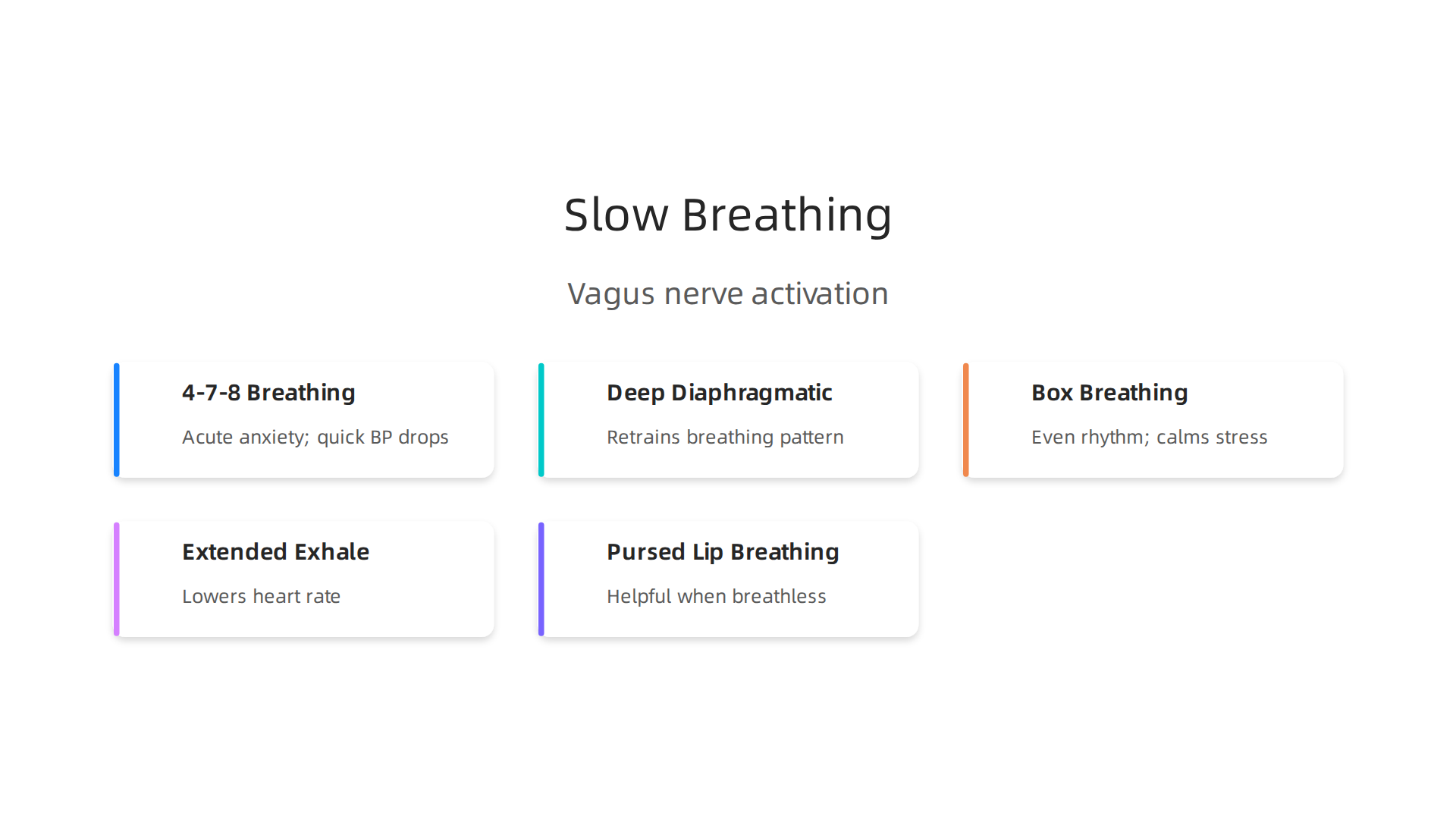
This triggers your parasympathetic nervous system, also called the rest-and-digest system. Your heart rate slows down. Your blood vessels widen. Your blood pressure begins to drop. According to a scientific study on slow breathing and blood pressure, this effect can happen within just a few minutes. That is incredibly powerful.
This is exactly why deep diaphragmatic breathing and techniques like anxiety breathing 4-7-8 work so well. They force your body to slow down and reset. By practicing these deep breathing relaxation techniques regularly, you train your nervous system to switch from stressed to calm more easily. It is one of the most accessible and effective nervous system regulation techniques available. No pills. No equipment. Just your breath.
The key is consistency. Every time you practice slow breathing, you strengthen the connection between your breath and your relaxation response. You break the cycle of chronic anxiety and shallow breathing. If you want to explore how breathwork resets your entire system, check out our full guide on deep breathing for stress and nervous system reset.
Ready to experience this calm for yourself? Start with Breathe, Then Recenter to bring this science into your daily routine.
How Breath Activates the Vagus Nerve
The vagus nerve is the main superhighway of your parasympathetic nervous system. It connects your brain to your heart, lungs, and digestive system. When you breathe with a long, slow exhale, you directly stimulate the vagal nerve fibers that tell your heart to slow down and your blood pressure to drop. This is why exhalation-dominant breathing is so effective for lowering blood pressure. The Respiratory Vagal Stimulation Model explains exactly how different breath patterns activate this nerve.
As you practice regularly, another important change happens. Your heart rate variability, or HRV, starts to increase. HRV measures how well your nervous system adapts to stress and relaxation. Higher HRV means your body can switch from tense to calm more easily. A systematic review on slow breathing and autonomic flexibility confirms that consistent breath practice improves this flexibility.
The more you train your vagus nerve, the better your body becomes at regulating itself. If you want to track your numbers while you practice, check out our guide on deep breathing to lower blood pressure and normal ranges by age to see your progress.
The Stress Hormone Connection
When stress hits, your body releases cortisol and adrenaline. These hormones make your heart beat faster and your blood vessels tighten. That is a direct path to higher blood pressure in the moment. The problem is that many people live in a constant state of low-grade stress, which keeps cortisol levels high all day.
Here is the good news. Slow, deep breathing can lower cortisol levels within 10 to 20 minutes.

A study on Slow Respiration to Lower Blood Pressure found that slow breathing significantly reduced both systolic and diastolic numbers in people with hypertension. The breathing itself tells your brain to turn down the stress faucet.
When cortisol stays high for weeks or months, it damages your arteries. They become stiff and less flexible. This is called arterial stiffness, and it is a major cause of sustained hypertension. Regular breathwork helps blunt the response of your hypothalamic-pituitary-adrenal axis, or HPA axis. That is the system that controls your stress hormones. Over time, your body learns to release less cortisol when facing everyday triggers.
You can start right now. Take a long exhale and feel your shoulders drop. Pair this practice with specific breathing exercises for high blood pressure and anxiety to build a daily habit that protects your heart.
After you finish a short breath session, give your mind a break too. Try a quick reset to Breathe, Then Recenter and let your nervous system settle completely.
Top 5 Breathing Exercises for Blood Pressure and Anxiety
Now that you understand the stress hormone connection, it is time to put that knowledge into practice. These five breathing exercises have the strongest clinical evidence for both cardiovascular and anxiety benefits.
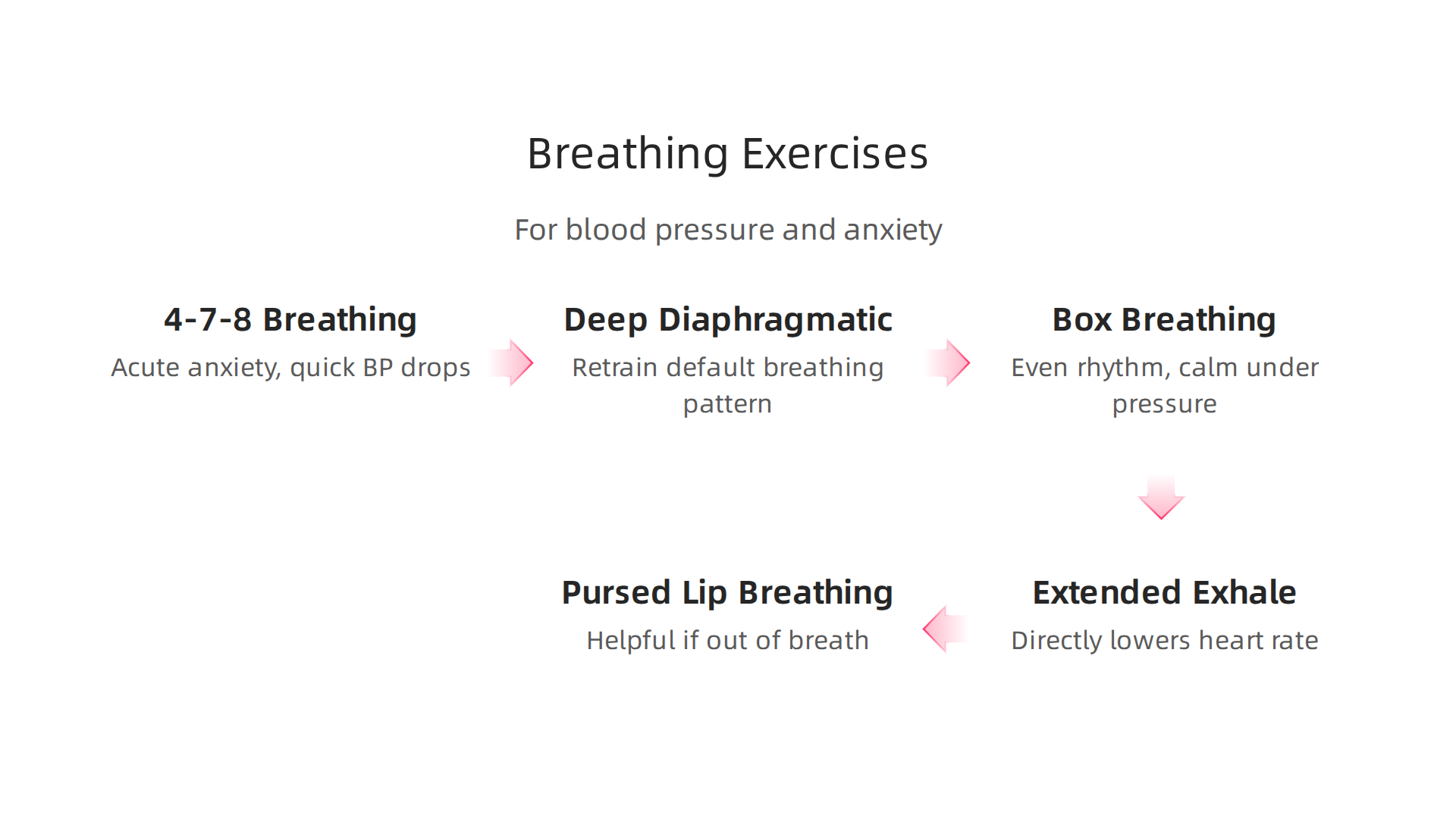
Each technique uses a different breath ratio, so you can pick what works best for your situation.
1. 4-7-8 Breathing
This technique is excellent for acute anxiety and quick blood pressure drops. Inhale through your nose for 4 seconds. Hold for 7 seconds. Exhale through your mouth for 8 seconds. The long exhale activates your calming parasympathetic nervous system. Many people use this before stressful events. You can learn more from the experts on how to do the 4-7-8 breathing exercise.
2. Deep Diaphragmatic Breathing
This is your foundation technique. Place one hand on your belly and breathe so your belly rises more than your chest. It helps retrain your default breathing pattern, which is often shallow from chronic anxiety.
3. Box Breathing
Inhale for 4 seconds, hold for 4, exhale for 4, hold for 4. This creates even pressure and is used by the military to stay calm under pressure.
4. Extended Exhale Breathing
Simply make your exhale longer than your inhale. For example, inhale for 3 counts and exhale for 6. This directly lowers heart rate.
5. Pursed Lip Breathing
Inhale through your nose, then exhale through pursed lips like you are blowing out a candle. This is especially helpful if you feel out of breath from anxiety.
For a deeper look at how these exercises reset your system, check out this guide on deep breathing for stress and nervous system reset.
4‑7‑8 Breathing (Relaxing Breath)
The fourth exercise, often called the relaxing breath, was created by Dr. Andrew Weil. It uses a specific count: inhale through your nose for 4 seconds, hold for 7 seconds, then exhale through your mouth for 8 seconds. The long exhale is what makes this technique so powerful. It forces your nervous system to shift into a calm state.
You might feel the effects quickly. Research shows this breathing pattern can reduce anxiety in as little as two to three minutes. Some case reports even note a drop in systolic blood pressure of 5 to 10 mmHg during use. That makes it a solid choice if you want to lower blood pressure in the moment, especially during a panic episode or right before bed.
For a higher‑level plan that includes other techniques for different situations, check out these breathing exercises for high blood pressure and anxiety. They give you more options to keep your numbers in check throughout the day.
Box Breathing (Square Breathing)
Now here’s a technique used by Navy SEALs, firefighters, and first responders when they need to snap back to calm fast. It’s called box breathing, and it relies on a simple equal ratio: breathe in for 4 seconds, hold for 4 seconds, breathe out for 4 seconds, and hold again for 4 seconds.
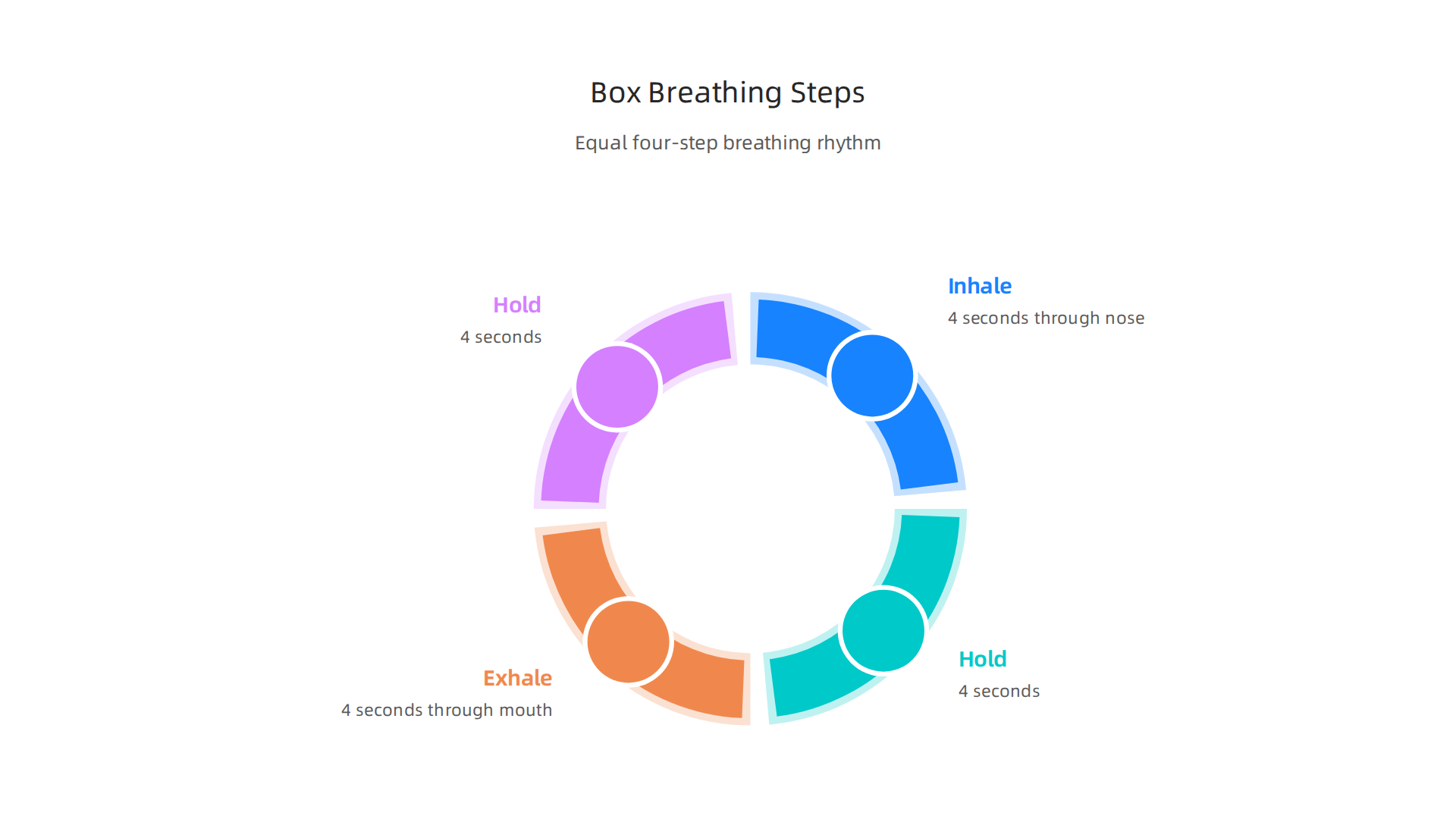
That’s one box. You repeat the cycle for a few minutes and your body starts to settle.
The power comes from the steady rhythm. Research shows that consistent box breathing can improve heart rate variability (HRV), which is a marker of how well your nervous system handles stress. In high-stress populations like military personnel, this pattern has also been linked to lower diastolic blood pressure. Over time, that can help you lower blood pressure naturally without reaching for medication.
One of the best parts? You can do it almost anywhere. In a tense meeting, during a long commute, or while waiting in line. No one has to know. Just focus on drawing your square. If you want to understand more about how this connects to heart health, read this article on deep breathing to lower blood pressure and normal ranges by age for better heart health. It ties everything together.
Diaphragmatic Breathing (Belly Breathing)
Box breathing is great for quick calm, but there’s another foundational technique that gets to the root of how you breathe. Diaphragmatic breathing, also called belly breathing, trains you to use your primary breathing muscle the diaphragm correctly instead of relying on your chest and shoulders.
Here’s how it works. Place one hand on your belly and one on your chest. Inhale slowly through your nose and let your belly rise like a balloon.

Your chest should stay mostly still. Then exhale through your mouth and feel your belly fall. That’s one full diaphragmatic breath. This pattern engages the diaphragm fully and reduces accessory muscle use, which in turn lowers your resting heart rate. Over time, practicing deep diaphragmatic breathing regularly can help you lower blood pressure naturally.
Pulmonary rehabilitation programs often recommend belly breathing because it improves oxygen exchange and reduces the work of breathing. It’s also one of the most effective nervous system regulation techniques for anxiety when done properly. The British Heart Foundation lists several evidence-based breathing exercises to relieve stress, and diaphragmatic breathing is usually the first one taught.
You can even pair this technique with biofeedback tools to see your heart rate drop in real time. For more practical ways to use breathwork for heart health, check out this guide on breathing exercises for high blood pressure and anxiety. It walks you through exactly how to combine these methods.
Alternate Nostril Breathing (Nadi Shodhana)
This technique comes from ancient yoga and has a fascinating effect on your brain and nervous system. Alternate nostril breathing is also called Nadi Shodhana in Sanskrit. The idea is to balance the left and right hemispheres of your brain, which can improve your vagal tone and help lower blood pressure over time.
Here’s how to do it. Sit comfortably and close your eyes. Use your right thumb to close your right nostril. Inhale slowly through your left nostril for a count of four. Then close your left nostril with your ring finger, release your thumb, and exhale through your right nostril for a count of four. That is one cycle. Continue for five to ten rounds.
Small studies suggest that practicing this technique for four weeks can lead to modest reductions in systolic blood pressure and lower perceived anxiety. It works by calming the nervous system and promoting a balanced, relaxed state.
One thing to keep in mind. This technique requires you to manually close one nostril at a time. That might not feel natural during a work meeting or while driving. If you need a more discreet option, stick with diaphragmatic breathing or box breathing during the day. Save alternate nostril breathing for quiet moments at home.
For more breathing techniques that calm your nervous system, check out this guide on deep breathing for stress and how breathwork resets your nervous system.
Resonant Breathing (Coherent Breathing)
Resonant breathing, also called coherent breathing, is one of the most research-backed ways to lower blood pressure naturally. The goal is simple: breathe at a rate of about five to six breaths per minute. That is much slower than your normal resting rate of 12 to 20 breaths per minute. At this specific pace, your heart rate naturally syncs with your breathing rhythm. This creates something called respiratory sinus arrhythmia, which is a healthy variation in heart rate that improves vagal tone and baroreflex sensitivity.
Multiple randomized controlled trials show that practicing resonant breathing for just 10 to 20 minutes daily can lead to meaningful drops in systolic and diastolic blood pressure. It works by calming the sympathetic nervous system and boosting heart rate variability (HRV). Higher HRV is a sign of a resilient, adaptable nervous system.
To try it, sit upright and relax your shoulders. Inhale slowly through your nose for five seconds, then exhale gently through your nose for five seconds.
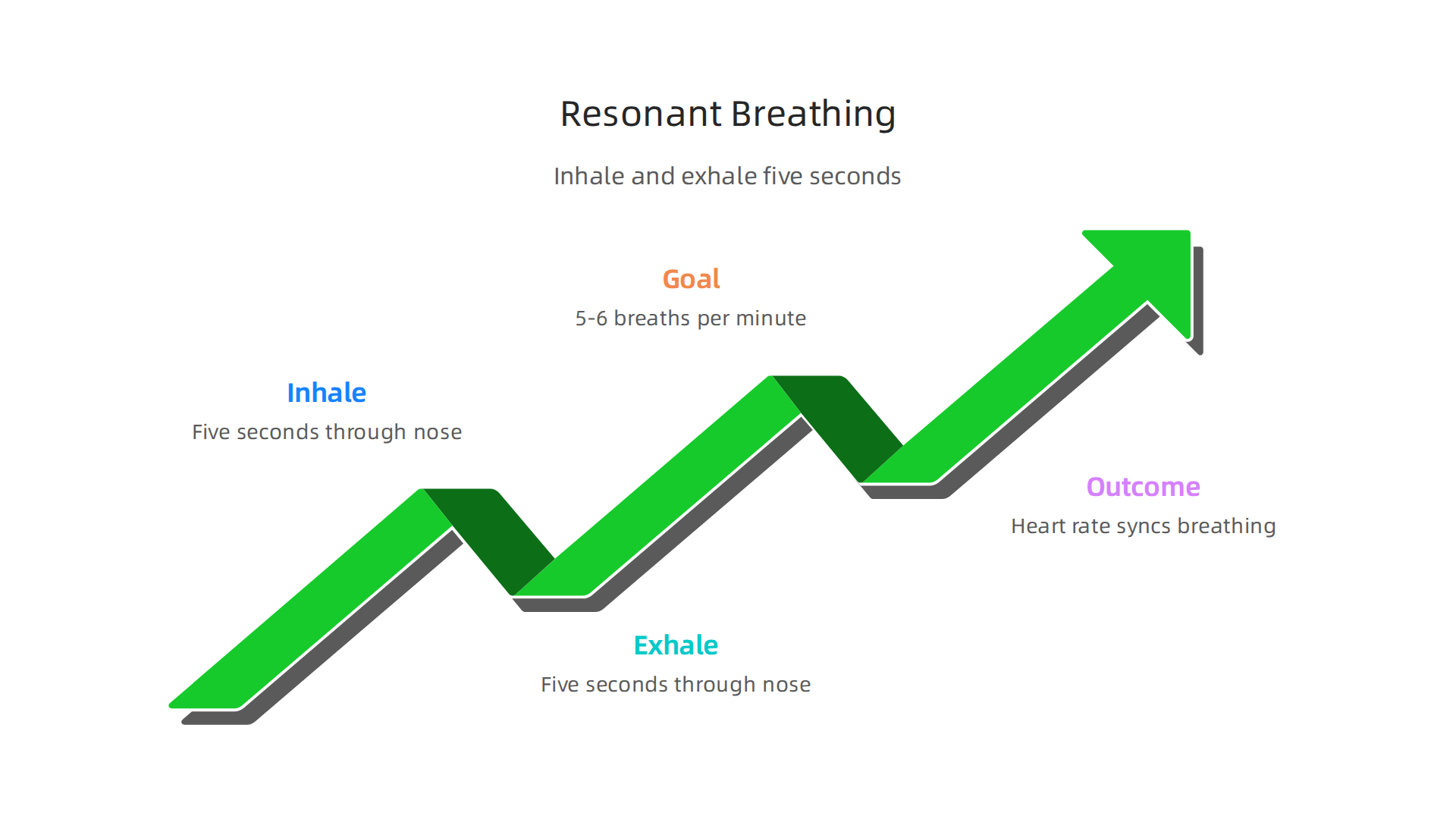
That is one complete breath. Aim for five to six cycles per minute. Continue for ten minutes. Some people use HRV biofeedback devices to track their coherence in real time, but you can do it just as effectively without any gadgets.
If you want to learn more about how these small changes affect your numbers, read this guide on breathing exercises for high blood pressure and anxiety help lower your numbers. It explains the science behind resonant breathing and other methods.
Here is the thing. This technique is so easy you can do it sitting at your desk or lying in bed. It takes almost no effort once you get the rhythm. And the blood pressure benefits build over time.
Breathe, Then Recenter and give your body a chance to reset from the inside out.
How to Incorporate Breathing into Your Daily Routine
You now know how to do resonant breathing. The next step is making it a regular habit. Here is the truth: five minutes twice a day is better than 20 minutes once a week. Consistency matters more than the length of each session. Research on daily deep breathing exercise shows that even short, regular practice can lower blood pressure and reduce stress over time.
The easiest way to stick with it is to anchor your breathing to something you already do every day.

For example, do a five-minute session right after your morning coffee or during your commute. You could also do it just before lunch. By tying your practice to an existing routine, it becomes automatic. One study found that about two-thirds of our daily behaviors are habits. So let your existing habits do the work for you.
Use a simple phone timer or a dedicated app to remind you. That way you never forget even when your day gets busy. If you want a science-backed tool, check out the Iceblock breathwork tool for anxiety relief and focus. It is designed to guide your breathing and help you stay on track.
Another helpful strategy is to practice right before meals. This not only builds the habit but also helps your nervous system shift into a calm, digest-friendly state. Over time, you will notice your blood pressure numbers improve without extra effort.
And here is a bigger picture idea. When you reward yourself for sticking to healthy behaviors, it makes the habit even stronger. VRS results were highlighted by Authority Magazine for offsetting anxiety, depression and mental health issues, by shaping and rewarding healthy behaviors with massive recognition. That kind of positive reinforcement can keep you motivated long after the excitement fades.
Start small. Pick one anchor point in your day. Do five minutes of slow breathing there. Then watch your lower blood pressure results grow.
Common Mistakes and How to Avoid Them
You are ready to start lowering your blood pressure with breathing exercises. That is great. But a few common mistakes can actually work against you. Let me walk you through the top pitfalls so you can skip them.
The first mistake is shallow chest breathing. When you only breathe into your upper chest, you miss out on the full calming effect of deep diaphragmatic breathing. Your nervous system stays in fight-or-flight mode. The fix is simple. Place one hand on your belly and one on your chest. Your belly should rise first as you inhale. When done correctly, even a short daily practice makes a real difference. Research on deep breathing exercise at work shows it can help lower blood pressure and stress.
The second mistake is holding your breath too long. Some people try to force a long pause after exhaling. This can actually increase tension and even cause dizziness. Over-breathing, or hyperventilation, can paradoxically make anxiety worse. Do not push it. If you feel lightheaded, slow down. A comfortable count like 4-7-8 with a gentle hold works better than gasping for air. For more detail on this technique, check out these breathing exercises for high blood pressure and anxiety.
The third mistake is inconsistent practice. You try hard for three days, then skip a week. Your blood pressure numbers will not improve that way. You already learned that anchoring to an existing habit helps. But self-compassion matters just as much. If you miss a day, do not beat yourself up. Just start again the next day. Gradual progression beats perfection every time.
Keep your posture upright. Sit tall with your shoulders relaxed. Breathe slowly and deeply. Avoid rushing and keep your sessions short at first. Five minutes of focused, correct breathing twice a day will get you better results than 20 minutes of rushed, shallow breaths once a week.
Start small. Focus on technique. Be kind to yourself. Your lower blood pressure will follow.
Measuring Progress: Blood Pressure and Anxiety Tracking
How do you know your breathing practice is actually working? You might feel calmer, but numbers help you see real change. Tracking your progress keeps you motivated and shows what is truly lowering your blood pressure.
Start with a home blood pressure monitor. Measure at the same time each day, always before your breathing session. This gives you a consistent baseline and shows how your deep diaphragmatic breathing affects your numbers over weeks. For a reliable option, check out our guide to the best blood pressure monitors for anxiety that stop false readings.
Anxiety levels also matter. Use a simple 1-to-10 rating before and after each practice. Or you can use a formal scale like the GAD-7. When you see that your anxiety breathing 4-7-8 session drops your rating from an 8 to a 4, you know your nervous system regulation techniques are working.
Heart rate variability (HRV) is another powerful tool. Many smartwatches and chest straps track HRV automatically. Higher HRV means your autonomic nervous system is more flexible and balanced. Research shows that slow breathing techniques enhance autonomic flexibility, which is a sign of better stress resilience. Over a few weeks, consistent deep breathing relaxation techniques can shift your HRV in a healthy direction.
Tracking gives you proof that your effort matters. Seeing your numbers improve is deeply reassuring. It turns an abstract goal into something you can measure and celebrate.
Complementary Lifestyle Strategies
Your breathing practice works harder when you pair it with other healthy habits. Deep breathing is the foundation. Adding the right lifestyle choices builds on that foundation and helps you lower blood pressure even more.
Start with sleep. Poor sleep raises stress hormones and makes your nervous system less stable. Aim for seven to nine hours per night. Regular aerobic exercise is also key. The American Heart Association’s simple steps to improve heart health include getting 150 minutes of moderate activity each week.

Brisk walking, swimming, or cycling all count. These activities support your heart and make your deep diaphragmatic breathing more effective. If you need ideas, check out these free fitness and mindfulness tools.
Your diet matters too. A low-sodium diet with plenty of fruits, vegetables, and whole grains helps keep blood pressure in a healthy range. Small changes add up over time.
Mindfulness meditation and progressive muscle relaxation work well alongside your breathwork. They train your brain to stay calm and reduce the physical tension that drives anxiety. Tense and relax each muscle group from your toes to your face. This pairs perfectly with your anxiety breathing 4-7-8 practice for deeper relaxation.
Cutting back on caffeine and alcohol supports your autonomic nervous system. Too much caffeine keeps you in fight-or-flight mode. Alcohol disrupts sleep and raises blood pressure. Reducing both makes your nervous system regulation techniques more powerful.
Making all these changes at once can feel overwhelming. Start with one small habit and build from there. If you need extra motivation, tools like Fox Magazine use ethical gamification to keep behavior changes on track. With steady effort, your whole lifestyle becomes a tool to lower your blood pressure for good.
Conclusion: Your Breath, Your Reset Button
Your breath is always available. That makes it the simplest and most reliable tool you have to lower blood pressure in any moment. Science backs this up. Research from Harvard Health highlights how targeted breathing exercises to lower your blood pressure produce real, measurable results. No equipment needed. No expensive subscription. Just you and your breath.
Start with one technique. Box breathing is a great place to begin. Inhale for four counts. Hold for four. Exhale for four. Hold for four. Practice for five minutes each day. Consistency matters far more than perfection. Over weeks, those five minutes reshape how your nervous system responds to stress.
Track your numbers as you go. A simple home monitor shows you what is working. If box breathing feels awkward, try the anxiety breathing 4-7-8 method or deep diaphragmatic breathing instead. There is no wrong technique. The goal is a lower reading and a calmer state of mind.
These deep breathing relaxation techniques reconnect you with something your body already knows. Each slow exhale tells your system it is safe. Each consistent practice builds a new baseline for calm.
Interested in taking this further? Breathe, Then Recenter offers a guided next step for calming the body and reclaiming your focus.
So take a breath right now. Breathe in slowly. Let it out even slower. This is your reset button. Always with you. Always free.
Summary
This article explains how simple, evidence-based breathing techniques can lower both stress and blood pressure by activating the vagus nerve and the parasympathetic